
‘The Marching Band’ Review: A French Crowd-Pleaser That Never Misses a Beat
Greenwich Entertainment
After becoming a $20 million blockbuster in its native France, Emmanuel Courcol’s latest work, The Marching Band, has finally hit U.S. theaters, courtesy of Greenwich Entertainment. Accessibly entertaining while never oversimplifying its somewhat familiar premise, which at its most abridged could boil down to “two brothers reuniting over their shared love of music,” The Marching Band exists as a fully formed crowd-pleaser that stands out as a luminous beacon of hope within a mainstream cinematic landscape that increasingly feels more akin to “content” than creativity.
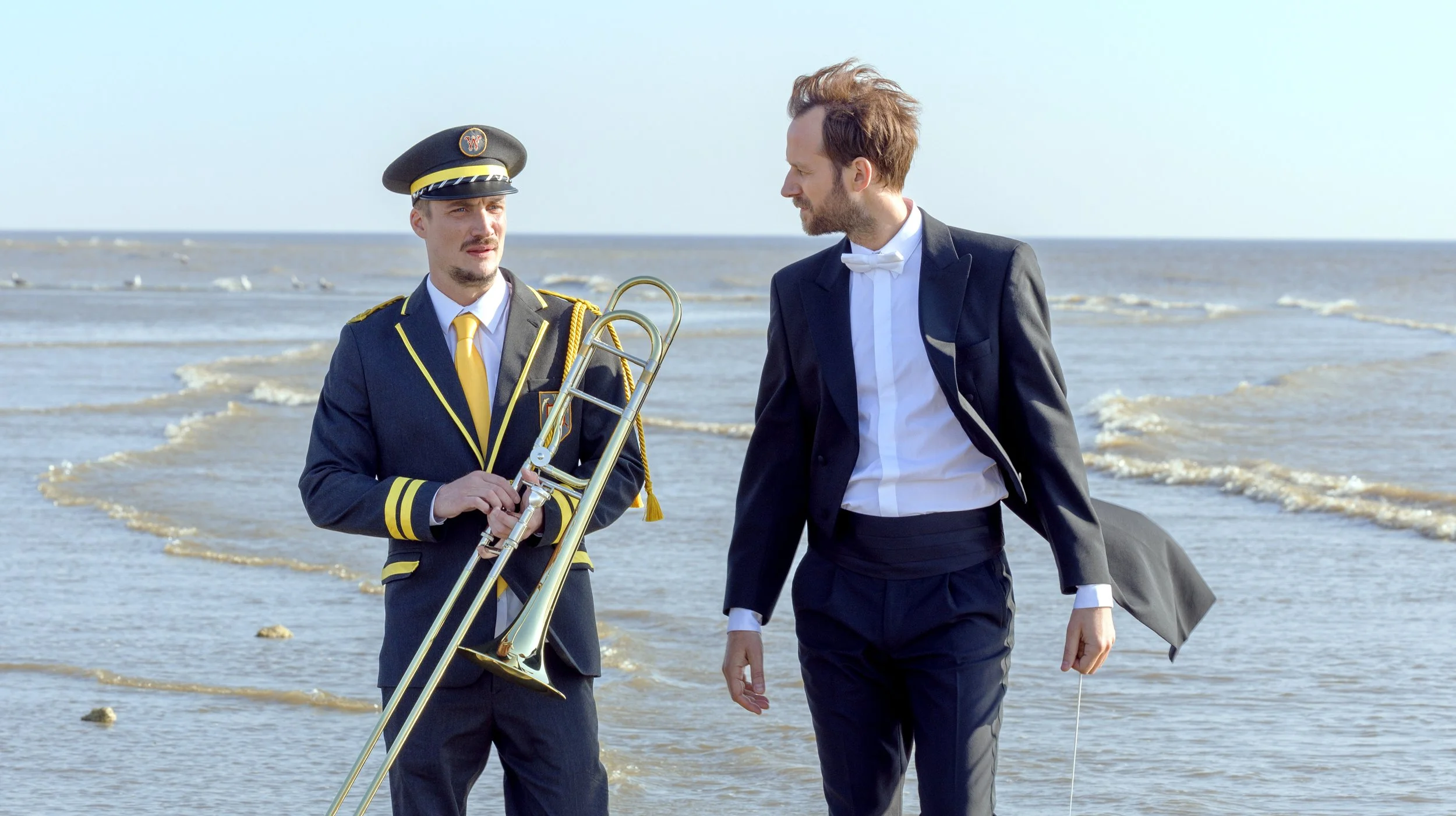
Jumping into its introductory exposition with guns blazing,The Marching Band lays its groundwork with tremendous efficiency. Benjamin Lavernhe (My Donkey, My Lover & I) stars as Thibaut, a world-renowned classical music conductor whose career takes a swift backseat after he is diagnosed with leukemia. Returning to his family in Northern France to seek out a bone marrow transplant, Thibaut is shocked to learn that his sister and mother cannot be appropriate donors because he was actually adopted. This sets him on a path toward a suitable benefactor, who turns out to be the biological brother he never knew, Jimmy (Pierre Lottin, The Stranger), whose working-class background could not be further from Thibaut’s own jet-setting artist life.
Jimmy, divorced and introverted, often played with a brawny melancholy by Lottin, works at the cafeteria of a local factory that employs much of the small town where he lives. After the initial astonishment of learning of his bourgeois conductor brother and comparing the drastically different circumstances under which they were raised, Jimmy agrees to be Thibaut’s donor. Reuniting a few months after the transplant, Thibaut discovers that Jimmy plays the trombone in his village’s struggling community brass band and decides to assist his brother in whipping the amateur group into shape.
Greenwich Entertainment
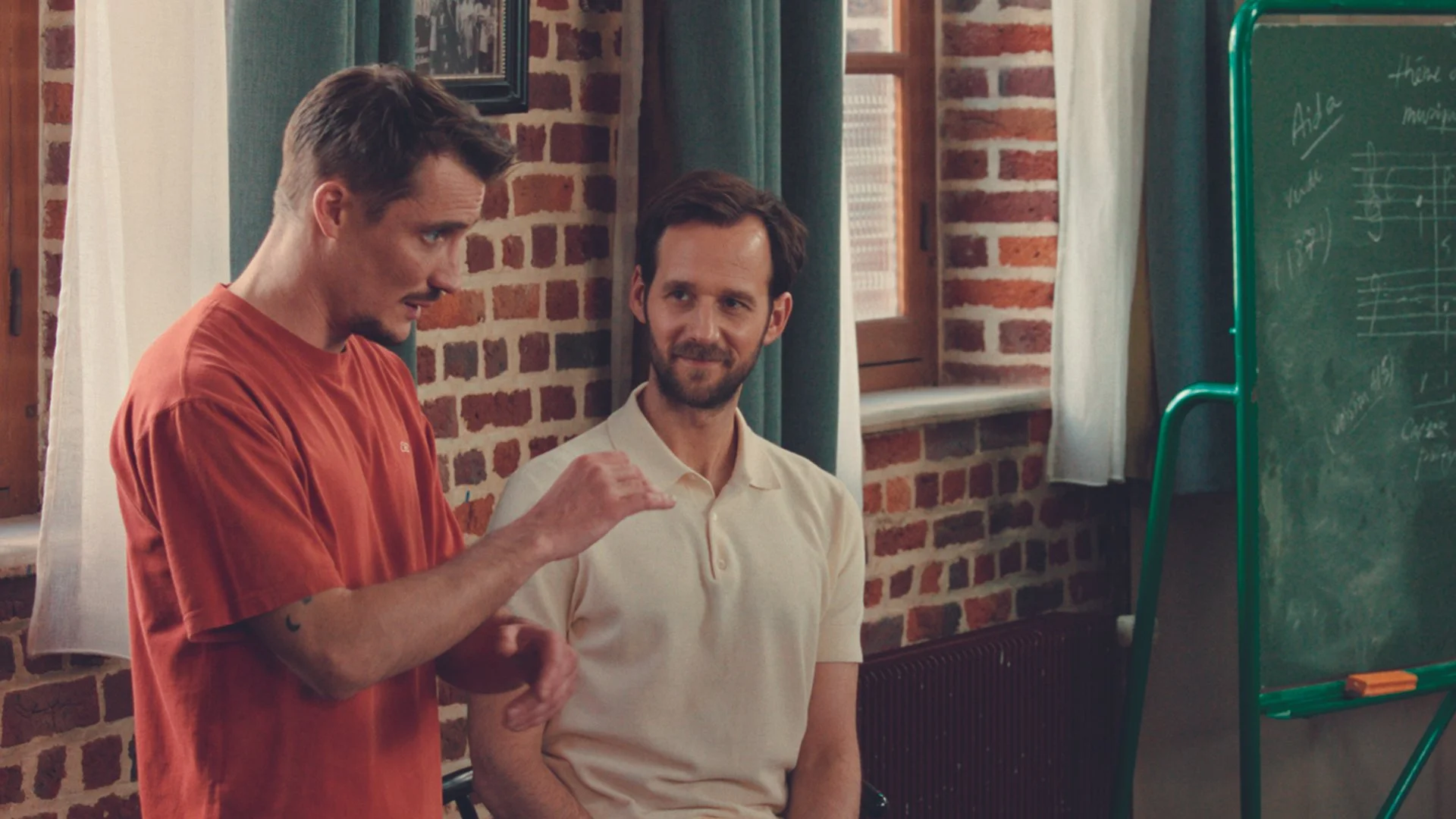
Filmed under the grey skies and among the red-brick factories of Hauts-de-France, The Marching Band taps into the region’s historical ties to middle-class industrial workers. While Thibaut and Jimmy’s connection runs deeper than blood thanks to their shared obsession with music, which runs the gamut from experimental jazz to Maurice Ravel’s “Bolero,” their disparate socio-economic statuses are the decisive barriers between them. Thibaut flits in and out of town with ease between sold-out shows, while Jimmy toils away at his low-paying job he and his co-workers feel chained to, despite low wages and obsolescence in the face of changing times. With their paths of fate diverged as small children, before they could even remember, Jimmy cannot help but tell Thibaut, “you drew the long straw,” a sentiment Thibaut rather guiltily agrees with, consciously or not, through his dogged quest to support the town’s motley band. These class divides and social realist elements ground The Marching Band in a substantive authenticity that balances its most heartwarming moments.
The symbiosis of Courcol’s direction and screenplay (co-penned with Irène Muscari) with the performances yielded by The Marching Band’s duo of lead characters makes for the movie’s most heartening elements. In spite of the vast differences in their characters’ backgrounds, actors Lavernhe and Lottin produce a palpable chemistry that spans from playful to intense, much like real brothers, allowing the movie to feel like a buddy film at times and a grounded family drama at others. This onscreen connection slowly builds, particularly on Jimmy’s part, who seems to let his wall down with Thibaut and others when he is closest to his musical practice. While Thibaut’s quandaries ultimately feel the most critical, the film’s centrifugal force revolves around Jimmy’s everyday life and allows Lottin’s performance to shine brightest, especially his psychological journey toward self-assurance, both as a member of the band and in the outside world.
Beyond its tender storylines and comedic beats, The Marching Band achieves a crowd-pleasing universality through the thoughtfulness behind its musical components, an art form that inarguably connects with any audience. Whether capturing Thibaut’s performances in grand Parisian concert halls or Jimmy’s community band practices in humble (at times off-key) rehearsals, Courcol approaches both with a consideration that celebrates the high and the low. Seeking verismo, the director deliberately cast leads with musical backgrounds and even brought in real marching band musicians to join the professional actors. The movie’s most musical juncture turns out to be its most powerful as well, a final sequence that communicates the democratization of music with an emotional energy that stands out as one of the year’s most memorable conclusions.

Greenwich Entertainment
Courcol’s latest crowdpleaser hits all the right beats, perfectly approachable for the masses while still packing a punch of mindful authenticity. The Marching Band almost feels like a throwback to the seemingly forgotten heyday of worthwhile commercial films, especially in a contemporary era that seems more appeased by straight-to-streaming slop than solidly satisfying movies.
4/5
‘The Marching Band’ world premiered at the 2024 Cannes Film Festival. The film’s U.S. theatrical release began on August 21, courtesy of Greenwich Entertainment. Click here to find a showtime near you.