
‘The Samurai and the Prisoner’ Review: Kiyoshi Kurosawa Delivers a Throwback to Classic Japanese Period Dramas Injected With His Idiosyncratic Ability
Janus Films
From Cure (1997) to Pulse (2001) and most recently, 2024’s Cloud, Kiyoshi Kurosawa has solidified his standing as one of Japan’s most fascinating and prolific auteurs, often using his work to explore existential anxieties of the modern world and their effects on the psyches of the nuanced figures typically at the center of his movies. Many film enthusiasts and scholars cite Kurosawa’s career as one of the catalysts for the early 2000s renaissance of J-horror, which had a tremendous influence on the genre that spread like wildfire across contemporary world cinema.
Initially, Kurosawa’s latest effort, The Samurai and the Prisoner, feels like largely unexplored territory for the filmmaker, largely due to its rigorous homage to classic Japanese period dramas, as well as its origins as a 2021 best-selling novel of the same name, one of the few book-to-screen undertakings during his forty-plus-year directing career. But as The Samurai and the Prisoner navigates the twisted mysteries at the core of its conflict, working through the four seasons that shape its narrative and troubled characters, the movie gradually reveals its close kinship with many of the concepts that have come to define Kurosawa’s singular creative sensibilities.
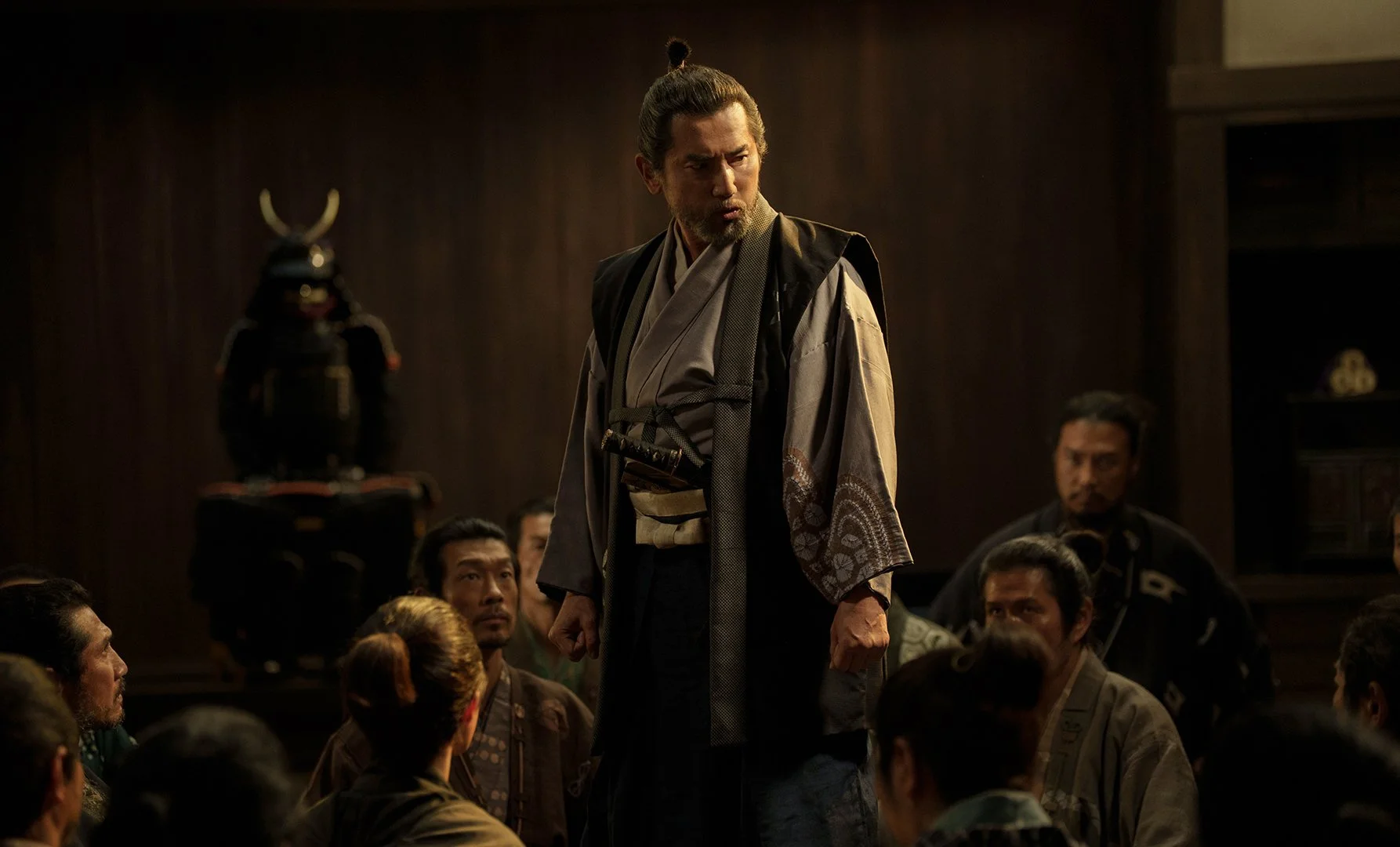
Set in 1578, during the Sengoku or Warring States Period, The Samurai and the Prisoner hinges almost solely on the socio-political context of the era in Japan, submerging itself in several real events and figures who shaped the era of instability before the country’s ultimate unity. At the fore of the film is Lord Araki Murashige (Masahiro Motoki), a respected veteran samurai who rules over Arioka Castle, set deep in the mountains of the Settsu province. When Murashige decides to rebel against the crushing control of encroaching warlord Oda Nobunaga (a mostly unseen Bando Shingo), his tenants and warriors alike doubt his judgment, a distrust further concretized by the strange events that unfold within the castle’s walls and the violent raids that happen just beyond them during the ten months that follow.
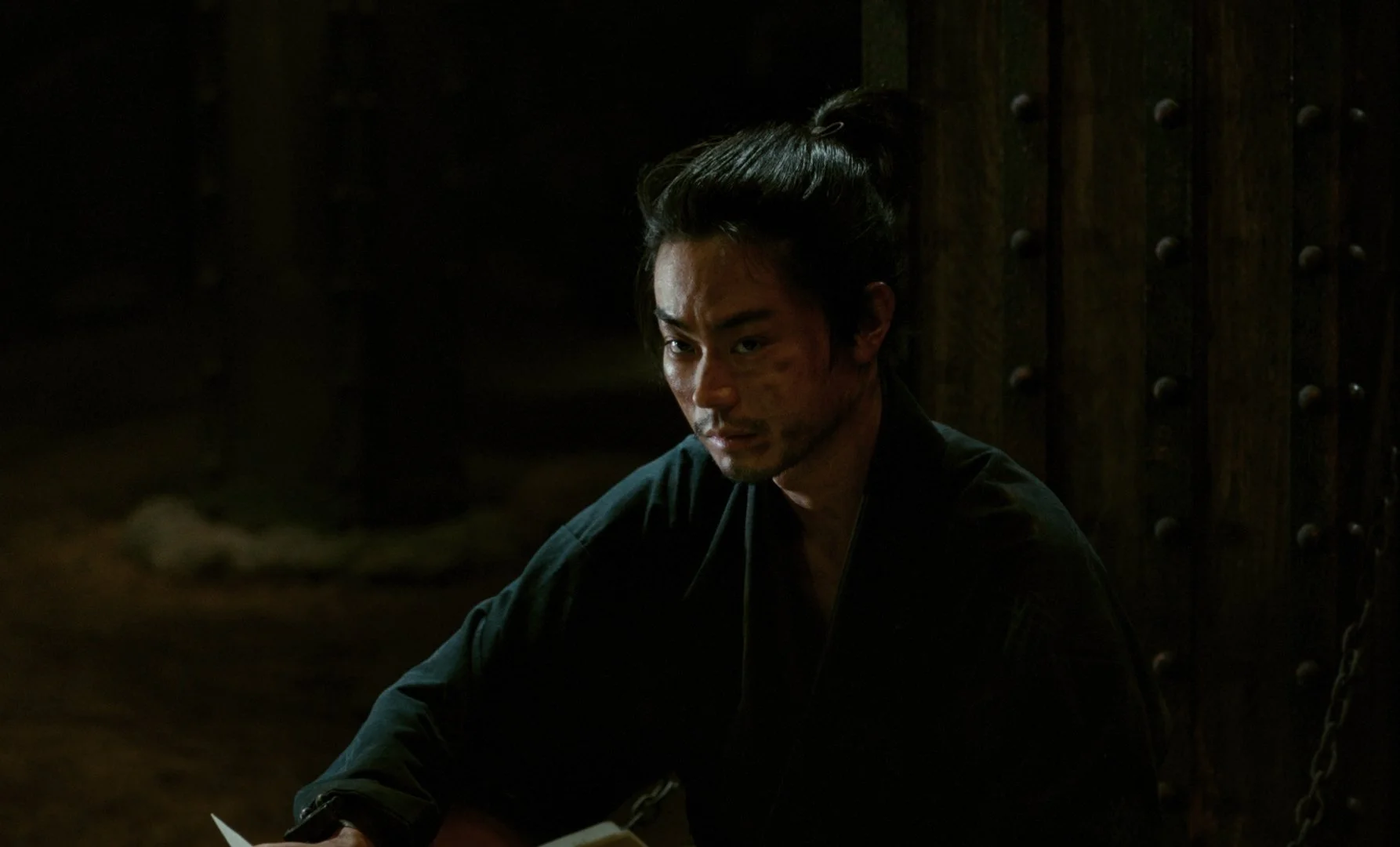
The riddles commence when Murashige imprisons one of the intermediary delegates sent by Oda to Arioka Castle, Kuroda Kanbei (Maskaki Suda, who starred in Cloud). Kanbei and others are surprised by the incarceration, when, according to Samurai Law, he should have been honorably beheaded. This confounding procedure on Murashige’s part seemingly lays the path for more chaos, which materializes as four strange and inexplicable events that further shake Murashige’s loyalists, marked by broken teapots, lethal lightning strikes, and misplaced severed heads, all of which increasingly alienate Murashige from his supporters and his own convictions as a leader. Murashige eventually finds an unlikely ally in Kanbei, chained within the fortress's dungeons, whose sharp intelligence and perception eventually become Murashige’s most powerful asset as his power comes under more acute threat.
Janus Films
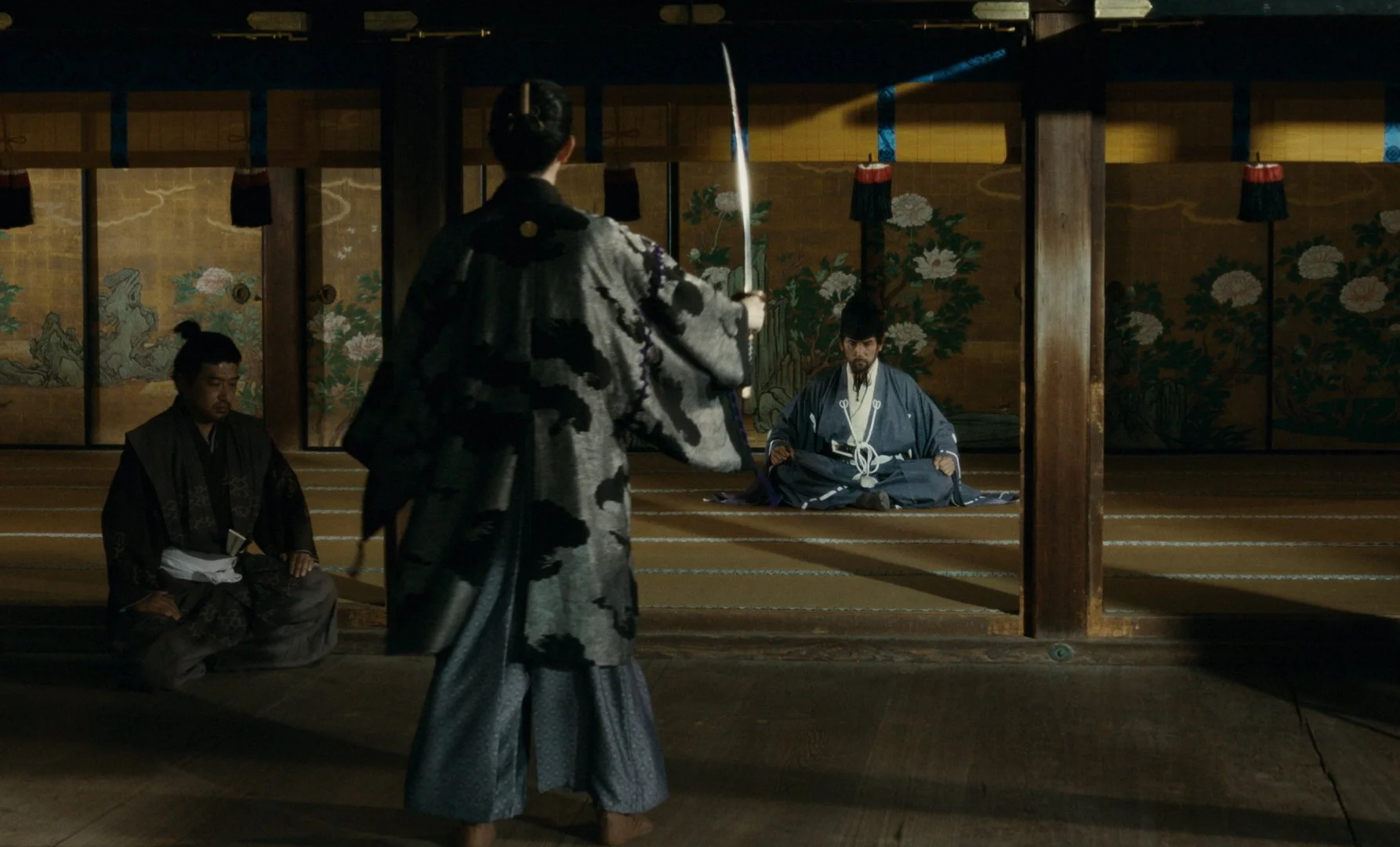
While much of Kurosawa’s filmography is distinguished by an uncanny fixation with the modern mechanisms that poison society, The Samurai and the Prisoner in many ways feels like the traditional jidaigeki movies that put Japanese cinema on the map, drawing on elements from celebrated works including Seven Samurai and Kwaidan, not only through its nested story, a common narrative technique of the genre, but also its precise and elegant aesethetic construction that evokes a long forgotten time. Sengoku period details and the well-defined boundaries of the castle never feel like a hindrance to the director and his creative team’s collaboration, despite being centuries removed from the standard and ultra-modern visual language of his other works. Shot by cinematographer Yasuyuki Sasaki, every image showcases an appreciation for the history behind it, from tatame-matted rooms to ornate kimono patterns, all seemingly lit with natural sources that further expresses their authenticity.
Repositioning from its consequential historical framework and onto the movie’s duo of central characters, The Samurai and the Prisoner will likely feel much more familiar to Kurosawa devotees. Murashige begins at the near pinnacle of regional influence, only to descend into a mentality of rising impotism and estrangement as his decision-making faces the scrutiny of his underlings, observing his destruction as a consequence of his cumulative actions, much like the complex protagonists of the director’s other films. This downward spiral is reinforced through the conviction of Motoki’s impressive performance, which creates an identical arc. Suda’s turn as Kanbei intriguingly counters Murashige’s collapse, despite being the person imprisoned. With an evasive charisma somewhat reminiscent of Mamiya from Cure, Kanbei’s influence rises as he becomes Murashige’s valued confidant and advisor, making the audience ultimately question the true nature of their power dynamic when the dust finally settles.
Although Oda’s warriors increasingly threaten to breach the high walls of Arioka, the immaterial troubles that progressively preoccupy Murashige’s mind prove much more ominous as The Samurai and the Prisoner unhurriedly traverses its nearly three-hour runtime. The validity of Samurai Law in the physical world returns again and again as the movie faces its unique conundrums, as does the question of divine intervention, both concepts Murashige seems reluctant to confront until his situation almost necessitates it, the latter idea being pressed upon him by his wife Chiyoho (Yuriko Yoshitaka) and her Buddhist dogma. These unseen forces that eventually lead Murashige’s psyche possess near-menacing qualities through their deep unknowns, aligning with the transcendental horrors explored in Kurosawa’s other films.
Janus Films
In all truthfulness, for many viewers, The Samurai and the Prisoner will require a heightened level of concentration in comparison to Kurosawa’s more kinetic and engrossing works. Set nearly half a millennium ago,the movie tenaciously commemorates a time of great transformation for Japan, but one full of important political players and movements that might take a cursory Google search to fully grasp, particularly for audiences in the Western world. Nevertheless, The Samurai and the Prisoner, its impressively-wrought period setting,and its clever narrative construction could prove favored among fans of Japanese history and avid jidaigeki fans alike.
4/5
Japan | 2026 | 147 minutes | Color | Japanese with English subtitles | 1.66: 1 Aspect Ratio
‘The Samurai and the Prisoner’ world premiered in the Cannes Premiere section at the 2026 Cannes Film Festival. The movie begins its U.S. theatrical release on Friday, July 31, courtesy of Janus Films. Click here to find showtimes near you.