
‘The Mysterious Gaze of the Flamingo’ Review: Chile’s Oscar Hopeful Is a Touching Queer Western
Altered Innocence
It is 1982, and a mysterious illness has descended upon a dusty one-horse mining town in the remote deserts of Northern Chile, where the community's male constituents blame the trans women operating the local cantina for spreading this malady through their hypnotic stares. This is the offbeat framework set up by Diego Céspedes for his Cannes-winning first feature, The Mysterious Gaze of the Flamingo. An unconventional coming-of-age story with splashes of Western tropes and queer compassion to spare, The Mysterious Gaze of the Flamingo proves to be an assured debut from Céspedes.
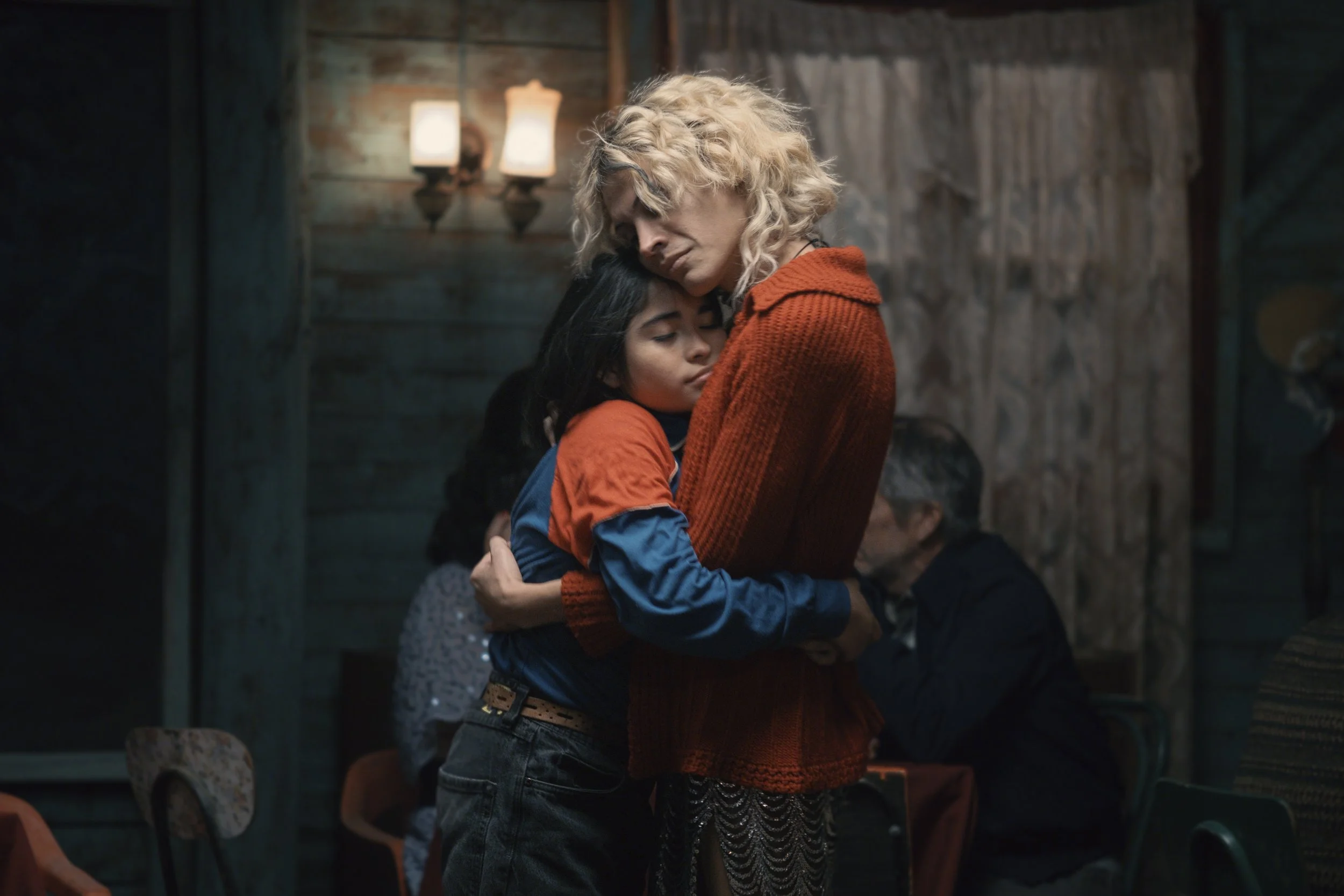
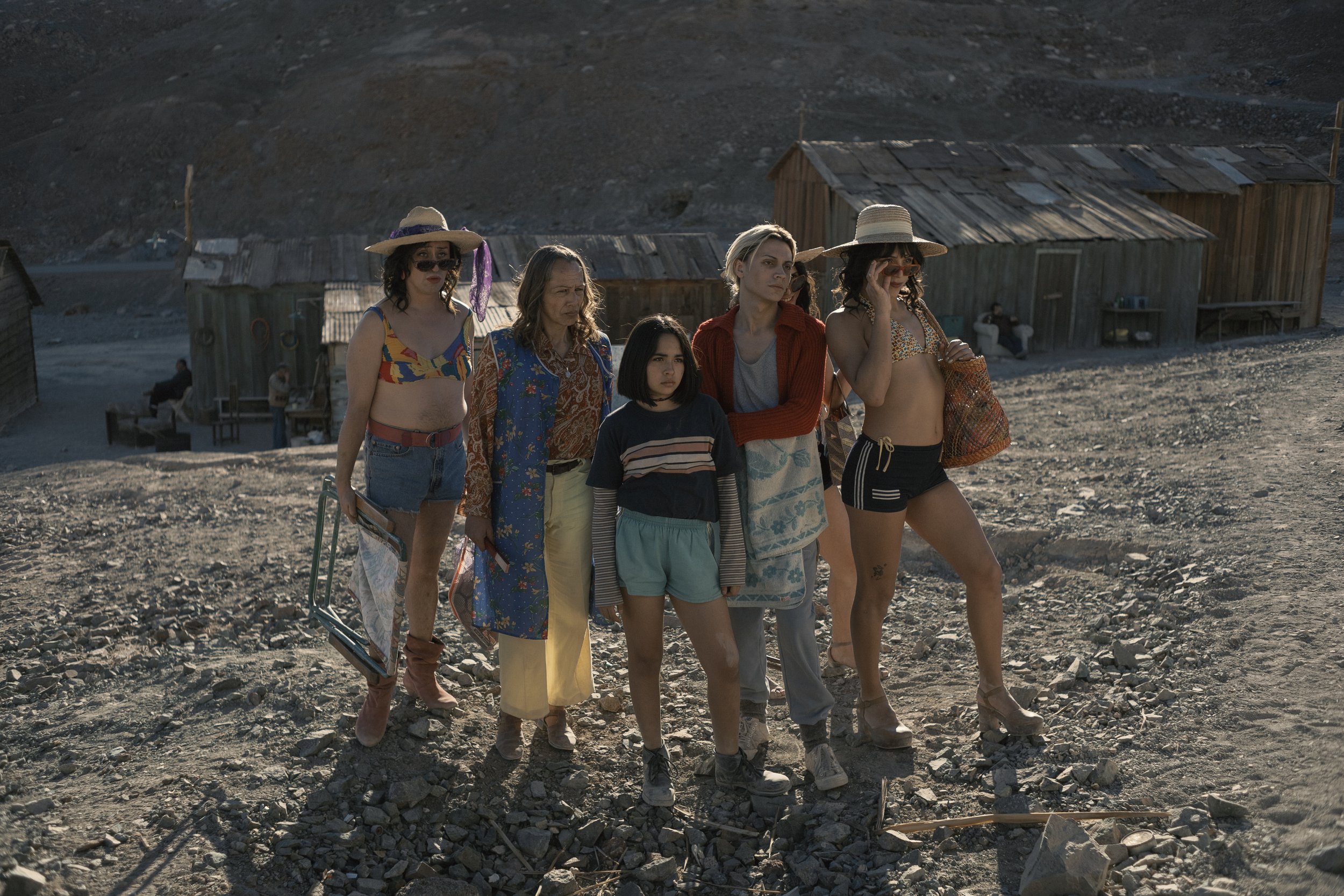
In her first acting role, Tamara Cortés stars as Lidia, an eleven-year-old orphan abandoned as an infant on the doorstep of a ramshackle cabaret bar that serves as the only watering hole in a gone-to-seed mining settlement. The bar is run by a chosen family of trans women, including the forthcoming matriarch Boa (Paula Dinamarca) and ailing Flamingo (Matías Catalán), who has always considered Lidia her flesh-and-blood daughter. While Lidia and her quirky household enjoy a life of love, laughter, and music within the security of the cantina, the local miners see the trans women as visions of otherness, oscillating between violent contempt and uncontrollable attraction toward them.
One night, despite her worsening health, Flamingo decides to put on one of her signature cabaret performances, enrapturing the miners who stare on with deep fascination. Suddenly bursting through the bar’s entrance as though it were the swinging doors of a saloon is Flamingo’s toxic on-again, off-again lover, Yovani (Pedro Muñoz), interrupting the show with a violent outburst and desperate pleas for someone to “take this plague out of me!” Despite warnings from Boa and the rest of the sisters, Flamingo once again chooses to pursue a moonlit tryst with Yovani, a decision that will send shockwaves through her chosen family’s lives, most acutely: Lidia’s

Altered Innocence
As an “us” versus “them” narrative develops in the lead-up to its climactic Western showdown, The Mysterious Gaze of the Flamingo’s most powerful thematic element becomes its authentic depiction of queer connection. Drawing on the understandings of the community he is part of, Céspedes’ screenplay profits from the quippy banter of his largely trans cast, many of whom he has worked with previously or knows personally, imbuing the film with often comedic tones as characters like Flamingo and Piraña (Francisco Díaz) lovingly grill one another. The film has a special understanding of the imagination with which many LGBTQIA+ people use to cope with the world’s hardships, showcased through the emphasis on clothes that Flamingo and her sisters wear, the songs they sing, the fantasies they create, all mechanisms of expression that aid them in handling the increasingly lonesome conditions of their lives in the desert.
Set during the height of Pinochet’s regime, The Mysterious Gaze of the Flamingo maintains an intriguing dialogue with Chile’s historical marginalization of the queer community, despite its desolate setting, which feels a million miles removed from the bustling metropolis of Santiago. Throughout the mining village, HIV/AIDs is exclusively spoken about with fear and disgust, as it was throughout most of the world during its emergence in the early 80s. This anxiety comes wrapped in stigma, leaving little empathy for Flamingo or the already fallen victims who have been affected by the virus. As the movie’s central representative of the younger generation, Lidia’s perspective offers much hope. While she may not understand the conditions of the plague (as the miners call it), her adolescent spirit holds no judgment, only loving concern for Flamingo and the others. Furthermore, Lidia singularly defies the self-loathing of the film’s queer characters, an element impressed upon them by a society that has forced them to the sidelines.
While the film’s use of non-actors and the moving story of found-family at its core make for an emotional viewing experience, The Mysterious Gaze of the Flamingo’s incorporation of Western elements adds significant interest, particularly in its engagement with the genre’s traditions of upholding gender conventions (which often champion toxic masculinity). Dramatic trumpets interrupt the score with a vibrancy that channels Ennio Morricone, sweeping desert panoramas harken the work of John Ford. These time-honored genre nods, combined with the movie’s criticisms of masculinity, create neo-Western associations that feel invigorating in the landscape of contemporary cinema. If The Mysterious Gaze of the Flamingo is a Western, it is one in which women are finally allowed to be the archetypal heroes.
Altered Innocence
Céspedes’ budding filmmaking sensibilities prove potent with The Mysterious Gaze of the Flamingo, a powerful work that honors the Queer community and its difficult history on the margins of mainstream society. Such narratives and characters are crucial to explore, especially as LGBTQ+ rights and freedoms continue to be contested worldwide. Recently announced as Chile’s submission for Best International Feature at the upcoming 98th Academy Awards, the film follows in the spiritual footsteps of 2017’s trans opera, A Fantastic Woman, the country’s only Oscar winner.
4/5
2025 | Chile, France, Germany, Spain, Belgium | 104 min | Spanish with English Subtitles
‘The Mysterious Gaze of the Flamingo’ world premiered at the 2025 Cannes Film Festival, where it won the Un Certain Regard award. The movie begins its U.S. theatrical release on Friday, December 12, courtesy of Altered Innocence. Click here for more information about ‘The Mysterious Gaze of the Flamingo.’