
‘Little Trouble Girls’ Review: Catholicism and Coming-of-Age Clash in Slovenia’s Oscar Entry for Best International Feature
Kino Lorber
Many comparisons can be drawn between movie-making and Catholicism, from the sensorial experiences they labor to convey to the innate dramaturgy built into the narratives they construct and dispatch to their loyal followers. While contemporary Catholicism in cinema made a monumental resurgence last year following the release of Edward Berger’s delightfully entertaining Conclave, another filmmaker, as of late, is also incorporating components of the religion into her work: Slovenia’s Urška Djukić.
Djukić’s directorial debut (which she also wrote), Little Trouble Girls, aptly concentrates on three life-altering days in the life of a sixteen-year-old Catholic schoolgirl, who struggles to disentangle the clashing feelings of a changing mind and body from her devout, up to this point, untested faith.
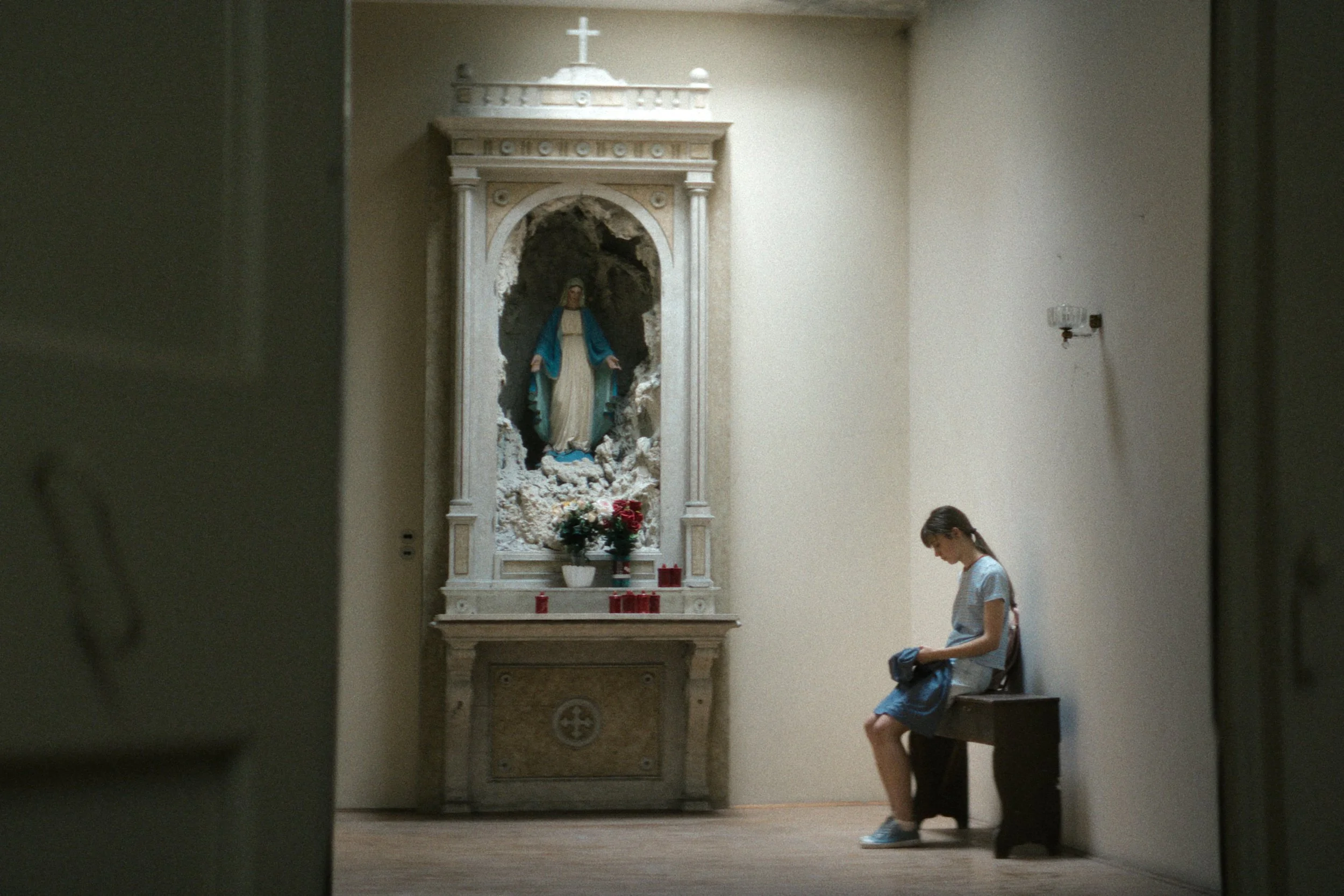
The movie opens with a striking composition (one of many), focusing on a piece of ancient artwork in which Christ’s wound looks glaringly yonic, setting the scene for the juxtaposing sensations to be explored. We then cut to a crowded school auditorium, where an ensemble of Catholic girls sings traditional Slovenian canticles with the voices of angels and the clandestine power of a million horses. The camera rests its gaze on one girl in particular: Lucija (Jara Sofija Ostan in her first credited role), a newcomer to the choir, whose wearied stare contains an essence far exceeding her sixteen years. Following the practice, Lucija catches Ana Maria’s (Mina Švajger) attention, a popular older student with effortless confidence that draws Lucija out of her shell.
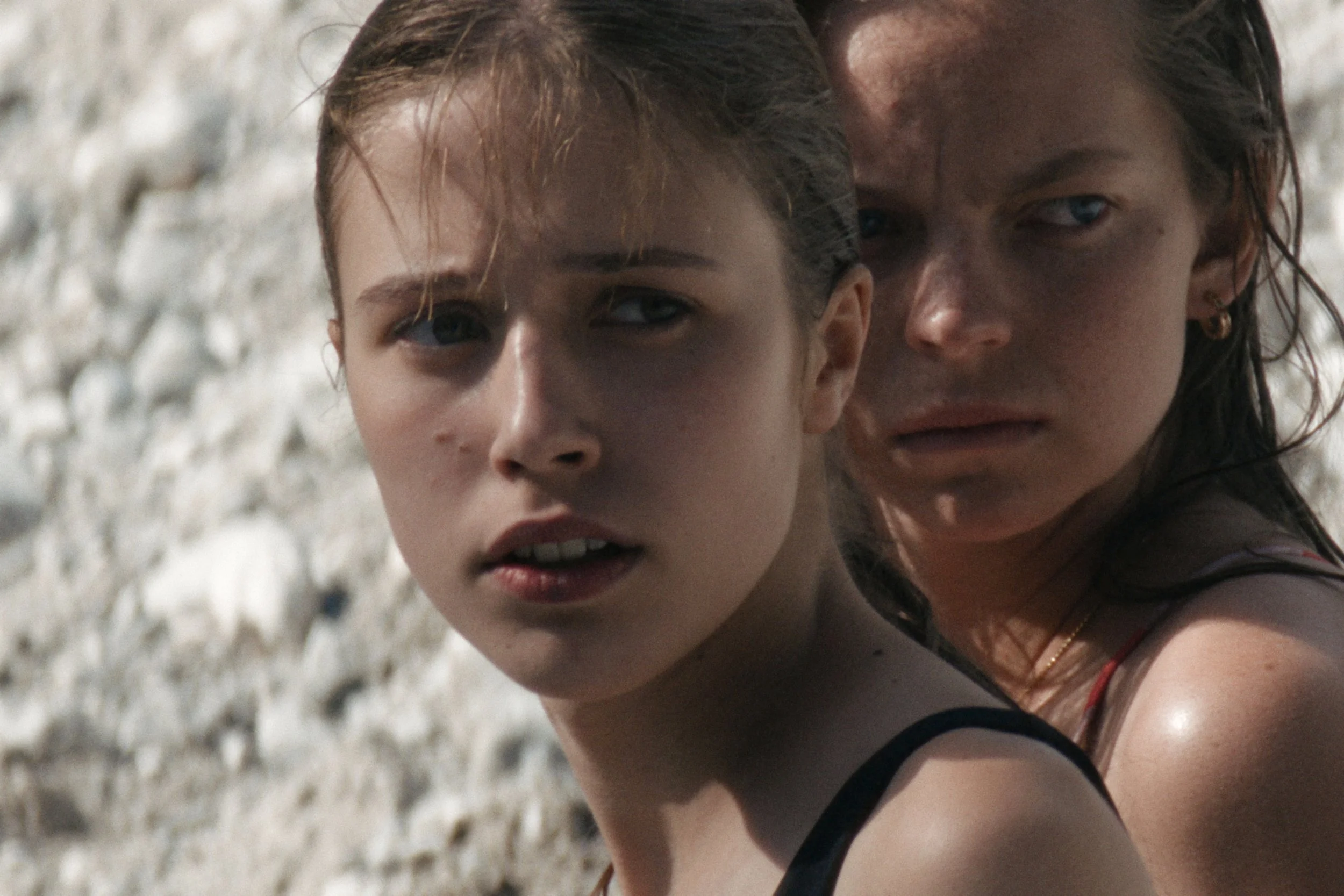
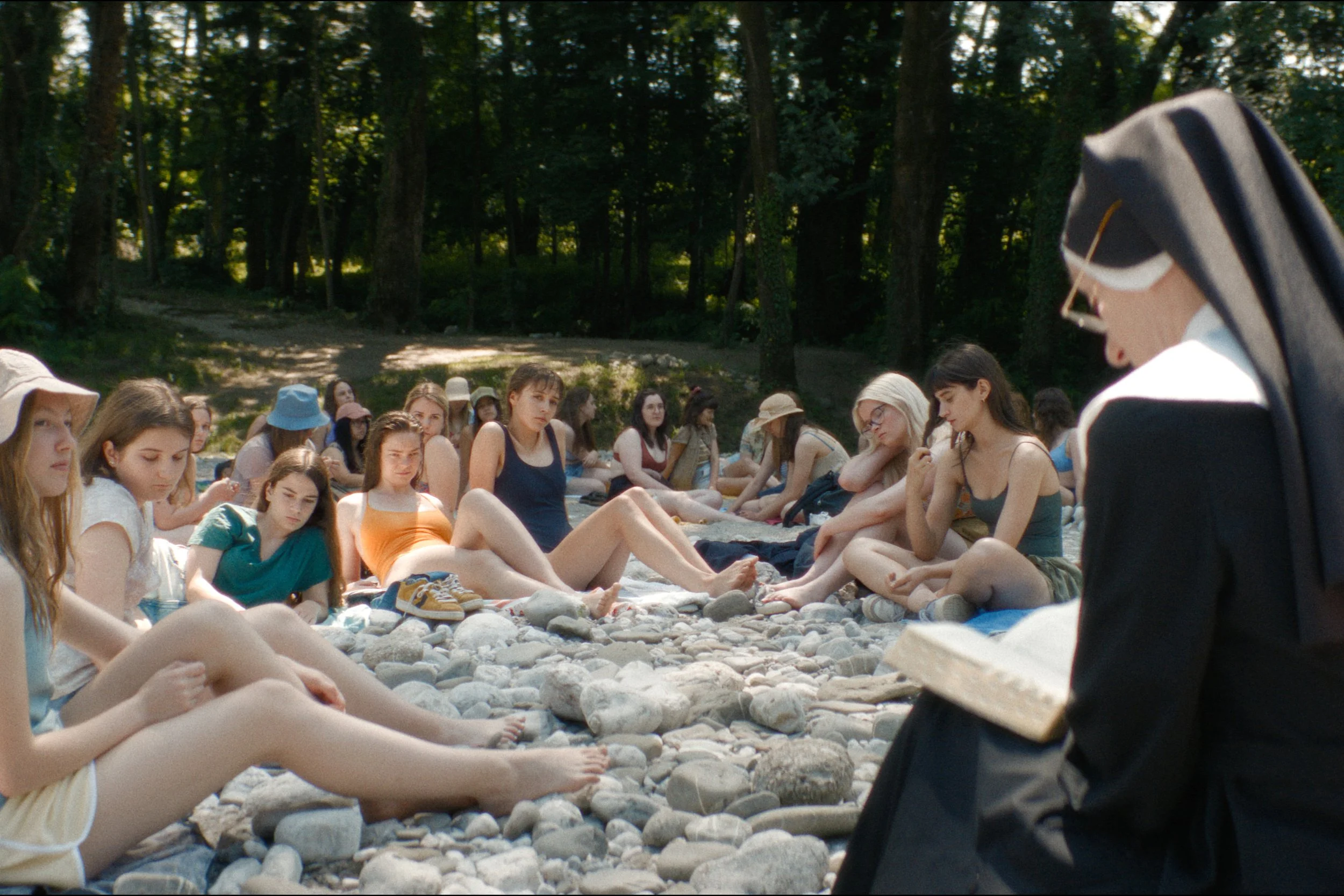
Lucija’s mother disapproves when she finds her donning red lipstick, which she feels young girls should not wear; nevertheless, she grants her daughter permission to accompany her choral group on a three-day intensive rehearsal at a secluded convent. Upon arrival at the stunning medieval cloister, shot with admirable naturalism by Lev Predan Kowarski, Lucija is quickly distracted by Ana Maria’s newfound fondness for her, a textbook dynamic in which the popular girl takes the quiet girl under her wing, but with a queering twist. More concerning for Lucija, however, is her magnetic attraction toward an enigmatic construction worker employed at the convent, clad with handsome dark features and everlasting sweatstains. As the days of rehearsal pass, Lucija is confronted with a myriad of unexplored feelings that shake her religious convictions to the core.
Kino Lorber
While much of Little Trouble Girls is grounded in a realism reflective of its youthful central characters’ developing perspectives, the film finds intriguing ways to incorporate symbolism, a foundational element of Catholicism and, by extension, most other religions. A narrow bridge leads Lucija and her choir into the archaic town that houses the convent, marking the narrative’s true initiation as she traverses it, away from childhood and into adulthood. Imagery of flowers, cracks in walls, and secret passages into cave systems denotes the hidden interiority, the entrances to the inner workings of spaces, parallelled with Lucija’s deepening introspection as she experiences wholly new sensations and labors to decipher them.
Undoubtedly drawing on her own adolescent experiences, Djukić’s screenplay powerfully reflects the tumultuous ventures of being a teenage girl, the highest highs that crumble into the lowest lows at the slightest nuance. The trajectory of Lucija’s friendship with Ana Maria and her posse often channels an austere, European version of Mean Girls, with Lucija’s rapidly ascending social status among her classmates swiftly destroyed as soon as she challenges the head honcho.
Despite the fragility of the schoolgirls’ strict hierarchy, Little Trouble Girls endeavors to embody all of the curiosity and blossoming passion of its characters with a certain respect typically unexplored in cinema. Late-night games of “Truth or Dare” and lessons in kissing feel especially grounded in reality, particularly for Western cultures, where the shame built around sexual exploration for teenagers is relegated to dark corners instead of being communicated as a normal part of growing up. The movie’s few adult characters offer little guidance as Lucija’s crisis of conscience begins to blaze (specifically her chorus singer, whose pipeline from goofy to boorish is exceptionally short), leaving her, like many teens, to figure out the answers for herself. As previously mentioned, whenever the choir of young women begins to sing, the film places a moving emphasis on the potency of youth within them, a force desperate to break free, with the chanting offering an unconscious release from the strictures of the religious circle they inhabit.
Thanks to their fruitful creative collaboration, Djukić and Ostan form Lucija’s character with an aching authenticity that speaks to the tumultuous headspace she faces during the choir retreat. After casting her from a large group of up-and-coming Slovenian actresses, Djukić reworked her screenplay around Ostan’s shy personality and the coltish physicality with which she carries her growing body and limbs. Ostan delicately embodies the innocence of her character, one whose entire judgment is dominated by fears of committing sin. This careful construction yields a hypnotic performance, drawing the audience closer to Lucija’s conflicted inner workings as a girl praying for the unspoken permission to enter womanhood, freed from the religious anxieties imposed on her throughout her life.
Kino Lorber
Through its exalted explorations of coming-of-age femininity, Djukić’s potent filmmaking sensibilities are on full display in Little Trouble Girls, by far one of the year’s standout feature debuts. Little Trouble Girls premiered earlier this year at the Berlinale as part of the festival’s Perspectives line-up, snagging the FIPRESCI prize before touring the world on the film festival circuit. The movie was recently announced as Slovenia’s entry for Best International Feature at the upcoming 98th Academy Awards, where it will compete to score the country’s first-ever nomination.
4.5/5
Slovenia, Italy, Croatia, Serbia | 2025 | 90 minutes | Slovenian with English subtitles
‘Little Trouble Girls’ begins its U.S. theatrical release on Friday, December 5, in New York City, before expanding nationwide in the following weeks, courtesy of Kino Lorber. Click here to find ‘Little Trouble Girls’ showtimes near you.