
‘Barrio Triste’ Review: Bad Bunny Collaborator STILLZ Shifts From Music Videos to Experimental Cinema
Film Movement
After shooting music videos for the likes of Rosalía and serving as Bad Bunny’s creative director, multidisciplinary artist STILLZ has ventured into feature filmmaking for the first time with Barrio Triste, which hits digital streaming outlets on Friday, October 9, after making the rounds on the film festival circuit in 2025. Informed by the Medellín neighborhood of the same name, where the director’s family once lived, Barrio Triste feels more akin to a psychedelic impression than a grounded portrait of the community’s disenchanted youth during one of its most troubling epochs.
The movie kicks off with a respectable news anchor reporting from the streets of 1987 Medellín, where residents have recently shared accounts of mysterious “lights descending from the sky” at night, accompanied by loud metallic bangs. Interrupting the reporter’s live segment, four young men jump him and steal the news crew’s video camera, all while the footage keeps rolling. Although some of them want to sell the camera and move on, the men hold on to it, and through this ever-shifting, unreliable perspective, Barrio Triste effectively captures a day in the life of these lost souls, including jewelry heists gone wrong, hardcore band practices, and, most head-scratchingly, alien abductions?
Film Movement
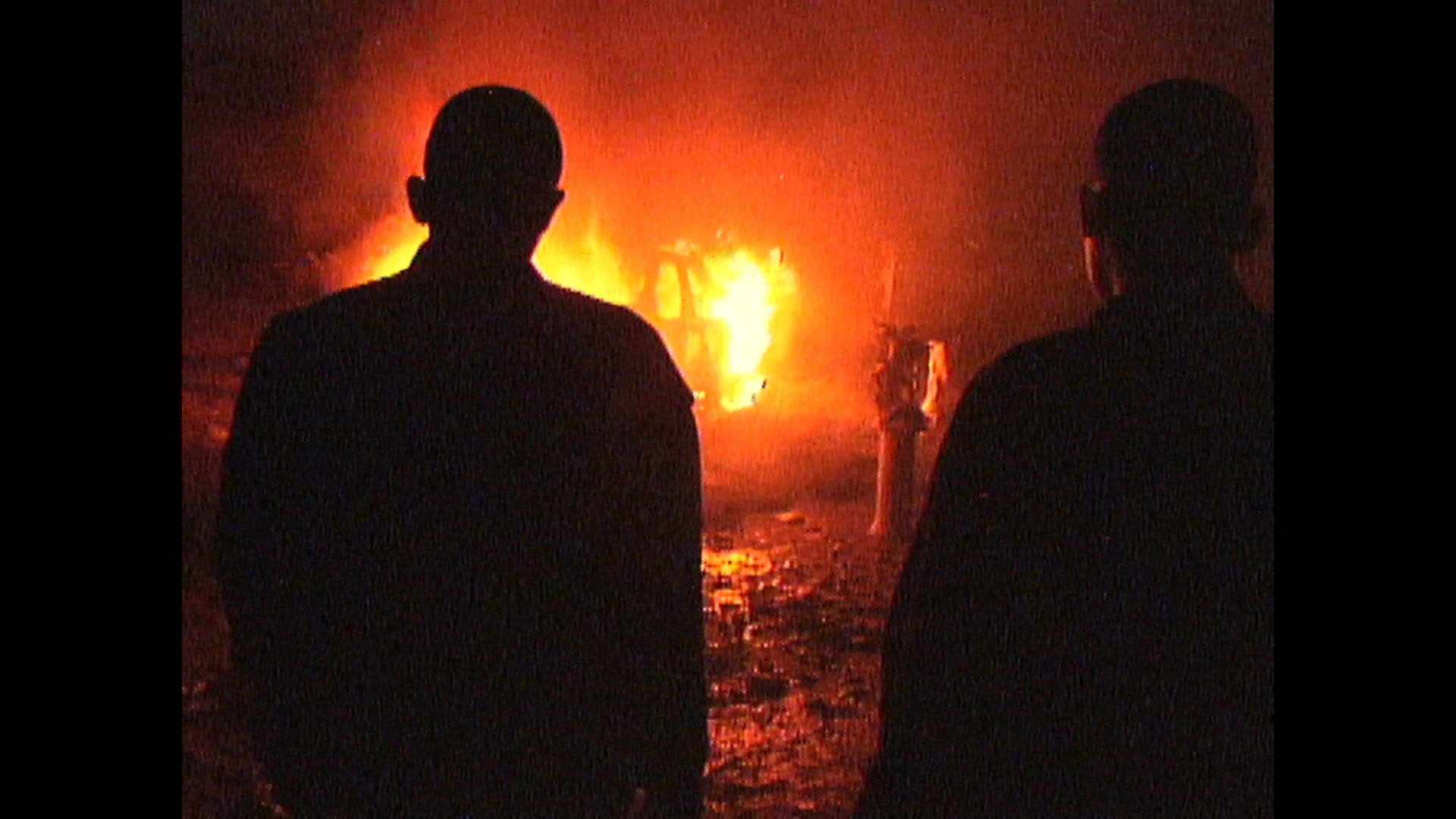
Barrio Triste lives up to the boundary-pushing bona fides of Harmony Korine’s EDGLRD, which co-produced the film. Its initial setup deceives with promises of a straightforward narrative premise before ultimately descending into a maelstrom of opaque yet at times hypnotic imagery, shot by STILLZ himself on a Betacam news camera from the 1980s. While the movie rather vexingly lacks a muscular sense of structural framework or character development, some of its sequences are undeniably striking through their gritty visual language and the atmosphere they create, notably an extended car scene in which the shaky handheld camera follows the quartet of central characters on a car ride from their rugged neighborhood in the hills down into the city’s more affluent areas.
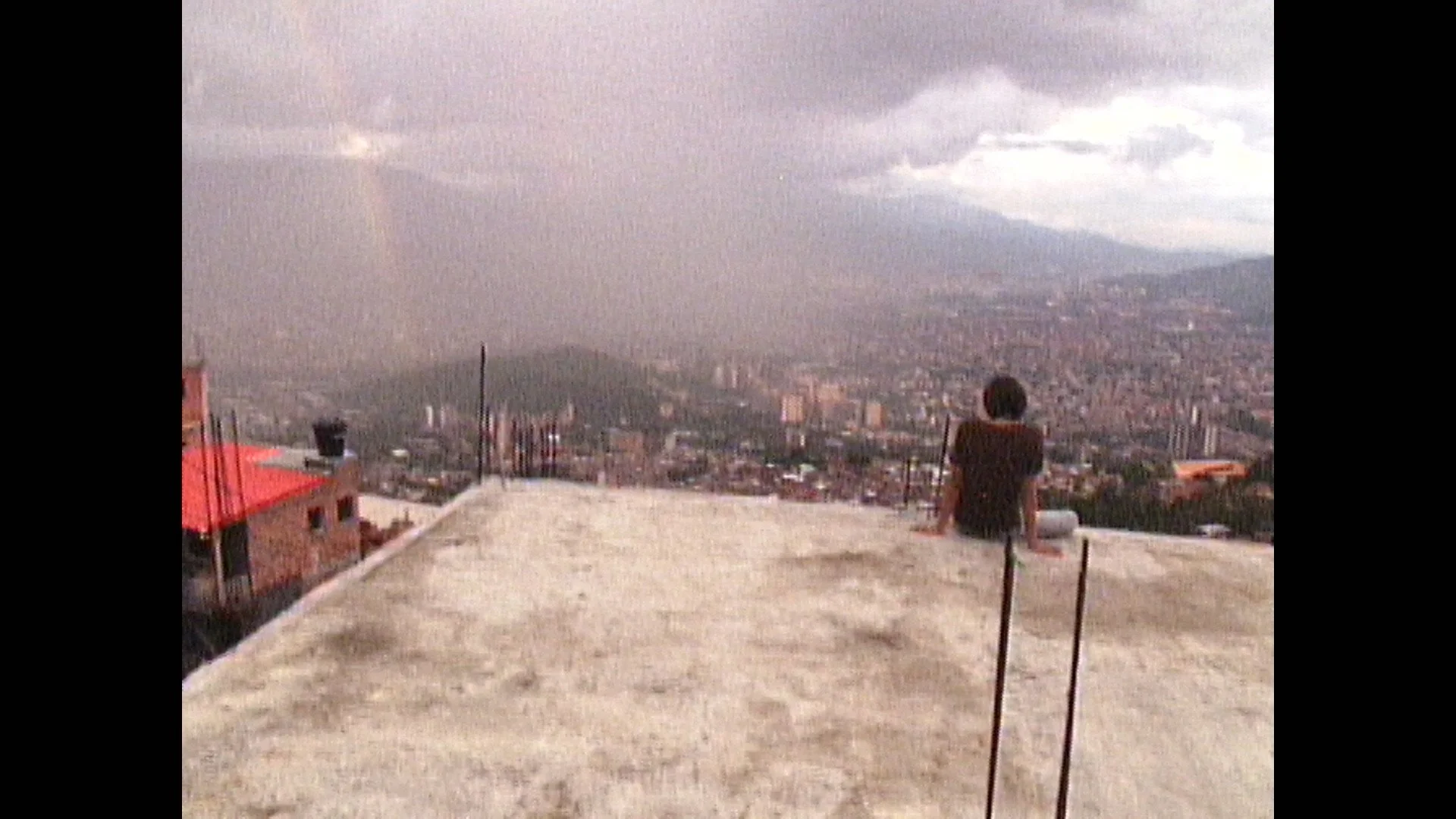
The filmmaker’s visuals-first approach effectively captures the displacement experienced by the figures it studies, particularly through its emphasis on the poverty-stricken neighborhood almost existing on a separate plane from the surrounding metropolis, which appears like a mirage in the distance, far below the mountaintop location of Barrio Triste, unreachable and unattainable for the young men who feel like they might never escape the conditions of their cruel environs.
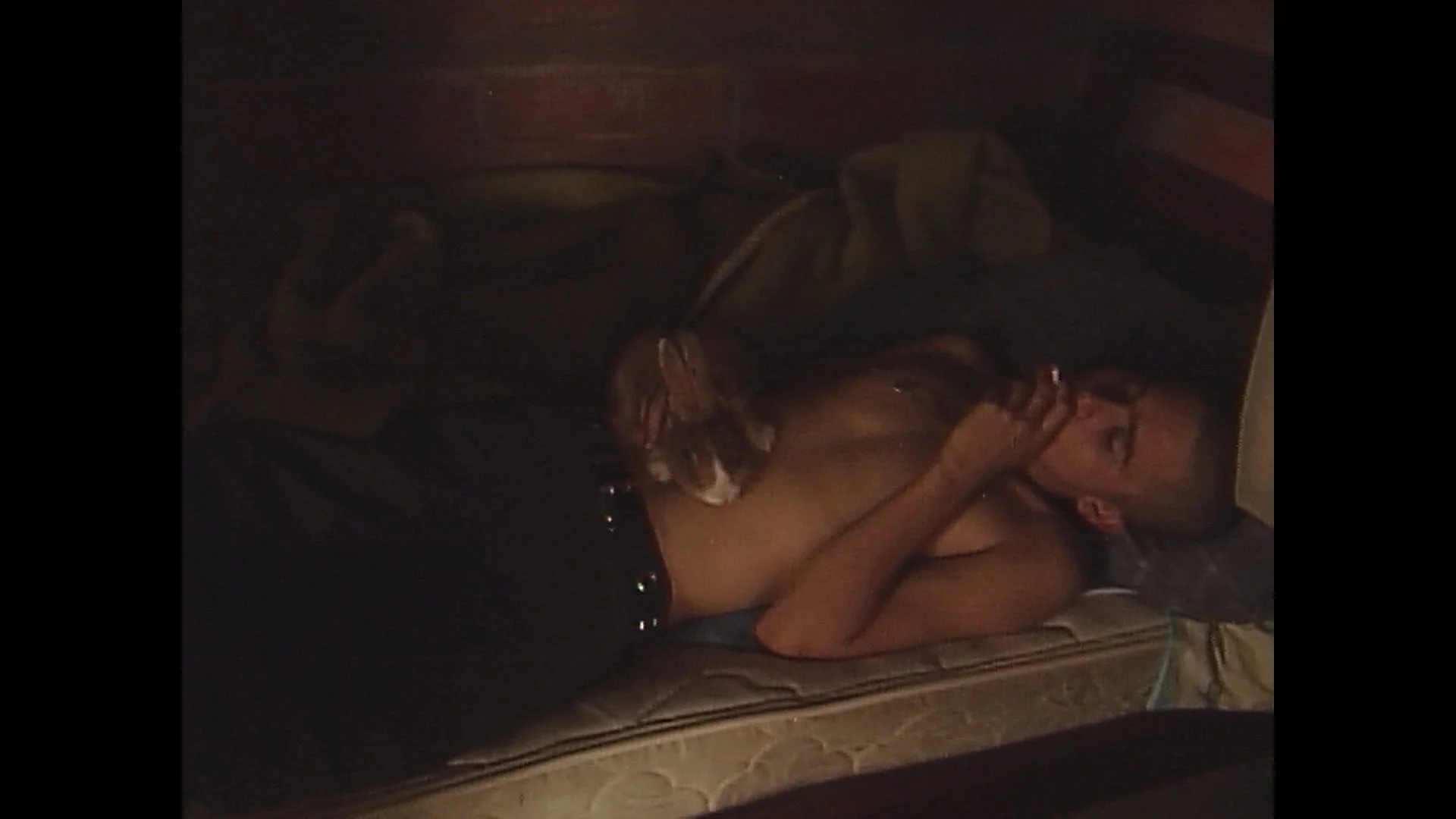
The film’s social context does much of its heavy lifting, especially as the mohawked, pierced hard-punk exteriors of its characters begin to melt away and expose their existential insecurities. In a cutaway to a confessional with one of the guys, he tells the camera, “When I lost my innocence, I lost all happiness.” With Barrio Triste’s specific period set during one of Colombia’s, specifically Medellín’s, most tumultuous times at the near peak of the drug-related corruption, it is transparently comprehensible to recognize the patterns and paths that have led these men into a life of criminality and grief for a secure future that may never come. Although the movie’s extraterrestrial twist comes out of left field when it finally arrives, it raises the question: will any of these abductees even be missed by the broken world they leave behind? While Medellín’s reputation and safety have skyrocketed in recent years, making it one of South America’s most desirable urban destinations, Barrio Triste reflects upon one of its lowest points in modern history with a frenetic, disorienting gaze, proving that distance in years does not necessarily provide the clarity for better understanding of a moment in time or history.
Film Movement
STILLZ’s ambitious feature debut offers several elements to appreciate, including an incredibly foreboding score by electronic artist Arca that propels the work forward whenever its lack of coherence threatens to derail it. This is clearly an artist who can make interesting work across many creative mediums, now presumably with the connections to bring projects to life on a major scale, should he feel compelled to. While Barrio Triste feels much less electrifying than its description initially promises, STILLZ still proves a visionary to keep an eye on.
3/5
‘Barrio Triste’ world-premiered at the 2025 Venice Film Festival. The movie will be available digitally in the United States on Friday, October 9, courtesy of Film Movement. Click here for more information about ‘Barrio Triste.’