
‘Revelations of Divine Love’ Review: Caroline Golum’s Latest Is a Handcrafted Ode to One of History’s Forgotten Heroines
Several Futures
Augustine of Hippo, Martin Luther, and John Calvin are just a few examples of men who have gone down in Christian history for the impact of their written word, but what about the women who have come to shape religion’s trajectory? As we know, they are all too often left out of the records, a remnant from Christianity’s ruling practices that shut women out from positions of authority or influence. For her sophomore feature, Revelations of Divine Love, Caroline Golum heads back to the late Middle Ages to explore the life and work of Julian of Norwich, an English Catholic anchoress whose history-making work (from which the film draws its title) is the oldest known English-language book written by a woman.
Pushed to the boundaries between Earth and Heaven during a mysterious three-day illness that manifested itself in psychedelic visits from the Lord himself, Julian of Norwich dedicated the rest of her days to intense prayer and an ascetic lifestyle, a devotion which garnered the woman much admiration from the community around her, an era of English history faced with great change in the face of social unrest and farspreading plague. While little is known of Julian’s life outside of her crowning written work, which did not become widespread until centuries after her death, Revelations of Divine Love works to revere her influential spirit with a singular style unto itself, culminating in an unconventional microbudget biopic that flourishes with creative spirit.
Several Futures
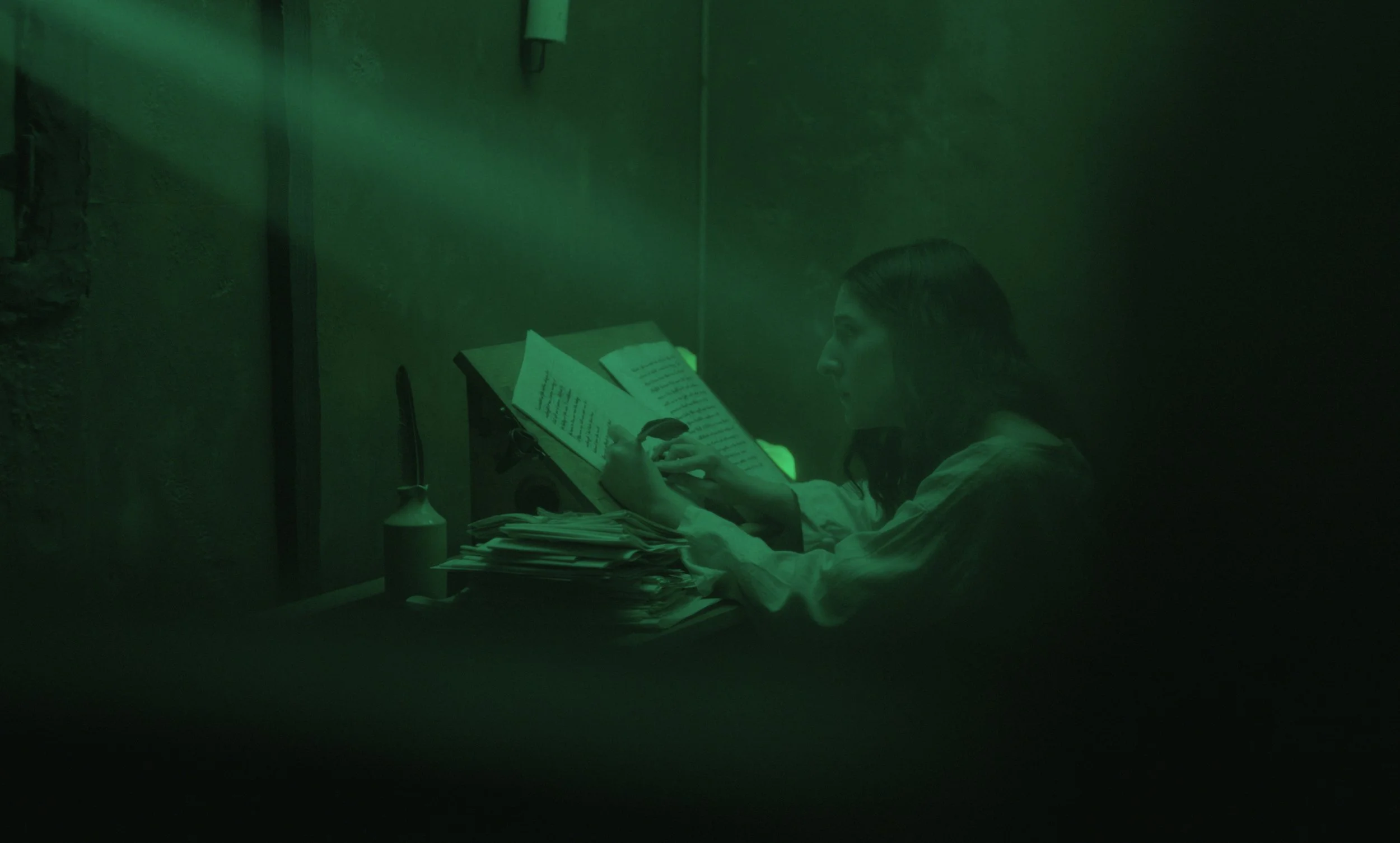
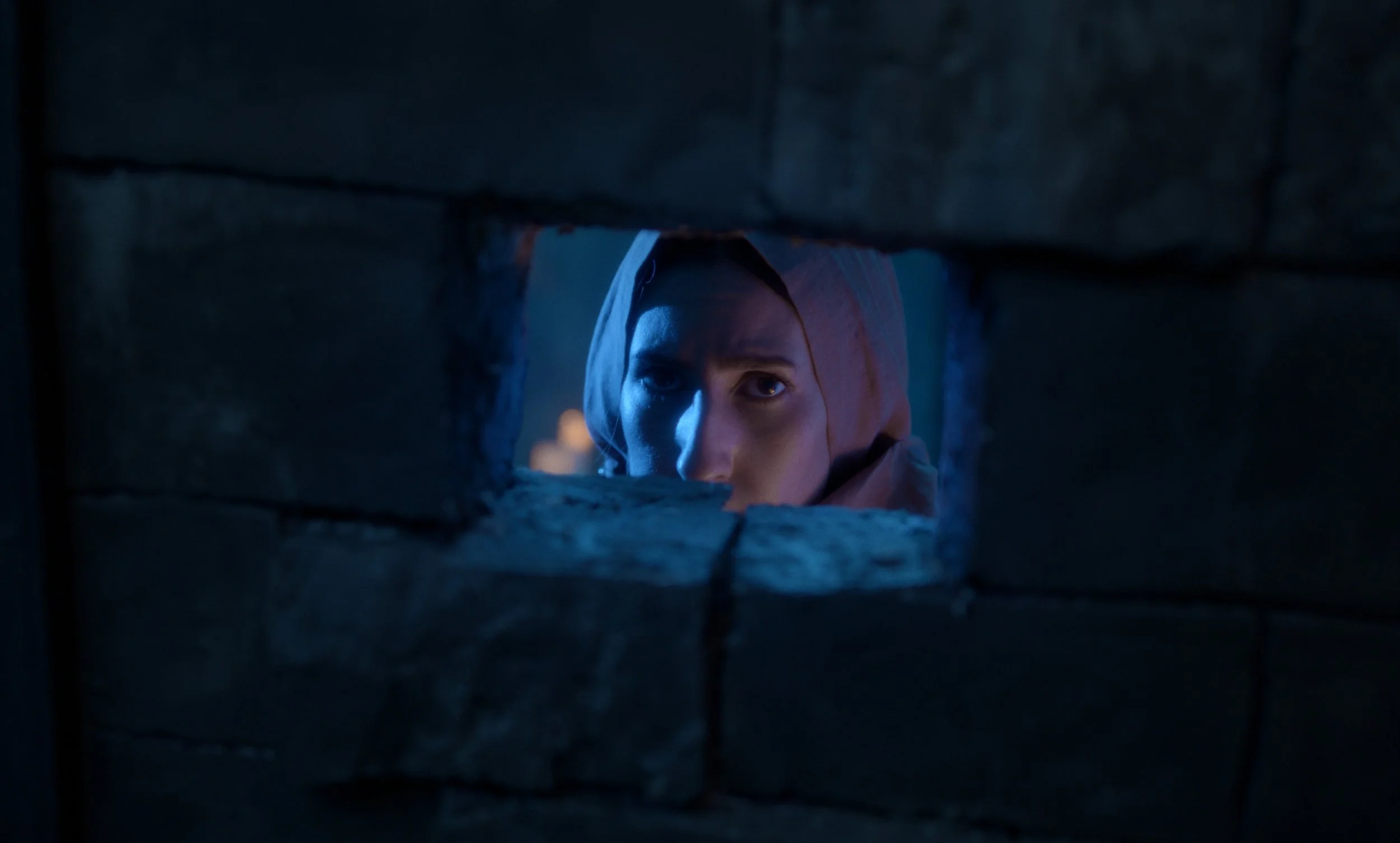
Julian (Tessa Strain in her first credited role) is thirty and still living at home with her mother when she is overcome by a malady that will change her life, marked in the film by the onset of vivid red lights reminiscent of Suspiria. Over the following seventy-two hours, Christ shows her the way to purity through the teachings of charity, righteousness, and most importantly, love. As Julian’s words put it, “Love is our Lord’s meaning.” The anchoress then chooses to enter a life of total solitude, immured behind the wall of a small, dirt-floored room at a local church, where she takes her meals through a tiny window. With days split between protracted prayer and laboring over her writings, which chronicle the astonishing visions Jesus bestowed upon her, Julian believes she has found her path to total righteousness within her humble quarters, which she vows never to leave. Despite her new, closed-off existence, Julian cannot ignore the instability of the world around her. Neighbors begin to call on her as her piety becomes well-known, both to supporters and naysayers alike. As Norwich slowly becomes engulfed by the chaos spreading across England like wildfire, Julian begins to understand the overarching teachings of her godly visions.
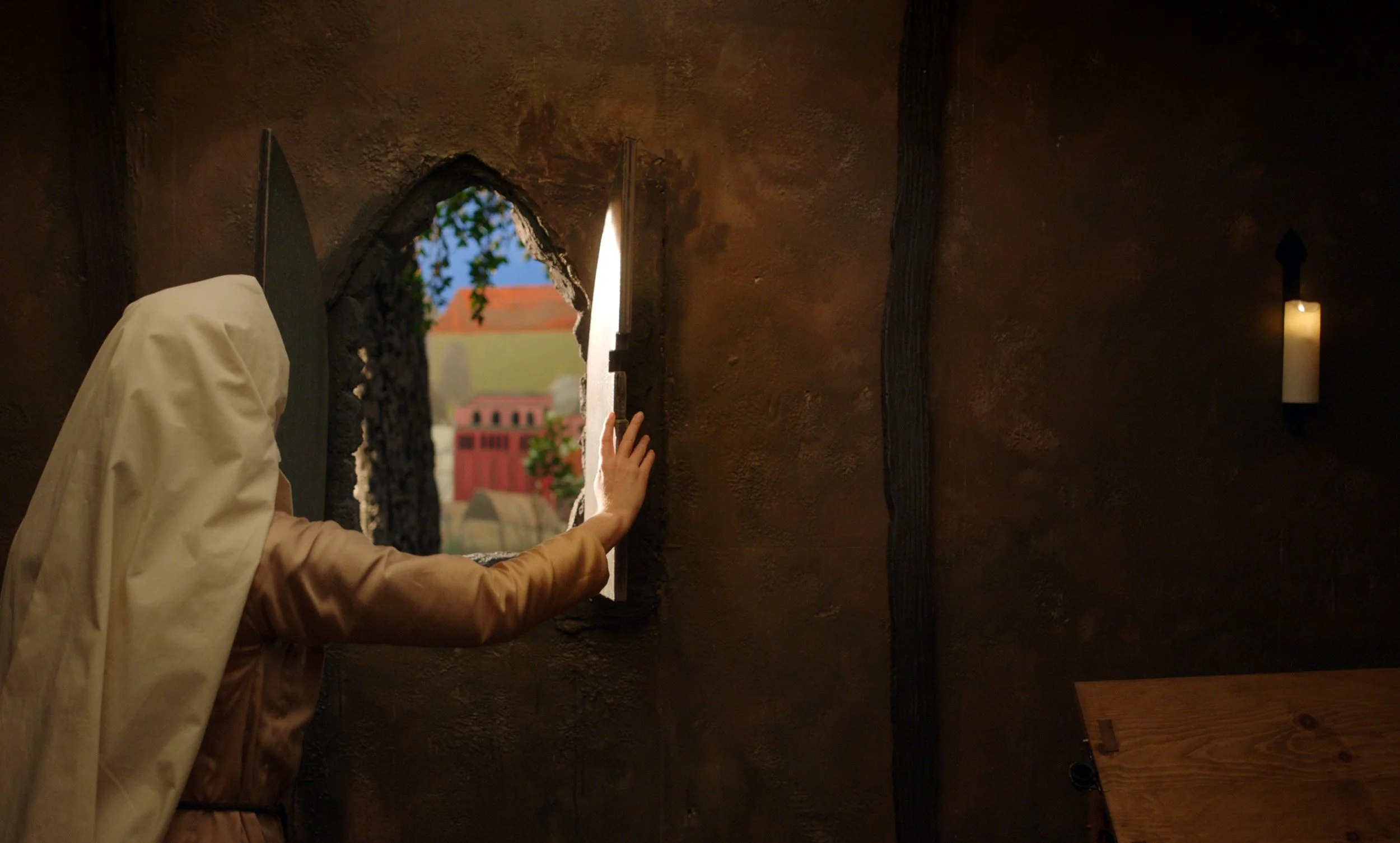
Shot and produced on a shoestring budget in Queens, New York, Revelations of Divine Love stretches its dollar as far as possible, culminating in a final product that is creatively ingenious and interesting at every turn. While recent Oscar-winner Hamnet had millions to work with in creating a film set in a similar period, Golum and her team had a tiny fraction of the former’s budget but worked within those limitations to recreate a long-gone era with an idiosyncrasy unmatched in recent cinema. Unable to recreate massive sets that transport the audience to Medieval Norwich, exterior shots of the cityscape are mimicked with a miniature model, rather akin to a charming vintage Christmas village. The film’s visual language is bolstered by practical effects, including fog machines and dramatic lighting cues, with a particularly effective example occurring when the Bubonic Plague descends upon Norwich like a green miasmic cloud. Shot by cinematographer Gabe Elder (Familiar Touch), the movie’s atmospheric look and feel never lose steam, despite its particularly restrictive shooting locations, far from the bucolic landscapes of 14th-century England.
Through its excavation of Julian’s historical and spiritual account, Revelations of Divine Love brings its female subjects to the forefront, an effort that most conventional Christian scholars have long bypassed. While Julian is ultimately most consoled by her newfound connection to Christ, her earthly alliances lie mainly with the women who shape her inner circle: her dear mother (Mary Jo Mecca) and her faithful maid and best friend, Sarah (Isabel Pask). This narrative effort on Golum’s part (she co-wrote the script with Laurence Bond) not only recenters history from a male perspective but also incorporates Julian’s text, which understood the power of Jesus as that of a mother: a nurturing, homely love, a matriarchal energy conveyed by Julian to her growing supporters as the film progresses.
Several Futures
With careful crafting, both narratively and visually, Revelations of Divine Love charmingly imbues the 650-year-old spirit of its historical heroine, an influential figure of holiness whom I had never come across until seeing this film. Created far from the AI-slop algorithms that dominate the social media feeds of the masses, the film is a lovely reminder of how much can be made with not a lot, reconfirming that original stories and perspectives do not have to be backed by large pockets to find appreciative audiences.
4/5
‘Revelations of Divine Love’ begins its U.S. theatrical release on Friday, March 27, at New York City’s Anthology Film Archives, courtesy of the movie’s distributor, Several Futures. Click here for showtimes near you.