
‘Living the Land’ Review: An Exquisite Ode to Life and Tradition in Rural China
Film Movement
Much of Chinese culture was coordinated by an agrarian way of life before the country’s Communist Party moved toward a free-market economy in the latter half of the 20th century, marking a radical shift away from the farming practices that had sustained China and its people for many thousands of years. For his sophomore feature, Living the Land (Sheng Xi Zhi Di), Chinese filmmaker Huo Meng dissects this transitional period in a rural community of his home province, Henan, which has historically been one of China’s most important agricultural regions.
While Living the Land concentrates on four generations of a farming family in a tiny rural village still largely dictated by tradition, the filmmaker chooses to focus most profoundly on the perspective of one of the clan’s youngest members, a ten-year-old boy, through whom the audience experiences the slowness of time that occurs during childhood when processing new information into lasting memories. Roughly spanning a year in the town, Living the Land richly examines this period of great metamorphosis and its lasting effects on the young protagonist and his family.
It is the spring of 1991, and ten-year-old Chuang (Wang Shang) lives in the bucolic hamlet of Bawangtai, where it takes a village to raise him, more specifically, multiple generations of the Li family, his maternal lineage, who have worked the surrounding fertile lands for many years. Although cherished by his relatives for his intellectual and emotional brilliance, Chuang still feels like something of an outsider in Bawangtai: he does not share the same last name with most of his kin, and his parents live and work nearly a thousand miles south in the rapidly industrializing city of Shenzen, where they seek economic prospects as their former agricultural practices become obsolete. As the third of his parent’s children, Chuang is unable to live with them under the restrictions of China’s one-child policy; instead, he is predominantly brought up by his caring Aunt Xiuying (Zhang Chuwen) and nonagenarian great-grandmother (Zhang Yanrong), who still makes her every opinion known loud and clear, despite her advanced years.
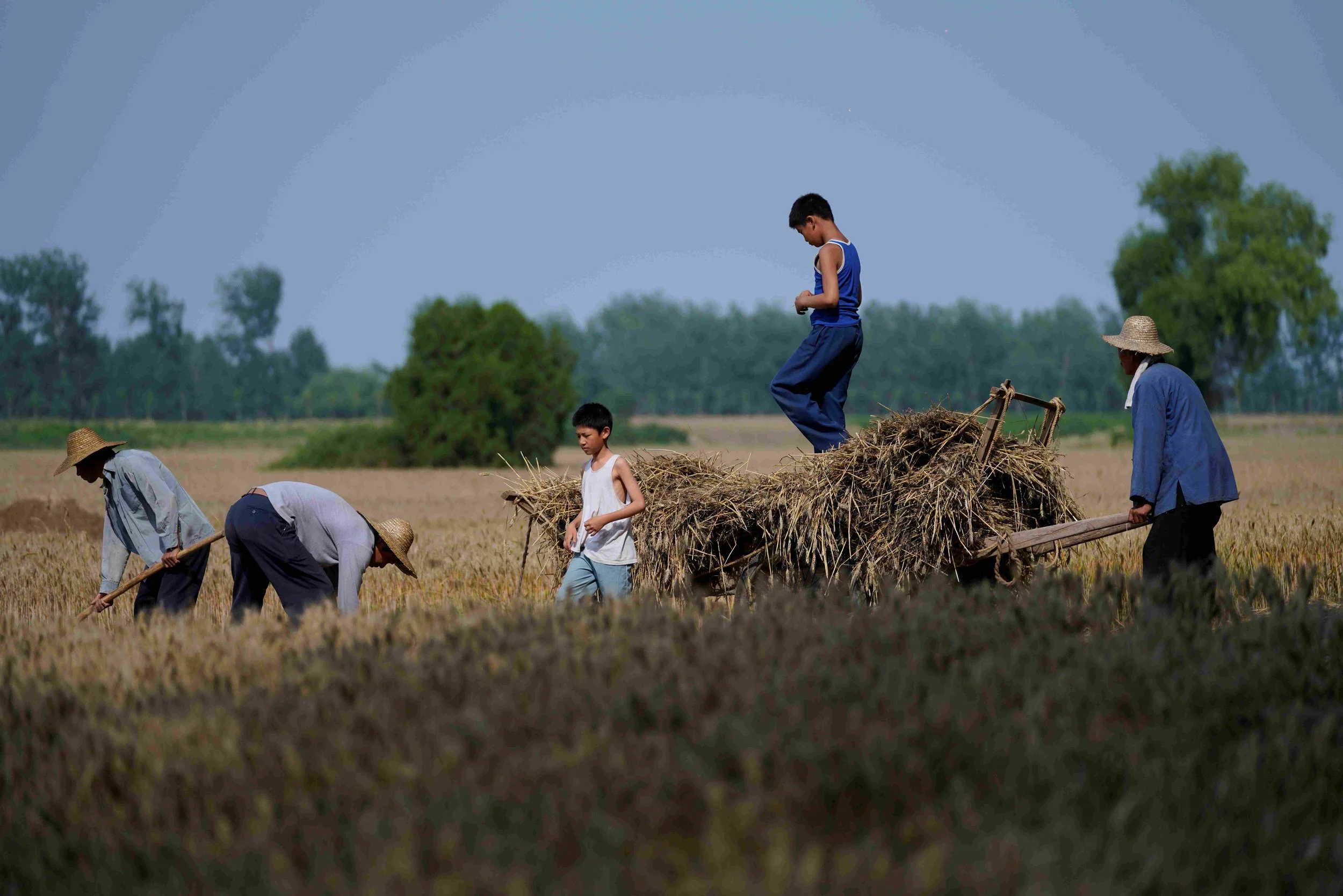
As the harvest season approaches, Chuang and his cousins freely roam the wind-rippled wheat fields where the older generations toil uneasily, their entire livelihood resting on the crop yields. The serenities of springtime soon give way to the tempests of high summer, and, for possibly the first time, Chuang begins to notice the tensions that strangle the community. A hotshot Communist Party worker assigned to monitor Bawangtai (through state-mandated pregnancy exams) has taken a fancy to Aunt Xiuying, who is being pressured to marry and escape the increasingly desperate situation of the village. Funeral custom reforms are promoted through television commercials, signaling the leadership’s growing push to replace time-honored values that still prevail in places like Bawangtai, where traditions are so deeply rooted that they still follow the lunar calendar. As Living the Land patiently traverses its meticulous circular narrative, it becomes clear that Chuang serves as a silent witness to a time-honored lifestyle on the verge of extinction.
Film Movement
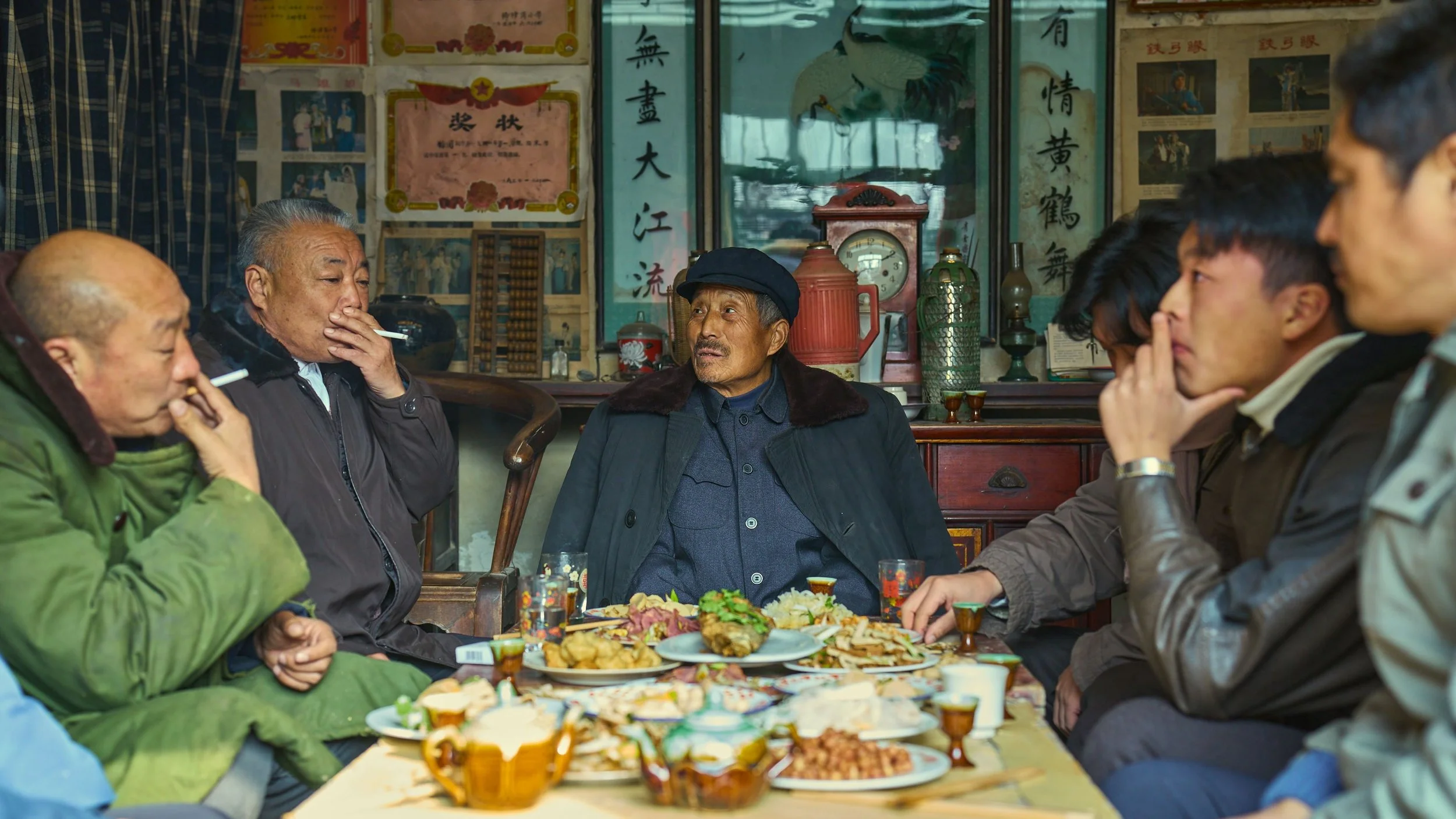
Awarded the Silver Bear for Best Director at the 2025 Berlin Film Festival, where Living the Land world premiered, Meng’s thoughtful precision through his latest work is reflective of its highly personal content, quoting the director from the end credits, “This film is dedicated to my childhood. The dear ones in my hometown.” Meng’s familiarity with the region is showcased at every turn of the movie, and its screenplay, which he also penned, from his use of mainly non-professional local actors to the Henan dialect they speak.
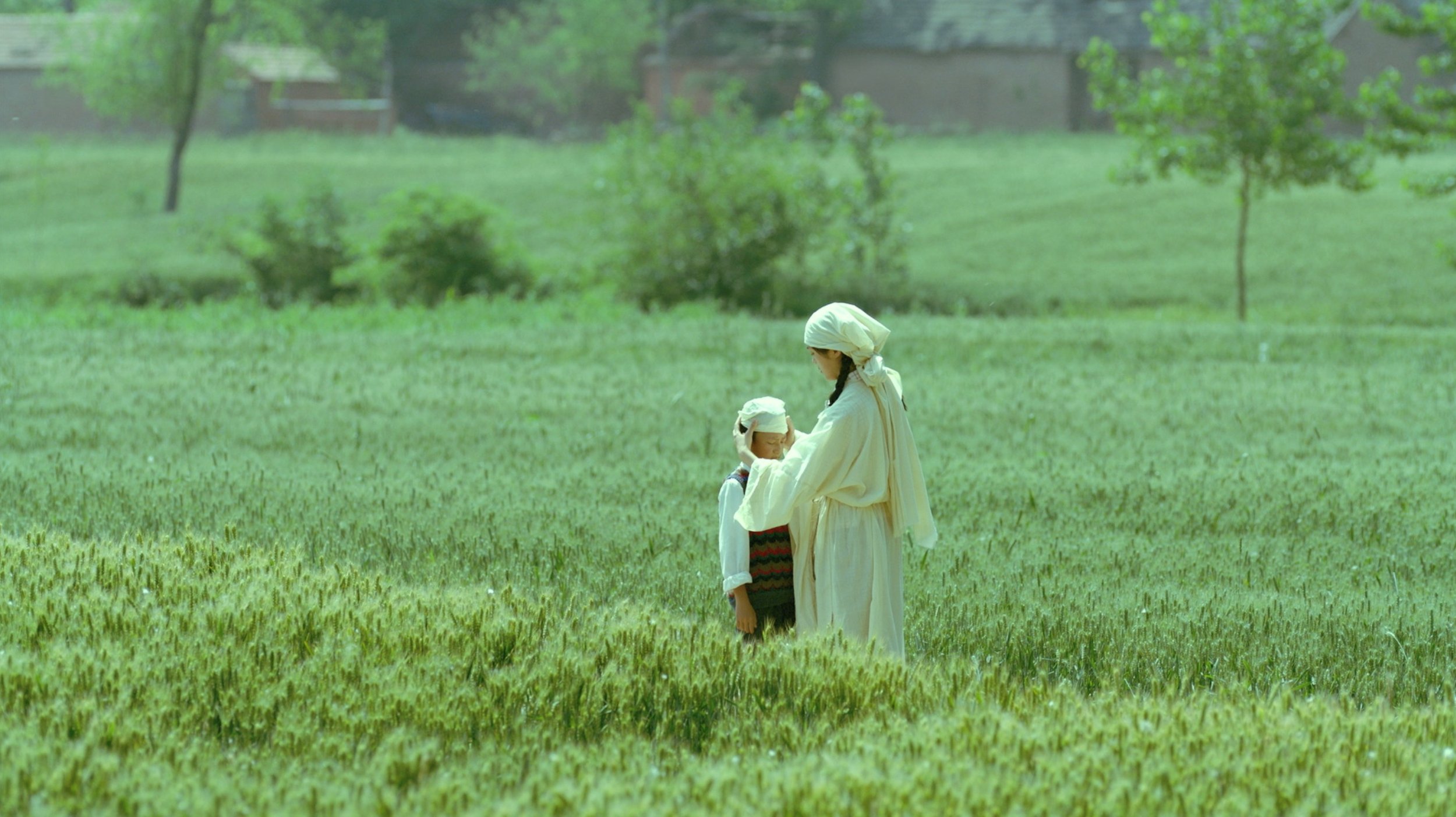
In Meng’s first collaboration with cinematographer Guo Daming, the two create a visual language that honors the banalities of peasant life: the vast verdant fields are shot with elegant magnificence, grueling domestic tasks are showcased in detailed tableaus as honorable duties, and in an early moment of the film, when the audience first enters Bawangtai, its dirt streets and roughly cobbled brick buildings are introduced with a roving long shot that accentuates every corner of the village, a place richly storied by its inhabitants despite its economic disparity. While the film’s careful narrative sinks deeper into the existential concerns that threaten the town, its look and atmosphere echo the changing seasons, moving from the richly saturated hues of the natural world in spring and summer to the steely cold death of winter.
While women’s empowerment was traditionally undermined by China’s patriarchal social systems, Living the Land challenges such conventions through the nuanced female perspectives it foregrounds, seemingly nodding to the influences that most shaped the filmmaker’s childhood. Chuang’s aunt, Xuiying, although quite reserved, fiercely cares for her family, often internalizing her own pain, both physical and emotional, to protect those closest to her. In the absence of her older sister, Chuang’s mother, Xuiying, steps in to raise the young boy almost as her own, a bond that proves most difficult for the two to break when she virtually sacrifices her own happiness to ensure the security of the Li family. When her wedding day arrives, Xuiying faces it as a criminal sentencing rather than the happiest moment of her life. Living the Land hits many mournful beats throughout its runtime, but Xuiying’s plight feels the most tragic. Almost Xuiying’s exact opposite in demeanor, from the chain smoking to the prolific cursing, Great Grannie’s account is similarly difficult, having overcome many years of hardship and suffering throughout her long life and its many cataclysms. Even in their absence, both of these unlikely heroines serve as the guiding forces in Chuang’s developing semblance of self.
While Mao Zedong’s initial Communist ideology may have aimed to empower the peasant class, it ultimately failed so badly that it pushed China toward the industrialization adopted by the Western world and the policies that cripple the livelihood of the central community in Living the Land. Even in the film’s 1990s setting, these people were so inextricably tied to their natural surroundings that they could not see a future without them. Unable to transition from the only life they have ever known, many of the adult figures in the film seem to put all of their hopes in Chuang excelling at his studies, because an education may be his only ticket out of an existence on the verge of expiration, particularly as the government moves in a direction that leaves them with even less infrastructural support.
Film Movement
Despite its emotionally charged chronology of peasant hardship as seen through the eyes of a young boy, Living the Land feels like a work with such immense reverence for the people and stories that inspired it, an increasingly crucial vision as rural communities worldwide are challenged by the unceasing development of technology and the demise of traditional practices. Captivating in its unhurried observations of rural life, Living the Land almost feels like a precursor to the inevitabilities of Wang Bing’s monumental Youth Trilogy, another poignant criticism of the industrialization that has swept through China over the past fifty years like wildfire and consumed many of its traditional ways of living.
5/5
People’s Republic of China | 2025 | 132 Minutes | Chinese - Henan Dialect - with English Subtitles
‘Living the Land’ begins its U.S. theatrical release on Friday, April 3, courtesy of Film Movement. Click here to find showtimes near you.