
Greenwich Entertainment
Every time I fill up my car, especially now as gas prices continue to fluctuate amid the U.S.-Israel war on Iran, I cannot help but think back to the time in my life when oil prices were the highest: my early teenage years during the Great Recession. One of the most dire periods in the history of globalized economics, the Great Recession has been cinematically depicted in myriad ways, from big-screen blockbusters such as The Big Short (2015) to microbudget works from the arthouse scene like Wendy and Lucy (2008).
For his feature directorial debut, Omaha, Cole Webley follows the more “Reichardtian” approach of the latter example, culminating in an affecting road film that captures complex corners of American family life with an impressionistic feel.
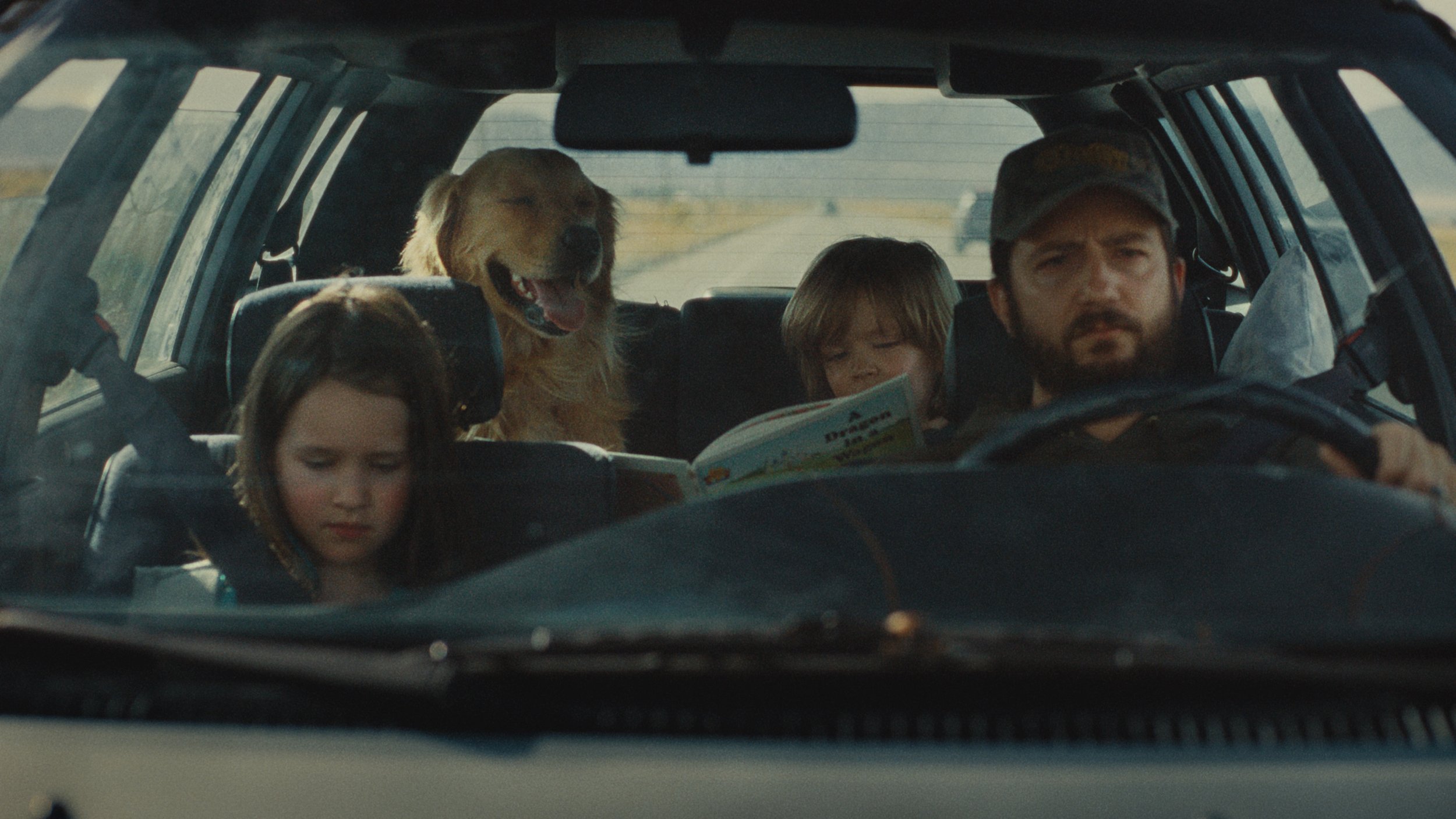
The film begins just as dawn breaks over a modest suburban home, not in Nebraska, but in Utah. The nearly ten-year-old Elle (Australian actress Molly Belle Wright) is woken by her father, played by possibly career-best John Magaro, and told to get in the car: “We’re going on a trip.” Instructed to bring along her prized possessions, Elle grabs a photo of her mother.
Elle heads to the run-down family sedan, where her father has already packed up little brother Charlie (Wyatt Solis) and their trusty Golden Retriever, Rex. Upon a final glance at the house, notices are plastered across the front door (eviction? foreclosure?), and a police officer enters as soon as the family exits. The quartet hit the road, but the children have no idea where their father is taking them.
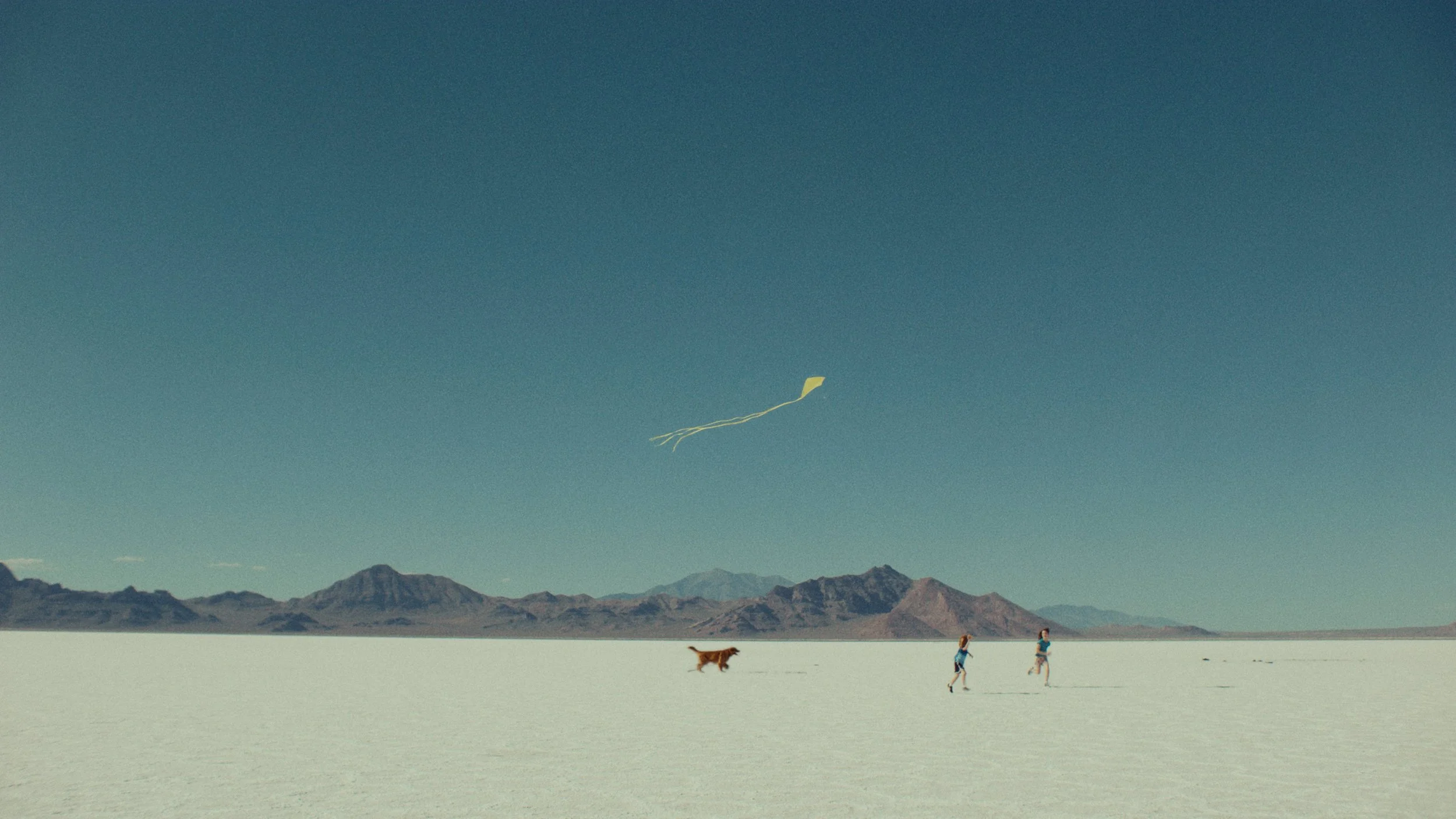
The suburbs quickly give way to the desert vistas of the West, and their expedition soon feels like a makeshift adventure for any late 2000s kid, replete with night swims at motel pools between gulps of Bug Juice, all captured with a serene verve by first-time cinematographer Paul Meyers. This familial bliss peaks in a particularly sublime sequence in which Elle teaches her brother to fly a kite on a vast salt flat, a juncture in the film that tugs at the heartstrings through its visual and emotional levity.
Despite finally learning from their father that their destination is Omaha, Nebraska, Elle develops increasing anxiety as their travels continue, possibly absorbing the uneasy energy their father is trying to hide. With each stop, his wallet grows slimmer; he skips meals so his children do not go hungry; he looks as if he is at war with himself as he desperately tries to keep his kids content; only when Omaha reveals its final act do we learn the origin of his battle.
Greenwich Entertainment
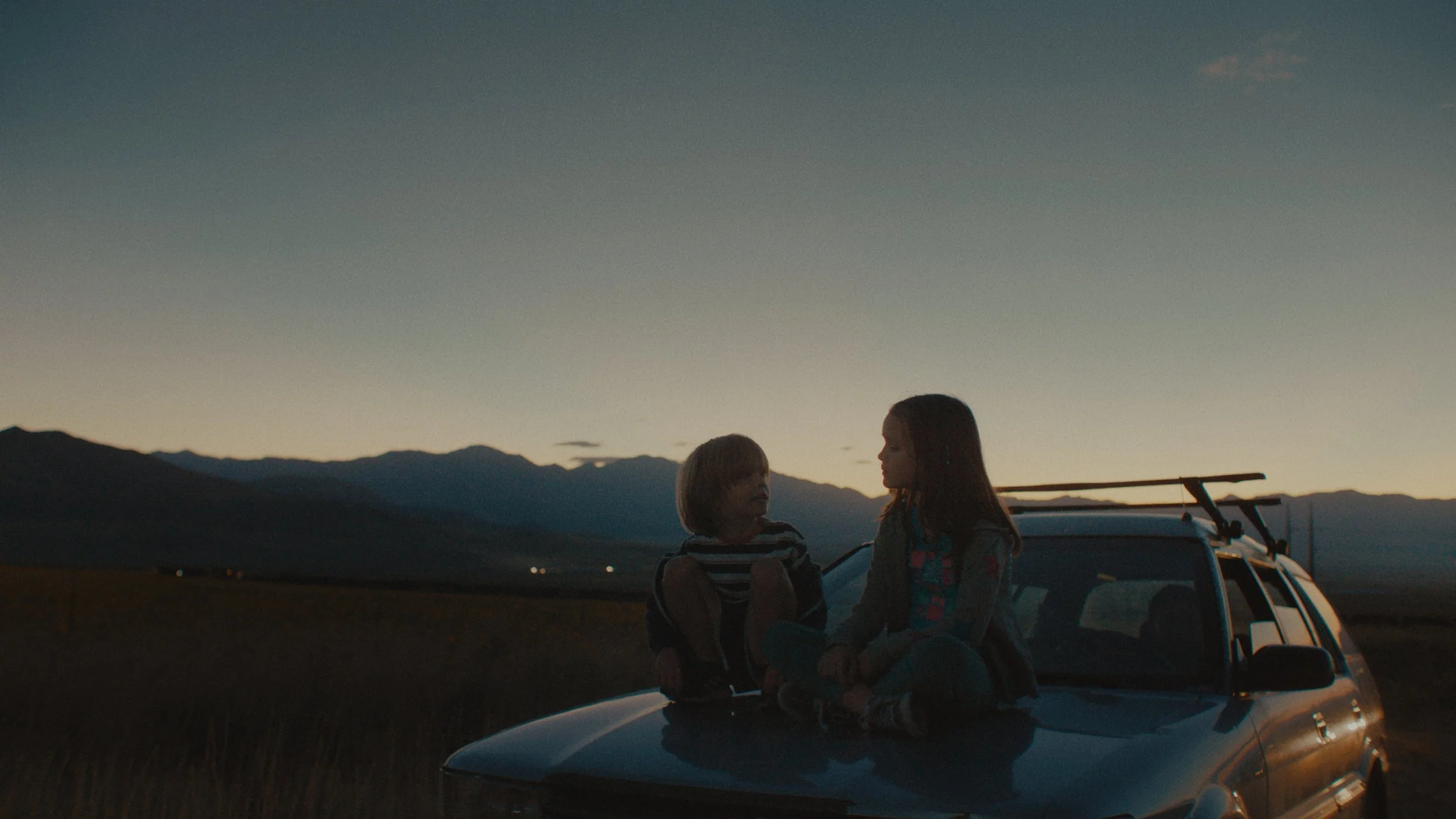
Having entered adolescence around the time of the film’s 2008 setting, the stripped-back nature of Omaha struck rather nostalgic chords for me, capturing a simpler time devoid of touchscreens and social media, also well attuned to the film’s limited production means (Webley and his team shot the film over just 20 days). As the movie’s central characters traverse quiet stretches of I-80, laughing and listening to favorite songs on the radio, there is a particular presentness among them that does not always feel afforded to American society today. This naturalistic authenticity bleeds from joyous beats into moments of distress, discreetly connecting the dots so the audience can better comprehend the emotional and economic strains that so heavily weigh on Magaro’s character, a single father in deep suffering over what is best for his family.
Omaha’s screenplay, written by filmmaker Robert Machoian (The Killing of Two Lovers, 2020), feels thoroughly evocative through its gradual narrative contextualization, though some viewers may grow impatient if they expect a more forthright road film. The crux of the movie necessitates a certain level of narrative withholding, a strategy that also aligns the audience with the precocious viewpoints of both Ella and Charlie as they embark on this journey and make indelible memories with their father. Furthermore, one could argue that the lean, impressionistic characterizations allow the family to serve as broader reflections of the struggles of American family life during the era.
Even if the narrative seems a bit flimsy, it is hard to challenge the exceptional performances at the heart of Omaha. While Magaro has been largely a heavy-weight supporting cast member in recent years, he returns to the spotlight with incredible form in this film, balancing the outside facade of a funny, carefree father with the inner turmoil of a man totally broken by the hand of cards life has dealt him, often fighting both sides of himself within the same scene, the same frame. Both child actors hold their own, effortlessly benefiting from the naturalistic dialogue and direction provided by the filmmaker and his screenwriter, grounding Omaha in a verismo that only children can offer.
Greenwich Entertainment
Ultimately, Omaha unveils the significance of its eponymous destination, culminating with a cathartic impact that speaks broadly to the time it captures and the conditions of American life that necessitated such alternatives. Road films have always spoken to times of great disillusionment, and Webley’s efforts on his debut feature wholly comply with this tradition. As Magaro’s character says about life, “It doesn’t always work out that way you planned.”
4/5
US | 2025 | 83 Minutes | English
‘Omaha’ world premiered at the 2025 Sundance Film Festival before going on to win the Deauville American Film Festival Jury Prize. The film begins its U.S. theatrical release on Friday, April 24, courtesy of Greenwich Entertainment. Click here for ‘Omaha’ showtimes near you.