
DC/DOX Review: ‘Jaripeo’ Is a Kaleidoscopic Portrait of Queerness on the Fringes of Mexican Rodeo Culture
DC/DOX
Departing from the outsider perspective that seminal queer documentaries such as Paris Is Burning adopt, Jaripeo, the feature documentary debut from Efraín Mojica and Rebecca Zweig, leans heavily into the intrinsic connection between the filmmakers and the community they portray. Shot in Mojica’s hometown, a tiny, dusty village in the Mexican state of Michoacán, Jaripeo examines the time-honored event of the same name, much like the Mexican counterpart to the American rodeo, but more specifically the queer figures who navigate the jaripeo circuit, traditionally ingrained with layers of masculine tropes.
Early in the documentary, with Zweig presumably filming from the backseat of the banged-up truck they sit in, Mojica (who uses they/them pronouns) reflects upon their birthplace, Penjamillo, a town they are always drawn back to despite the conservative social conventions that govern it. As Jaripeo develops, shifting between Mojica’s own perspective and those of two disparate gay men, it always returns to its subjects’ association with Penjamillo and the community they have carved out for themselves there.
One man holding Jaripeo’s central lodestar is the brawny and quiet cowboy Noé, a rather lonely figure who keeps his sexuality separate from the life he shares with his family in Penjamillo. As onscreen conversations between Noé and Mojica unfold onscreen with an honesty reflective of their queer communion, Noé’s often warped visions of masculinity rise to the surface: he speaks on his exclusive preferences for only the most machismo of men, deeming any outwardly effeminate characteristics within his conquests as undesirable, often leading his romantic tristes to be taken out with “straight” men under the heavy influence of alcohol, in the town’s most secretive corners.
The other figure at the heart of the documentary is Joseph, a late bloomer who came out of the closet at twenty and never looked back. A flamboyant fixture on Penjamillo’s jaripeo circuit and always the life of the party, Joseph proudly exclaims, “I’m constantly aware that I’m a star.” Decked out in long nails and impeccably thought-out style choices, Joseph’s dignity and confidence serve as the near antithesis to Noé’s deeply internalized homophobia.
DC/DOX
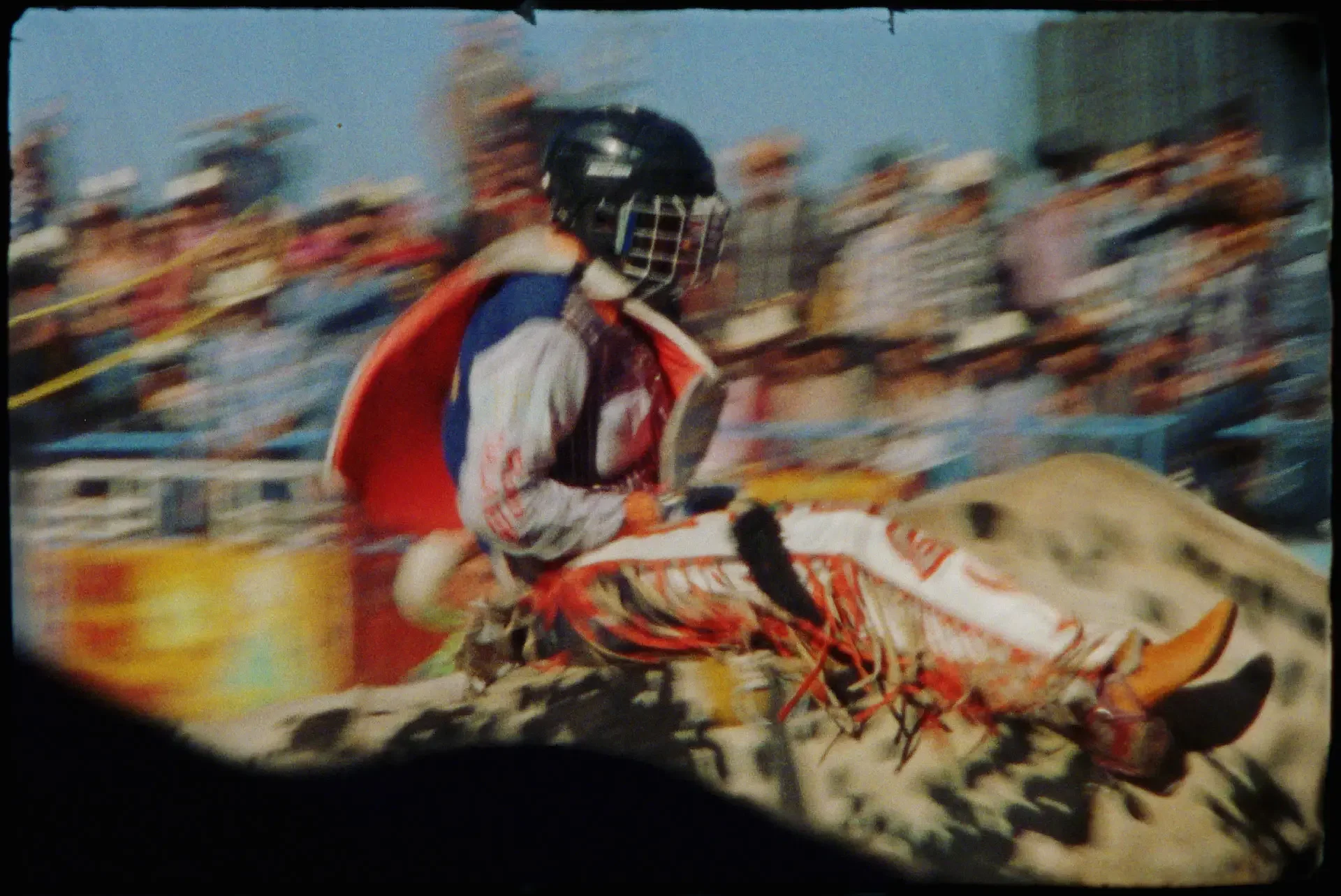
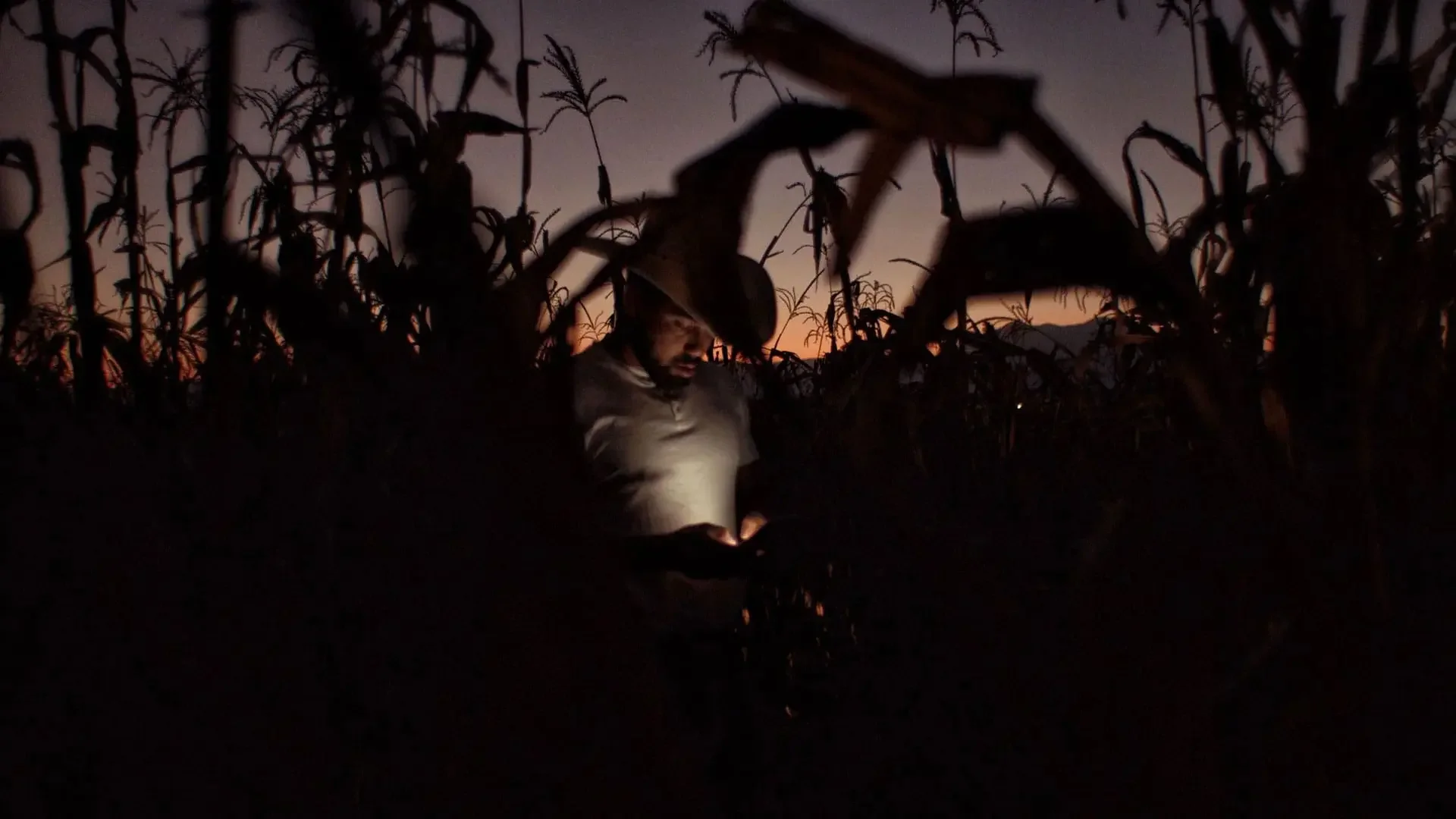
Stylistically, Jaripeo oscillates between distinctive modes which mirror the binaries of Noé and Joseph’s lives in Penjamillo. With quiet control, digital camera footage offers observations of the townspeople's lives, capturing their day-to-day movements in an isolated but scenically beautiful corner of Michoacán. These naturalistic images are punctuated by the documentary’s most fascinating mechanism: frenetic Super 8mm sequences. Almost working as the proxy for the queer gaze upon the jaripeos in full swing, in all of their tequila-guzzling glory, the hazy imperfections of the moments caught on film often focus on slight details: massive belt buckles glinting in the sun, stolen glances between men in the crowd, the caress of a hand on another’s shoulder. Other junctures prove visually kaleidoscopic: strobe lights in corn fields, dancing awashed in vibrant neon lights.
Having already impressed on the festival circuit with stops at Sundance and the Berlinale earlier this year, Jaripeo is an alluring exploration of masculinity that delivers crucial visibility for queerness within a seemingly unlikely space. Unfolding as a nuanced quest for self-reconciliation within a traditionally heteronormative environment, Jaripeo provides a tiny yet richly dense glimpse into Penjamillo and some of its queer locals, assuredly exploring identities and perspectives that feel more relevant than ever, particularly as LGBTQ+ liberties continue to be under threat in many conservative communities across the globe.
4/5
2026 | U.S./France/Mexico | 97 minutes | Color | In Spanish & English with English Subtitles
‘Jaripeo’ had its Washington D.C. premiere on Friday, June 12 at the 2026 DC/DOX Festival.