
I Finally Watched Béla Tarr’s ‘The Turin Horse’
Cinema Guild
Hungarian filmmaker Béla Tarr passed away in early January 2026 at the age of 70 after battling a longstanding illness, a loss that shook many cinephiles far and wide to their cores.
From a made-for-television adaptation of Macbeth to the monumental seven-hour social realist epic Satantango, Tarr’s decades-spanning career was marked by its absolute idiosyncrasies: stark black-and-white imagery, drawn-out shots that average 2-4 minutes (in opposition to Hollywood’s ASL of 2.5 seconds), and somberly secular depictions of the human experience. While Tarr’s filmography has remained largely relegated to the film festival circuit and arthouse theaters, the scope of his oeuvre has notably influenced filmmakers from Gus Van Sant to Apichatpong Weerasethakul, as has his experimental film school, Film.factory, based at the Sarajevo School of Science and Technology from 2013-2017.
I must confess, with some shame, I was one of those people spurred to explore Tarr’s work only after his death was announced. The reputation of Tarr’s films as rigorous yet transcendent viewing experiences always allured me, but alas, there are so many movies in the world to watch, and the downside of mainly covering new releases admittedly leaves much room for blind spots regarding those of the past. Finally diving into the Hungarian auteur’s body of work, I chose to begin at the end: with his last film, 2011’s The Turin Horse.The movie serves as a hauntingly ascetic final act for a filmmaker whose creative vision exists wholly in a world of its own, an unsentimental détente with a cruel world that could not possibly care for humanity’s hopeless debasedness (in the eyes of its unabashedly atheist creator).
Cinema Guild
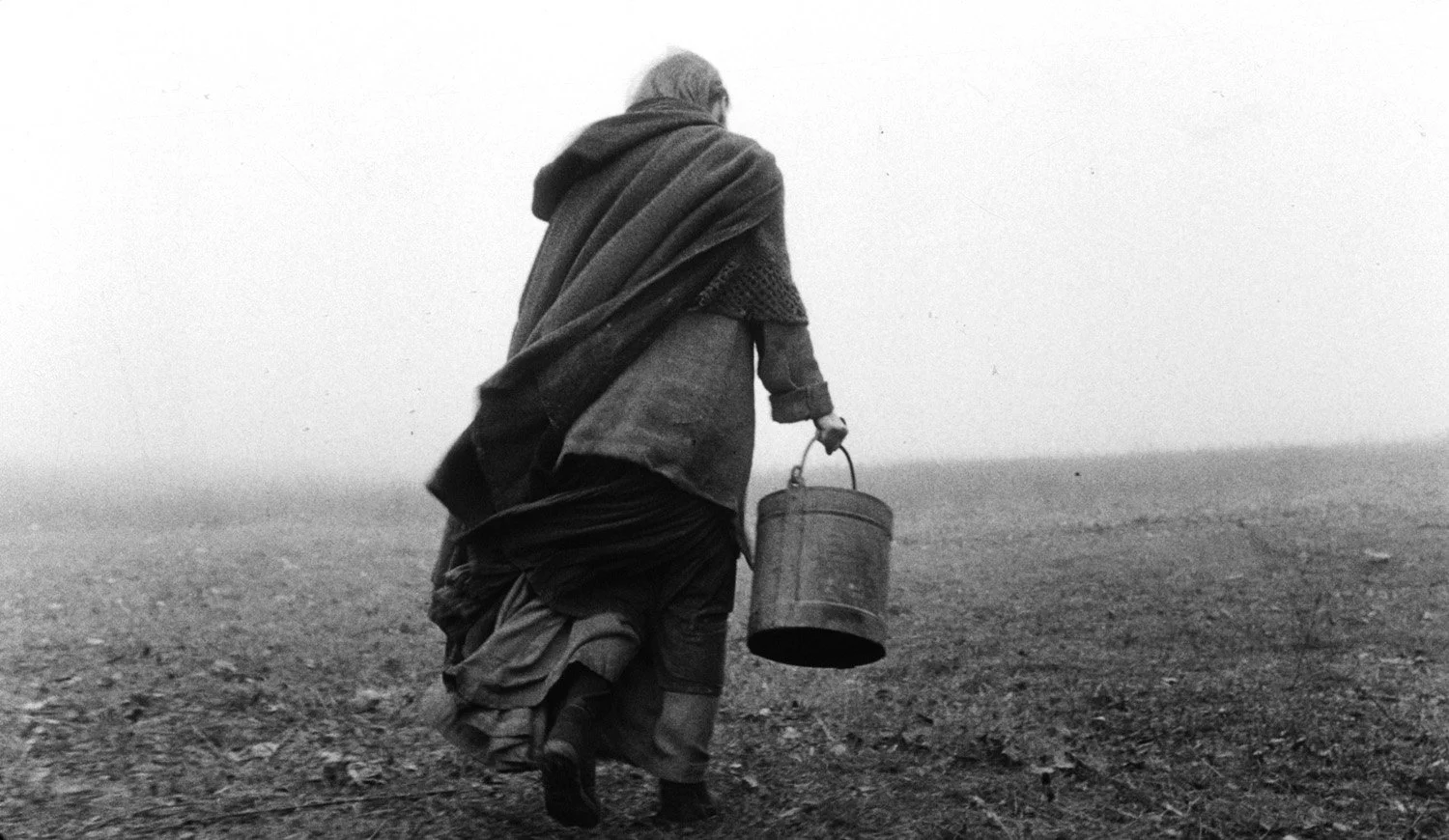
The Turin Horse is motivated by the myth that Friedrich Nietzsche was driven to insanity after witnessing the violent whipping of a cart horse on the streets of Turin in 1889, as presented in the opening title card. The first scene begins with a staggering shot that lasts nearly five-minutes, and we are transported to the wind-ravaged desolation of the Hungarian countryside, tracking a pathetic grey cart horse being driven by its owner, a sullen, aging peasant called Ohlsdorfer (János Derzsi). As the string-heavy score (composed by frequent Tarr collaborator Mihály Víg) oscillates between uncanny and strangely peaceful, we are left to ponder every inch of the seemingly everlasting shot. While the camera’s gaze remains steadfast, its focus constantly shifts, drawing closer and farther from its subjects, as if a silent ghost were witnessing their journey down the ragged country path.
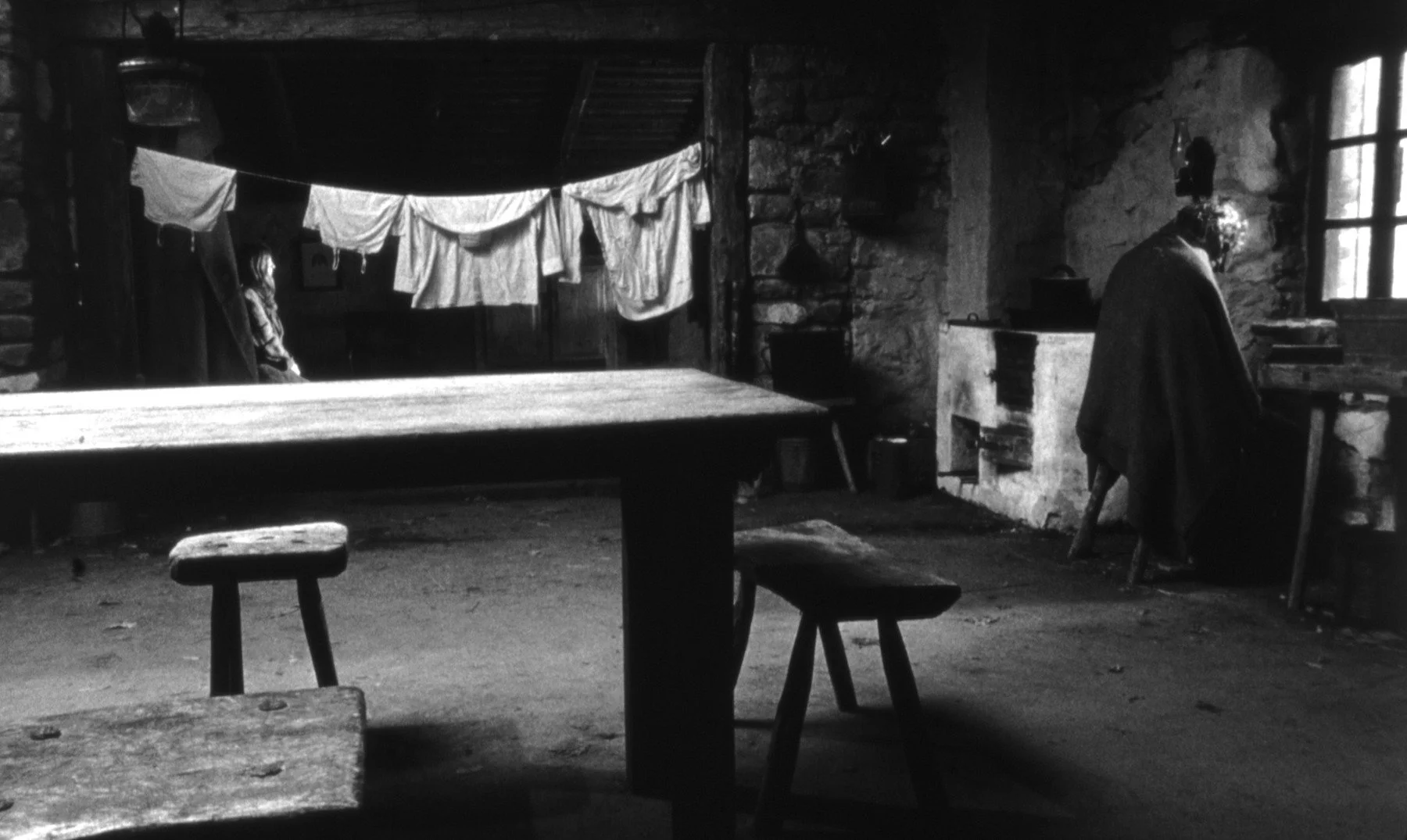
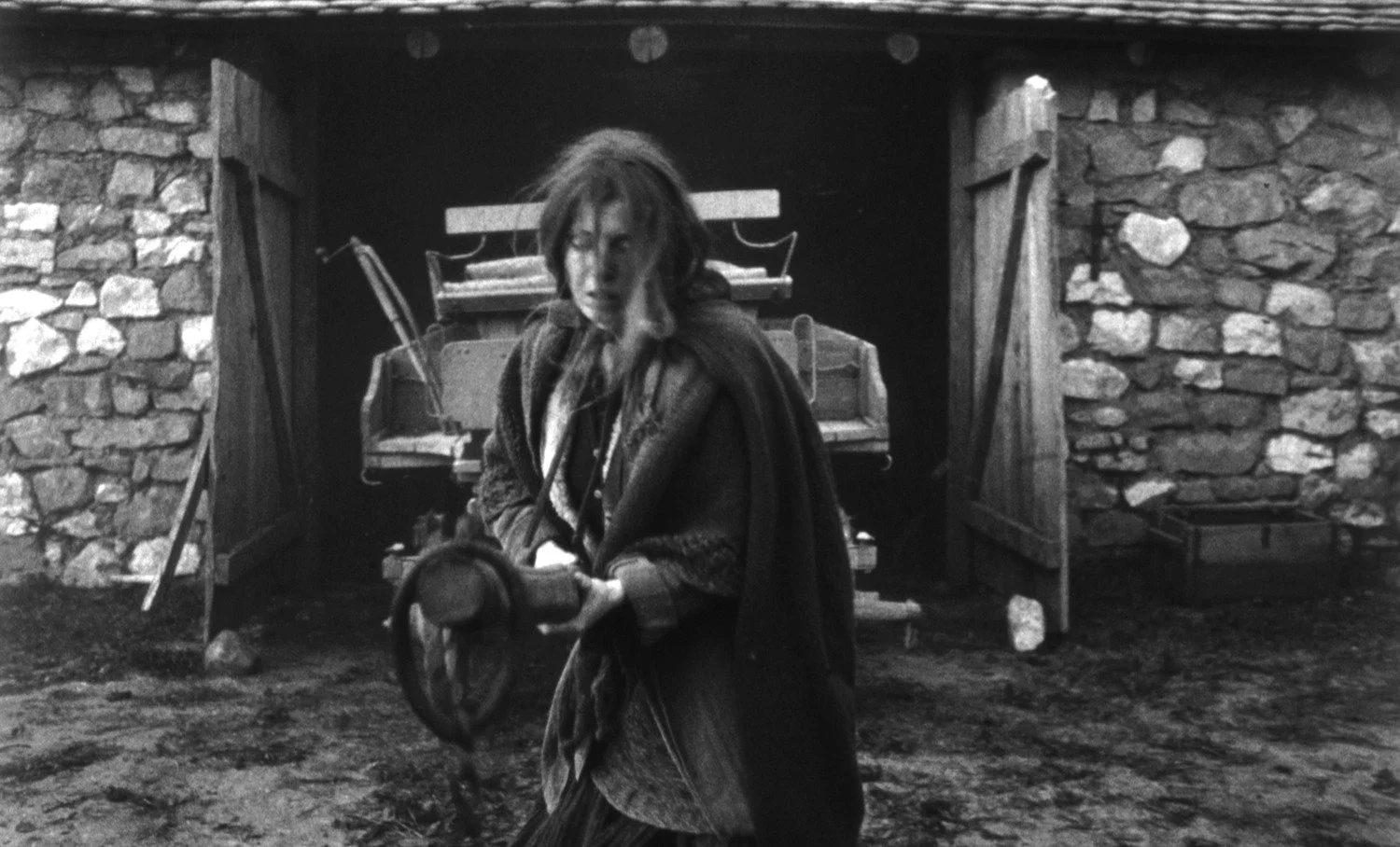
Ohlsdorfer’s destination turns out to be his dilapidated homestead, which he shares with his adult daughter (Erika Bók). Their paisan life is comprised of their daily rituals, which The Turin Horse never ceases to find fascinating. The father and daughter’s routine is set in stone and dictated by survival: drawing water from the well, boiling potatoes (which they carefully eat fresh from the pot with flinching fingers, with only a bit of salt for seasoning), and tending to their increasingly off-kilter horse. As the film reveals itself to be structured around six days (the final days?) of this simple family’s bleak life, every pillar of their world slowly unravels from the outside in, beginning on the second day when their horse refuses to cooperate any longer, stranding the two on their property.
As apocalyptic gale-force winds unceasingly threaten to topple the rough stone hut inhabited by Ohlsdorfer and his daughter, The Turin Horse casts its hypnotic spell, drawing audiences into the daunting repetition that marks the family’s existence. Far more interested in the subtle nuances of gesture and emotion than in narrative tradition, the movie’s first line of dialogue is introduced only twenty minutes into the film: “It’s ready,” the daughter proclaims about their unfortunate potato dinner.
Cinema Guild
In a piece for The New Yorker written after Tarr’s passing, Justin Chang writes, “The film begins with an anecdotal reference to Friedrich Nietzsche, and the cold, circular story that follows—about a woman and her elderly father, trudging about a dimly lit cottage on a remote, wind-lashed steppe—might have been founded on the Nietzschean principle of eternal recurrence. “ While indeed The Turin Horse does operate as a frigid exercise in facing eternal hopelessness, such correlations with ideas of eternal recurrence offer an intriguing sense of serenity and consideration concerning these two figures and their seemingly never-ending suffering. “Tomorrow, we’ll try again.”
Comprised of roughly thirty shots across its two-and-a-half hour runtime, The Turin Horse is a ravishing 35mm monochrome chef-d’oeuvre, one that will bore into the core of your mind, if only you let yourself surrender to its discreetly hyperrealistic vision. In a world increasingly dominated by short-form “content” better suited for popular culture’s collectively shrinking attention span, The Turin Horse feels like a transportive journey to the foundations of cinema: a flawless harmony of image, performance, and experience. After finally seeing this movie, I cannot wait to tackle the rest of Tarr’s influential filmography. Up next, 2000’sWerkmeister Harmonies.
Stream ‘The Turin Horse’ on Kanopy or get tickets to see it next month during Film at Lincoln Center’s “Farewell to Béla Tarr” retrospective.