
2026 Berlinale Preview: 10 Titles to Look Forward To

Foremost Film
In less than a week’s time, the 76th Berlin Film Festival will kick off in Germany’s busy capital, running February 12-22.
Often cited as the world’s largest public film festival, this year’s edition of the Berlinale will feature hundreds of new titles from every corner of the globe, ranging from debut filmmakers to seasoned veterans like Ulrike Ottinger and Hong Sangsoo. While Berlin might not have the star-studded coastal vistas of Cannes or the major-award contenders like Venice, the festival maintains a distinctiveness in its programming and an esotericism in the audiences it draws, perfectly aligning with the nuanced history of the city that has hosted it since its inception in 1951.
This year’s Berlinale will feature a Competition jury presided over by celebrated German director Wim Wenders, whose filmmaking helped place New German Cinema at the forefront of the cultural conversation during the 1970s and 1980s, a career that continues to the present day with recent films like the Oscar-nominated Perfect Days from 2023. Beyond the buzzy Competition section, this year’s Berlinale program features a wide range of new movies that could appeal to almost any cinephile. Continue reading to check out ten of the titles Foremost Film is most excited to see at this year’s Berlinale:
‘Árru’ - © Dánil Røkke
‘Árru’
Directed by Elle Sofe Sara
Panorama
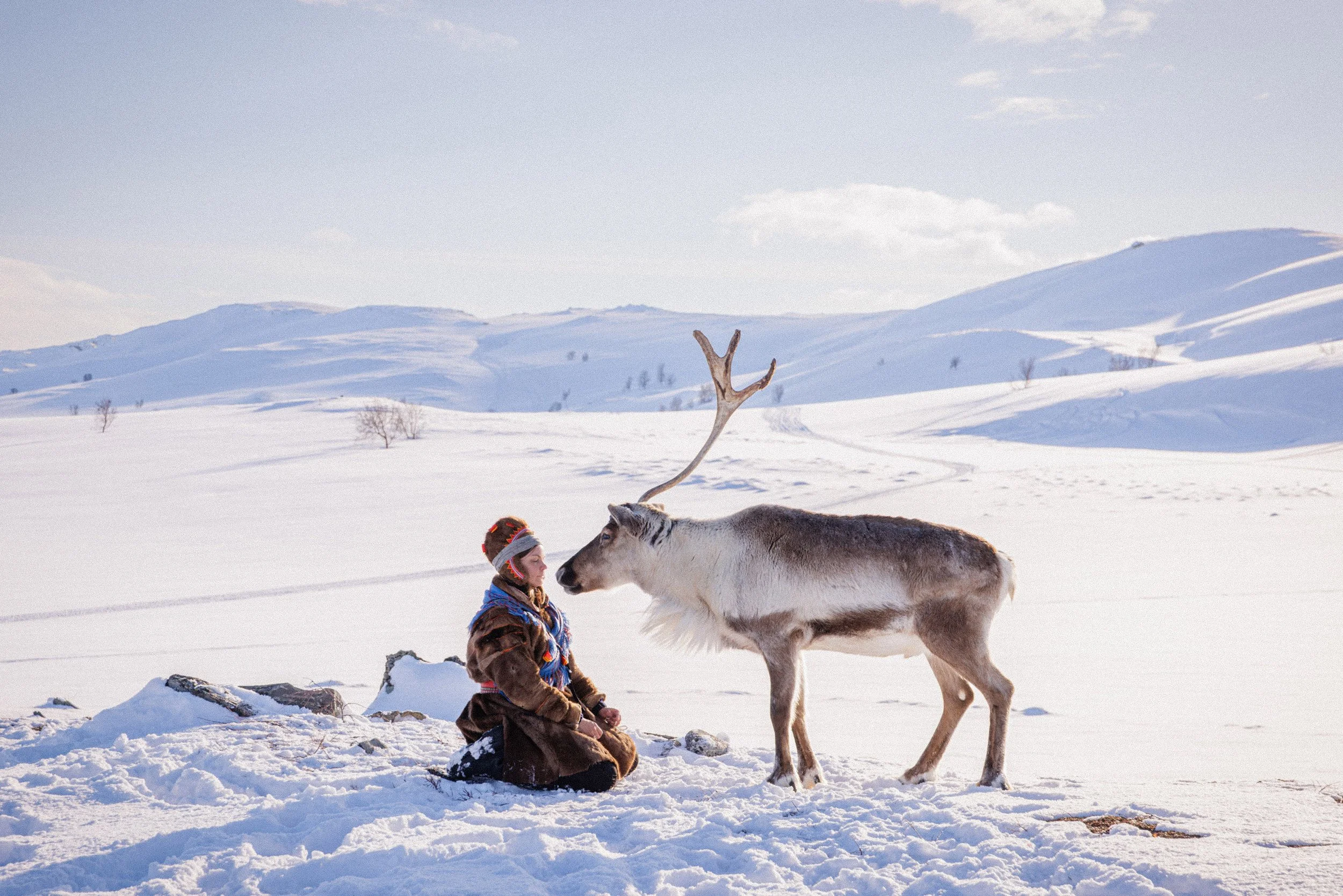
Shot in the Sápmi region north of the Arctic Circle, Árru centers on the plight of Maia, a Sami reindeer herder struggling to ward off a mining project from taking root in the ancestral lands of her people. When Maia turns to her uncle for support, deep-seated clan discord resurfaces, forcing Maia to choose between the land and her family. Árru’s subject matter and showcase of cultural traditions typically overlooked by popular culture may limit its appeal to film festival audiences alone, but these are exactly the types of work we most look forward to diving into each year at the Berlinale.
‘ A Prayer for the Dying’ - © Łukasz Bąk
‘A Prayer for the Dying’
Directed by Dara Van Dusen
Perspectives
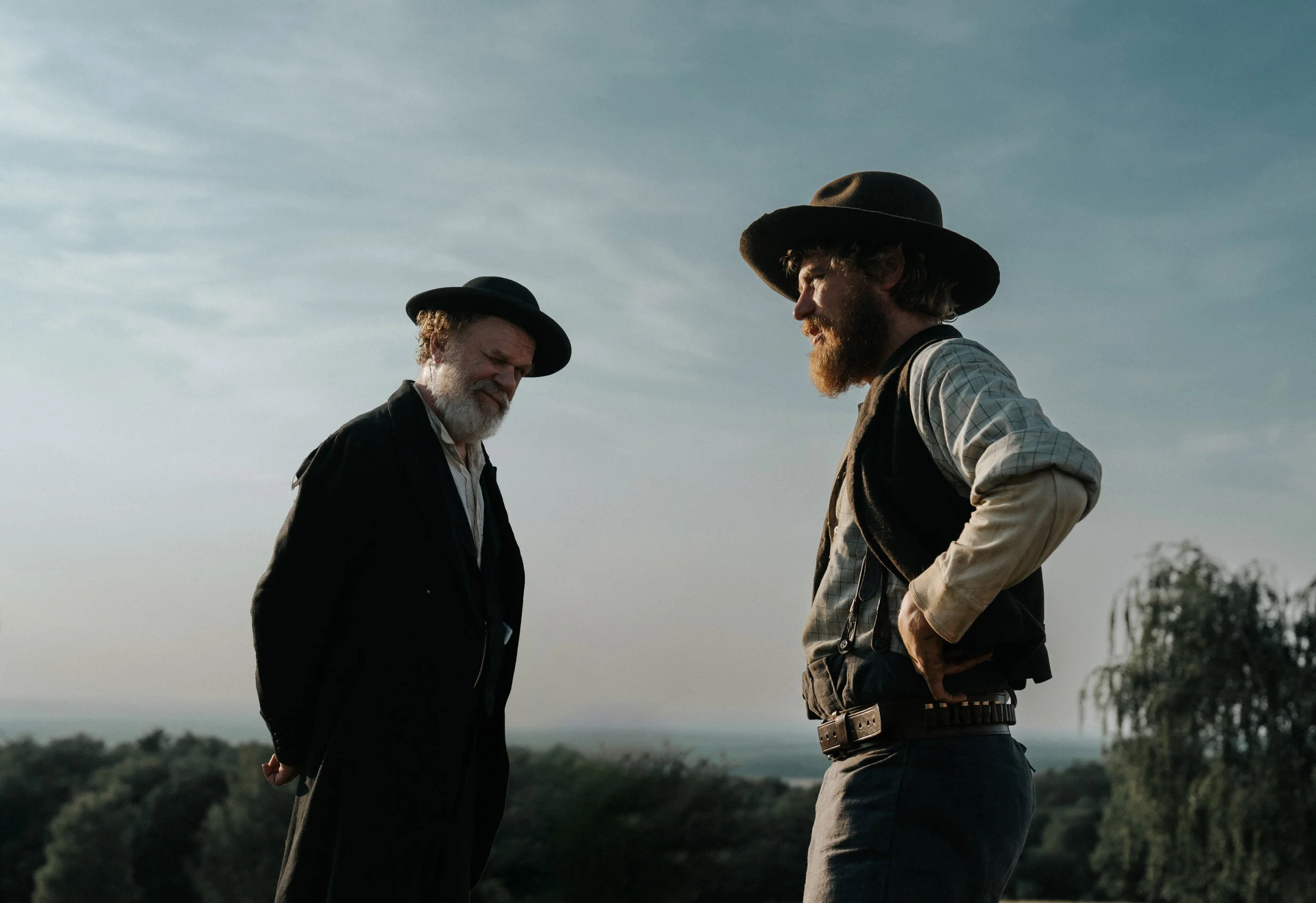
A Revisionist-Western marking Van Dusen’s feature debut, A Prayer for the Dying is set in Friendship, Wisconsin, circa 1870, where Civil War hero Jacob Hansen (Johnny Flynn) cannot shake the brutality of his past. His attempts to make up for his sins manifest through his urge to watch over the budding community of Friendship, a plan threatened by a mysterious epidemic that sweeps over the town, despite the local doctor’s (played by John C. Reilly) efforts. As current crises combine with the existential ones tormenting Jacob’s psyche, he struggles to overcome them both on his path to repentance. A Prayer for the Dying will feature in Perspectives, a competitive program of the Berlinale dedicated to first-time features that spotlights up-and-coming creatives.

‘At the Sea’ - © 2026 ATS Production LLC
‘At the Sea’
Directed by Kornél Mundruczó
Competition
Undoubtedly, one of the buzziest films to world premiere at the Berlinale Palast this year will be Mundruczó’s newest, long anticipated work, At the Sea. The film stars Amy Adams as Laura, a mother and wife who retreats to her family’s Cape Cod home after a stint in rehab caused by her longstanding alcoholism. As Laura works to rebuild relationships with her family and herself, the movie unfolds as a nuanced character study that tracks the serpentine path to recovery. With a supporting cast that includes Murray Bartlett and Dan Levy, At the Sea is primed to flaunt one of the starriest red carpets of this year’s festival. Notably, Mundruczó’s last English-language effort, Pieces of a Woman, landed its lead actress, Vanessa Kirby, a Best Actress nomination at the 2021 Academy Awards, an honor that the Hungarian filmmaker could achieve again with Adams as his leading lady, a powerhouse actress whose Oscar is still evading her.
‘Forest up in the Mountain’ - © Ezequiel Salinas
‘Forest up in the Mountain’
Directed by Sofía Bordenave
Forum
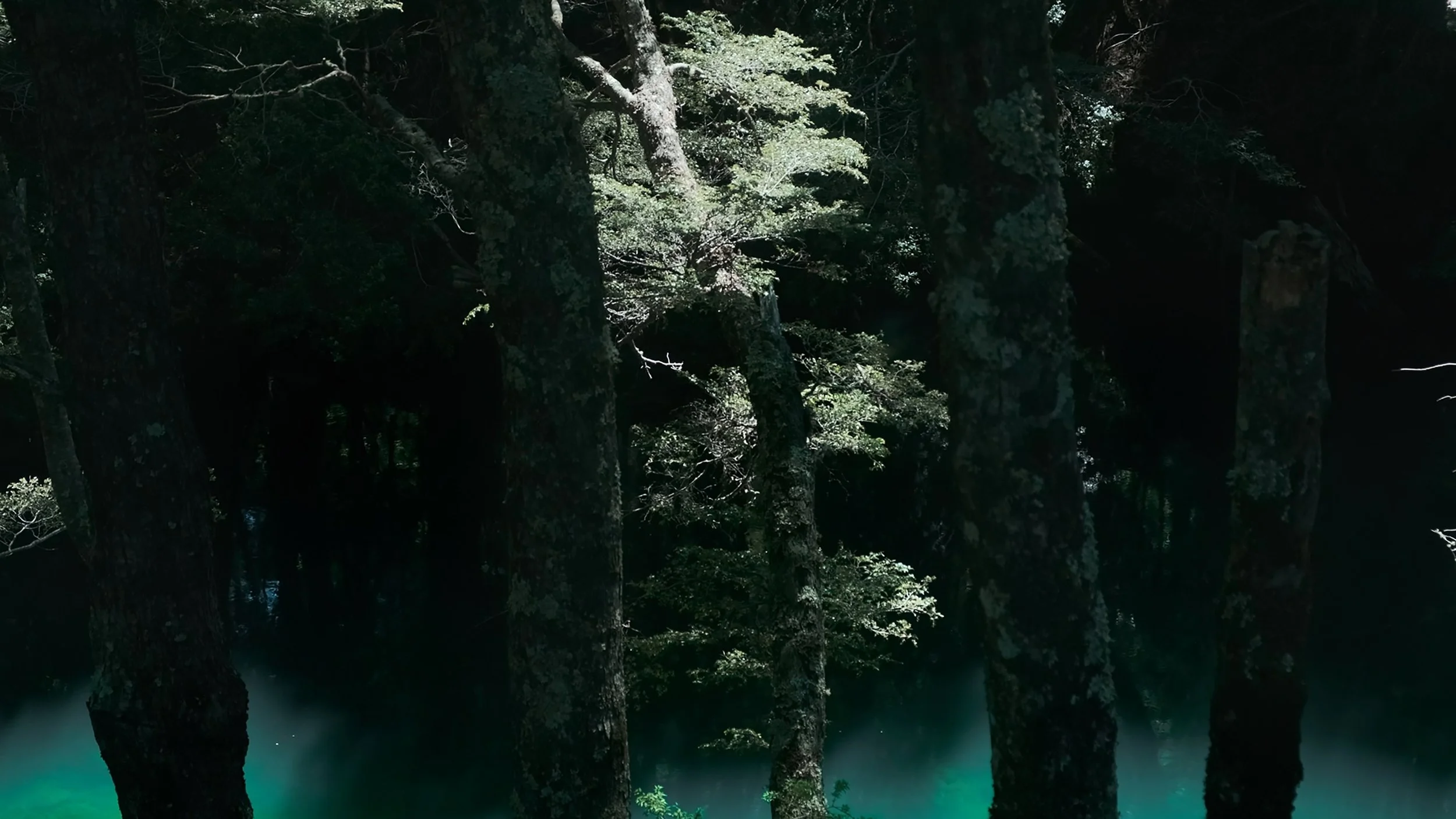
Sparked by official documents and court records surrounding the 2017 murder of a young member of Patagonia’s Mapuche indigenous community at the hands of Argentine Naval police, Forest up in the Mountain investigates and criticizes the enduring history of systematic state violence against the Mapuche people and the dispossession of indigenous lands in Argentina. Bordenave’s latest sounds almost like a companion piece to Lucrecia Martel’s 2025 work Landmarks, although its inclusion in the Forum section at the Berlinale clearly hints that it will be a much more experimental work.
‘Rose’ - © 2026_Schubert, ROW Pictures, Walker+Worm Film, Gerald Kerkletz
‘Rose’
Directed by Markus Schleinzer
Competition
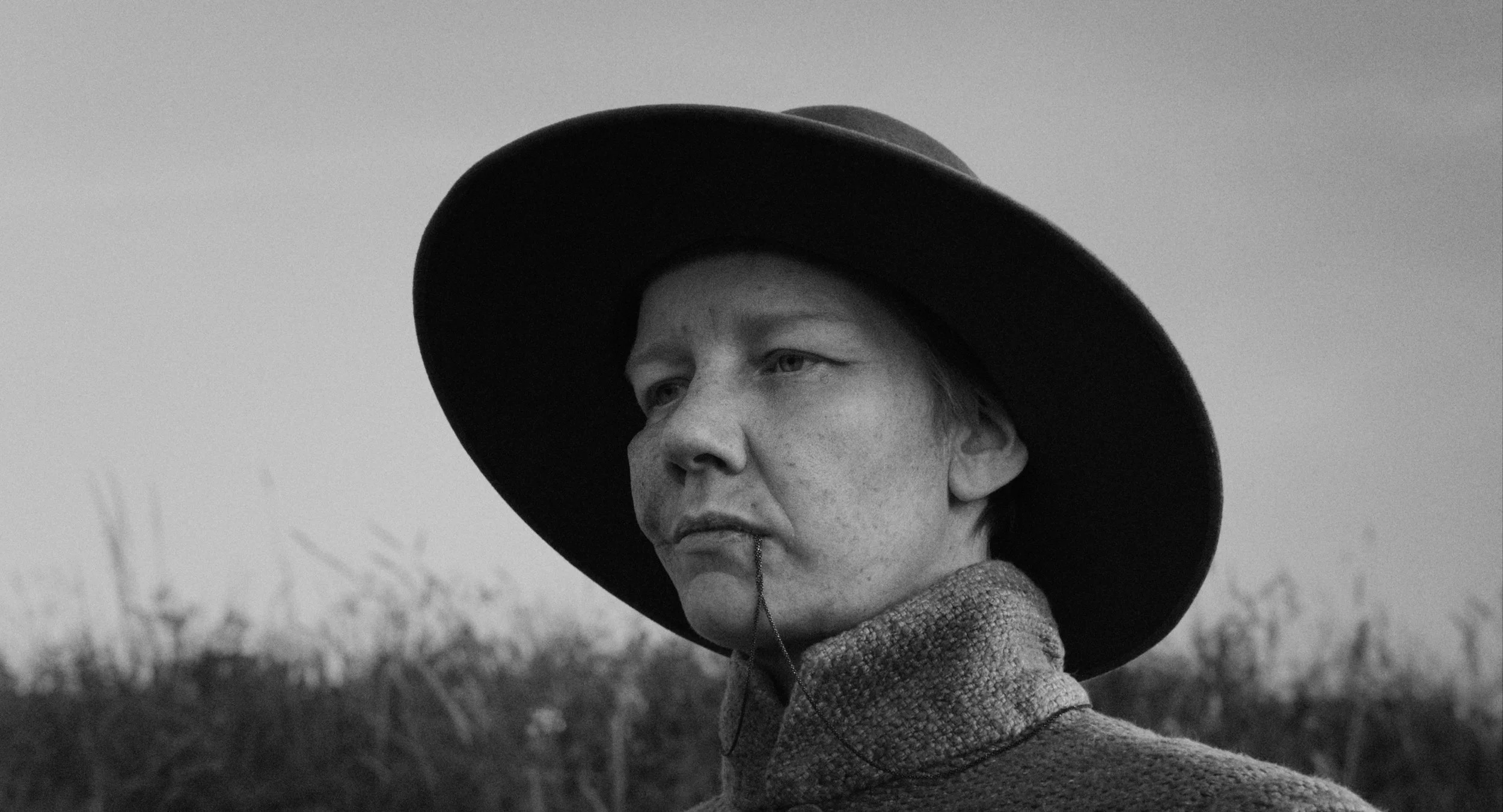
German actress Sandra Hüller has maintained a relatively low profile since catapulting onto the world stage in 2023 with the critically hailed Anatomy of a Fall and The Zone of Interest. Hüller will reemerge on the silver screen at Berlinale, starring in Rose from Schleinzer, one of Austria’s most provocative contemporary filmmakers. Shot in black and white, Rose transports audiences back to 17th-century Germany (long before the country’s unification), where a mysterious woman disguised as a soldier arrives in an isolated village, claiming to be the long-lost heir to one of the area’s largest farms. As the villagers navigate the enigmatic claimant, the truth about her identity gradually becomes increasingly deceptive. An intriguing narrative setup, combined with what is anticipated to be another distinguished performance from Hüller, Rose could make a significant impact on the Competition section at this year’s Berlinale.

‘The Blood Countess’ - © Amour Fou Vienna, Amour Fou Luxembourg, Heimatfilm / P. Domenigg
‘The Blood Countess’
Directed by Ulrike Ottinger
Berlinale Special Gala
Ottinger’s first film since 2020 marks one of New German Cinema’s most iconic female directors taking on one of European history’s most infamous women: Elizabeth Báthory, the 17th-century Hungarian noblewoman and serial killer rumored to bathe in the blood of her victims to preserve her youth and beauty. With Isabelle Huppert playing the countess, Ottinger’s screenplay (co-written by Elfriede Jelinek) is set in contemporary Vienna and is described as a macabre comedy that reworks the vampire genre through Ottinger’s singular avant-garde filmmaking sensibilities. A pillar of German cinema, Ottinger’s latest experiment is expected to draw major audience interest on the ground at the festival.
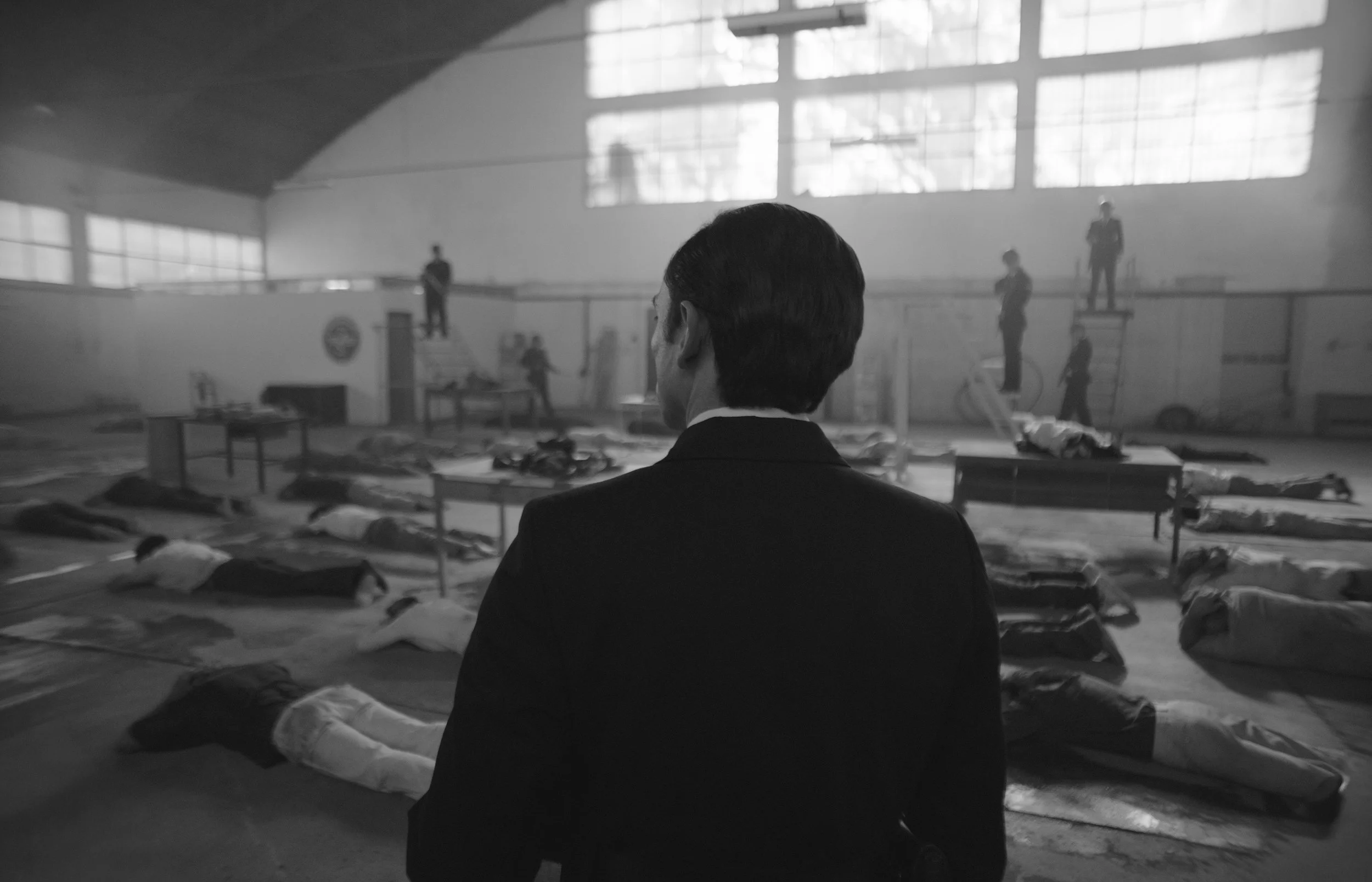
‘The Red Hangar’ - © Villano
‘The Red Hangar’
Directed by Juan Pablo Sallato
Perspectives
The military dictatorships of 1970s South America have continued to shape the continent’s ideas of history and identity, as explored in contemporary cinema by filmmakers like Pablo Larraín. For his debut feature, The Red Hangar, Sallato throws his hat into the arena with a black and white psychological thriller set on the precipice of Chile’s 1973 military coup led by Augusto Pinochet. The former head of Air Force Intelligence, Captain Jorge Silva, receives a command to transform the Air Force Academy into a detention center for Pinochet’s regime. Hoping the brutal new leadership will be swept away as quickly as it came, Silva quickly realizes he cannot bury his head in the sand and must take a stance against injustice.
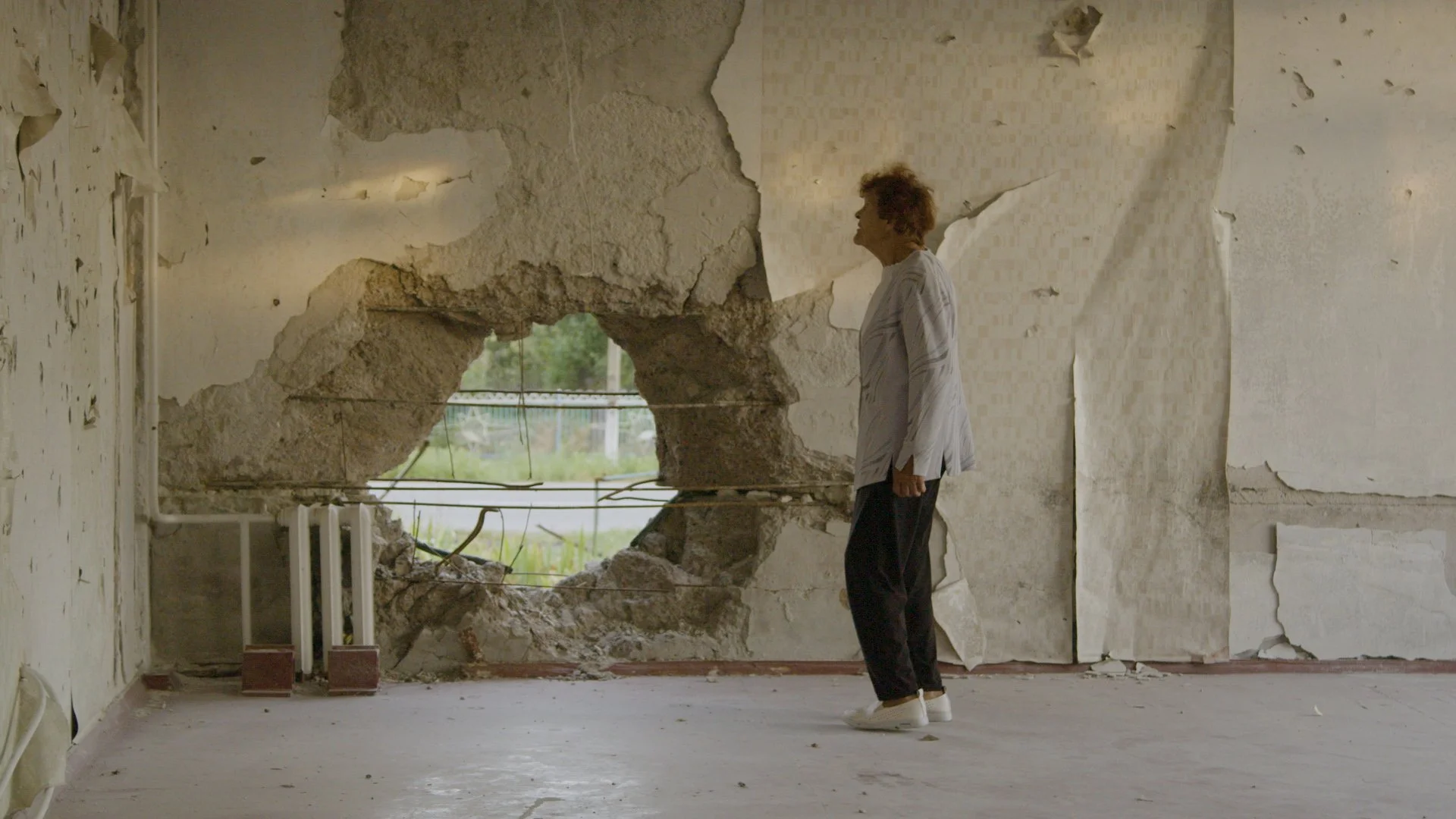
‘Traces’ - © Alisa Kovalenko
‘Traces’
Directed by Alisa Kovalenko, Co-Directed by Marysia Nikitiuk
Panorama Dokumente
A portrait of shared trauma, Traces platforms the experiences of Ukrainian women and survivors who have suffered sexual and physical assault at the hands of Russian soldiers in the ongoing Russo-Ukrainian war. An ode to the strength of women, who have historically endured such violent injustices in conflicts around the globe, Traces is shaping up to be a sobering yet essential watch at this year’s Berlinale. Featured in the Panorama Dokumente section, documentary films launched at the festival in recent years have had a significant influence on the landscape of world cinema, most notably 2024’s No Other Land, which won an Academy Award.
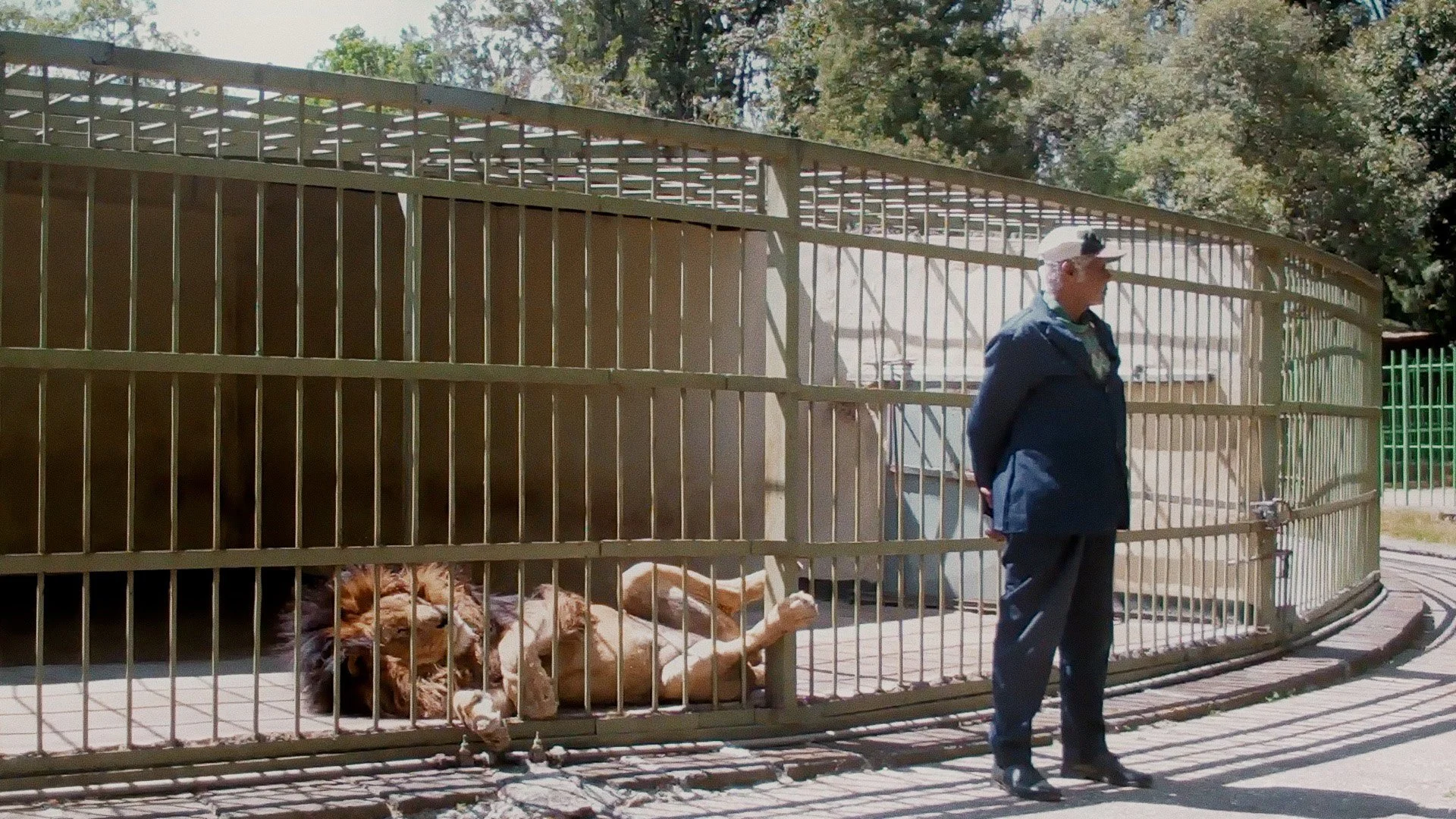
‘WAX & GOLD’ - © Ruth Beckermann Filmproduktion
‘WAX & GOLD’
Directed by Ruth Beckermann
Berlinale Special Presentation
With subjects that range from the workings of inner-city schools to her own Jewish heritage, Beckermann’s documentary films have impressed audiences and critics alike for decades. The Austrian filmmaker returns to the Berlinale to premiere her latest, WAX & GOLD, a documentary that takes her to the Hilton hotel in the Ethiopian capital of Addis Ababa, built in the 1960s during the twilight years of Africa’s colonial era. Combining archival footage with contemporary conversations and observations, Beckermann’s newest work investigates the push and pull between the past and present and history’s eternal impact on a post-colonial world.
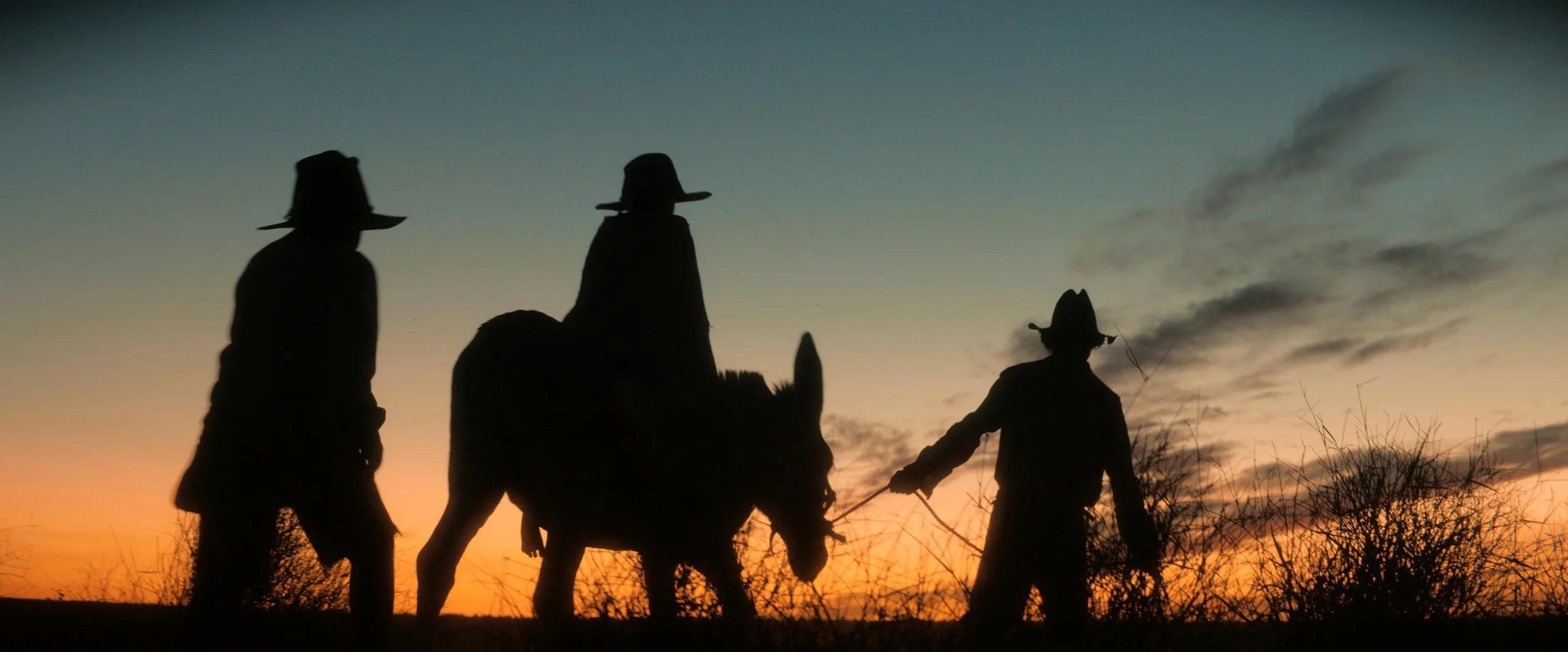
‘Wolfram’ - © Bunya Productions
‘Wolfram’
Directed by Warwick Thornton
Competition
Likely the only sequel to be featured at this year’s Berlinale, Thornton’s latest is a continuation of his 2017 TIFF Platform Prize winner, Sweet Country. Set in 1930s colonial Australia, Wolfram is an Outback Western that follows two Aboriginal siblings who escape the harsh treatment at the mining outpost where they are forced to work, setting off into the outback of central Australia to reunite with their family and rightful community at any cost. A hugely prominent voice in Aboriginal cinema, Thornton’s singular oeuvre always promises gorgeously composed imagery, nuanced religious undertones, and most importantly, concepts and characters that platform the historically marginalized perspectives of his community. Wolfram marks Thornton’s first appearance in the Berlin Film Festival’s Competition lineup.