
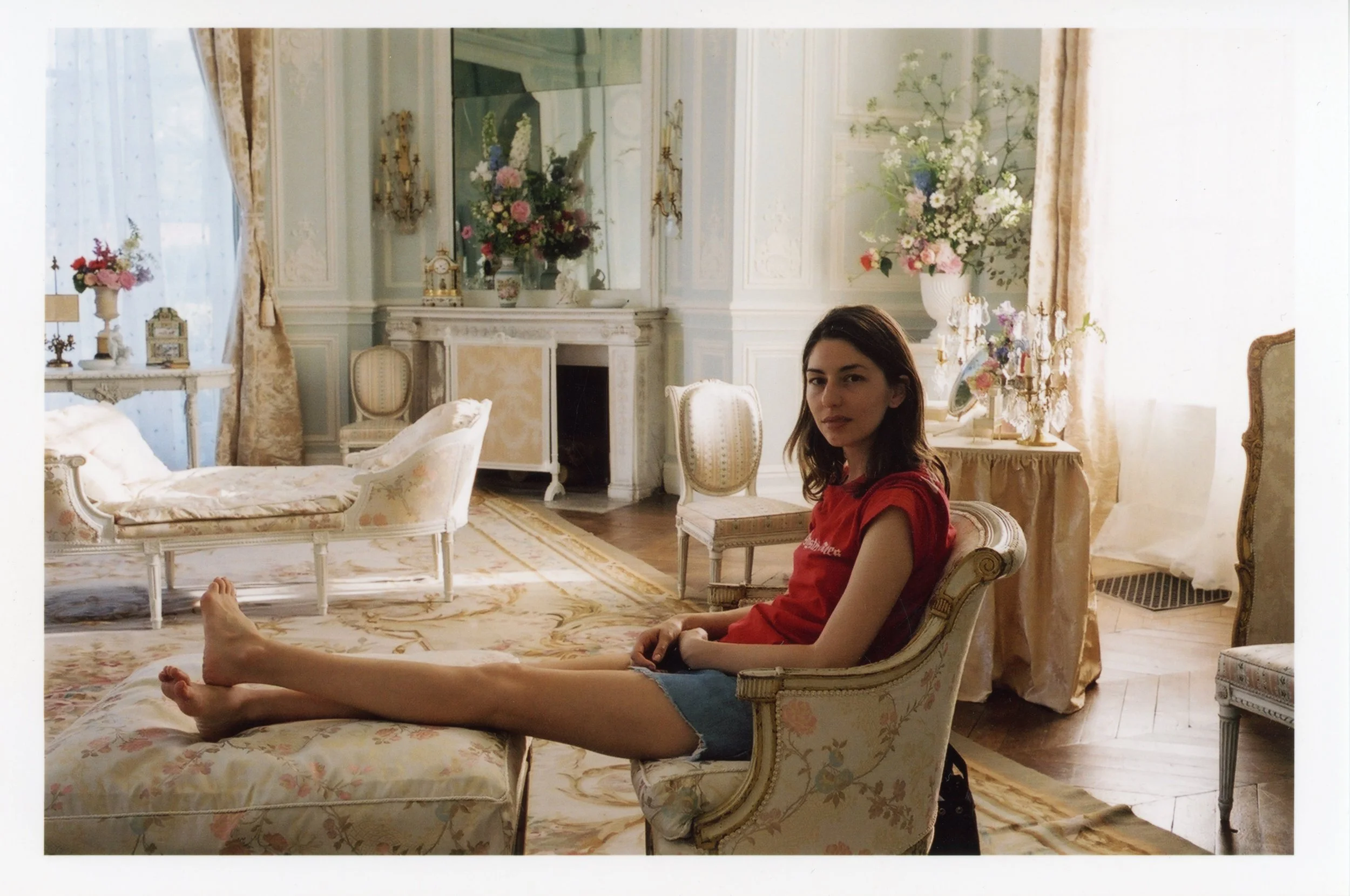
Sofia Coppola
Pastel Chuck Taylor Converse hidden amidst complimentary confections in every shade of pink, powdered wigs teased so high that Dolly Parton must have been envious, Bow Wow Wow songs blasting through the halls of Versailles- these stylistic anachronisms are the lifeblood of Sofia Coppola’s Marie Antoinette, which celebrates its 20th anniversary this month not only with a brand-new 4K restoration of the film, but also the release of Making Marie Antoinette, shot by Sofia’s late mother Eleanor Coppola during its unprecedented and now iconic 2005 shoot, both coming to theaters nationwide this weekend, courtesy of MUBI.
After Marie Antoinette’s 2006 Cannes Film Festival premiere, many critics, often with traces of misogyny or indictments of Coppola as a first-rate nepo-baby, bashed the movie’s liberal interpretations of French history and its rebellious commitment to a 1980s New Wave aesthetic. Despite these tough reactions and an underwhelming box office performance (roughly $60 million against a $40 million budget), the film still built a devoted fanbase shortly after its release. Many millennials around my age, at least those who grew up on Tumblr, whose feeds were flooded with dreamy stills, fan art, and references to Marie Antoinette’s killer soundtrack, soon became enamored not only with the eye-candy offered by Sofia’s incomparable sensibilities, but also with its intimate portrait of a woman navigating the cusp of adulthood within the confines of a society unwilling, or incapable, of understanding her, themes that would guide the filmmaker’s career to this day and spawn a generation-shaping influence referred to by some as the “Coppola effect”.
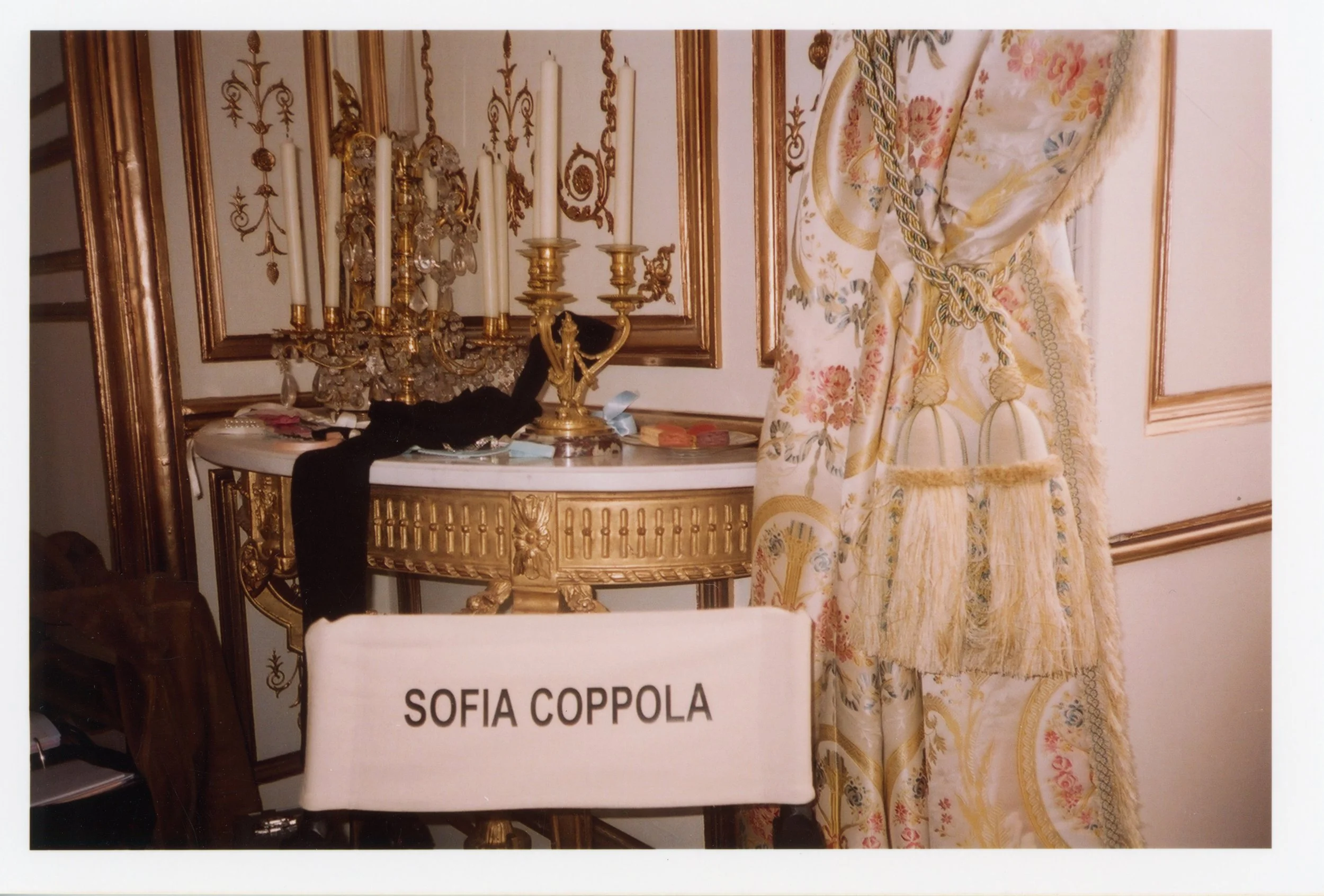
Sofia Coppola
Making Marie Antoinette began with the eighty hours of video camera footage Eleanor shot on the movie’s hive-like set. While Eleanor always wanted to use what she documented in a major project, it never came to fruition until she and her daughter revisited the footage during the 2020 pandemic and decided to edit it into a feature, years after the movie had developed a cult following and been critically reconsidered by many. After Eleanor’s passing in 2024, Sofia completed her mother’s vision, ultimately pairing the archival footage with Eleanor’s journal entries recorded during the ambitious filming, narrated by Diane Lane in the documentary.
Wearing all black on set in hopes of disappearing rather than distracting, Eleanor’s camera roves around Versailles, the movie’s enormous production crew, and a cast of hundreds, focusing on small details and in-between conversations that stand in stark contrast to Marie Antoinette’s opulent final form. “I love seeing where the illusion of the set meets reality,” shares Eleanor as she records her daughter running charge of a multilingual crew, bouncing between fittings with famed costume designer Milena Canonero (whose behind-the-scenes efforts are just as jaw-dropping as those captured onscreen) and firmly but calmly telling her assistant director how they will shoot within Versailles’ Hall of Mirrors, which Sofia wanted to establish as the movie’s “high school quad.” As Eleanor captures the shoot’s early days, the voiceover in her words reflects the anxieties she carries for her daughter in the face of such a massive production, ruminating on comparisons she draws between Sofia and Marie: both women who entered the limelight at an early age, both facing tremendous expectations within worlds dominated by men.
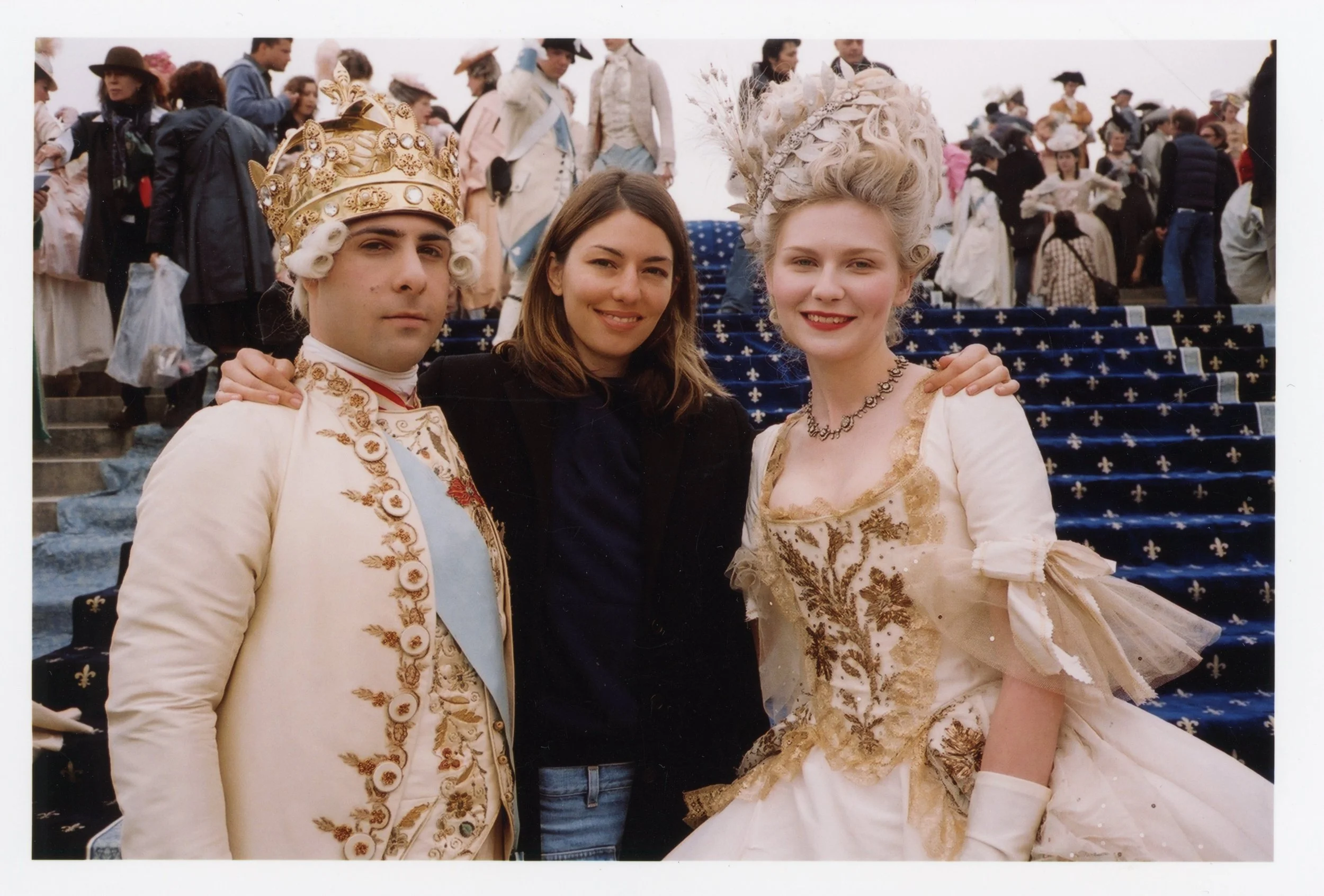
Of course, these motherly concerns unconsciously tap into the very same metaphorical qualities of the female experience that run through Marie Antoinette and all of Sofia’s subsequent films. As the documentary moves forward, the camera’s discreet gaze becomes fascinated with Sofia’s wholly unique and deceptively effortless vision, her authentic je ne sais quoi. Sofia runs her set with self-awareness of her distinctive approach; her directing style feels far less dictatorial than the customary filmmaker that comes to mind. In discussions with her star actors, frequent collaborator Kirsten Dunst and younger cousin Jason Swartzman, Sofia transmits a calming energy, even as the movie’s ambitious scheduling and scale bring on self-doubt.
Sofia Coppola
Making Marie Antoinette is not a mere time capsule; it slowly reveals itself as a manifestation of Eleanor’s own creative voice. Arguably best known for shooting Hearts of Darkness: A Filmmaker’s Apocalypse, the documentary chronicling her husband’s filming of Apocalypse Now, Eleanor’s creative voice was intertwined with supporting her family and their cinematic endeavors for years. Eleanor’s journal states, “My mood is a mix of resentment that I’m not doing my own thing and exhilaration that I’m shooting a camera in a stunning location in the lovely French countryside with my daughter at the helm of a major production she wrote and is now directing with clarity, grace, and her own hip approach to history.” While the documentary’s flesh and bone bolsters our appreciation for the monumental efforts that went into Marie Antoinette, Eleanor’s interior confessions spotlight her sensibilities in a way audiences rarely experience, particularly compared with her star-studded relatives. Ten years after Marie Antoinette, Eleanor would finally begin her own journey as a narrative filmmaker in her own right, releasing Paris Can Wait in 2016 and Love is Love is Love in 2020.
Making Marie Antoinette and its peek “behind the curtain” greatly enriches the legacy of the beloved film it centers on, both through the treasure trove of archival footage it brings back to life and its commitment to the deep connections between the Coppola women who created it, ultimately bolstering Marie Antoinette’s recognition as a trailblazing, if not initially misunderstood, work of cinema. Both the 4K restored Marie Antoinette and Making Marie Antoinette begin their U.S. theatrical release on Friday, October 23, courtesy of MUBI, and will be available on the streaming platform beginning November 6.