
‘The Chronology of Water’ Review: Kristen Stewart’s Directorial Debut Is a Demanding, Multi-Faceted Treasure
Les Films du Losange
Around its three-quarter mark, The Chronology of Water’s heartbeat, Lidia, tells a classroom of Creative Writing students: “Chronology convinces us we are moving toward a real place.” Adapted from the 2011 memoir of the same name by Lidia Yuknavitch, this compelling quote is one of many from a movie more concerned with time’s consequential purpose than with the function of its ordered linearity. The Chronology of Water, directed by Kristen Stewart in her feature-film debut, closely follows its nuanced source material to depict the ubiquitous concerns that shape the worlds of contemporary women, all channelled through the hyper-specificity of Lidia’s experience.
In the role of Lidia is English actress Imogen Poots, who had a busy 2025, co-starring in releases like The Teacher and Hedda. Never has Poots’ talent been on display quite like this, with her saucer-like blue eyes constantly transmitting a range of dynamic emotions as the film’s enigmatic narrative follows Lidia through different phases of her life, from teenagehood into her late thirties. Through Lidia’s narration, much of which is lifted directly from the pages of Yuknavitch’s book, we learn of the circumstances of her early years: a sexually abusive father and callous alcoholic mother have already pushed her older sister out of the house, and Lidia’s only escape is the world of competitive swimming.
Rescued from the silencing conditions of her upbringing by a full-ride scholarship to a Texas university, Lidia is finally granted the freedom to explore boys and girls, drugs and alcohol, anything to disconnect her mind from the body that traps her, one that only experiences respite when immersed in water. Olympic dreams are soon shattered by brushes with addiction, and failed relationships mark Lidia’s complex connections with men, thanks to her traumatic relationship with her own father.

Les Films du Losange
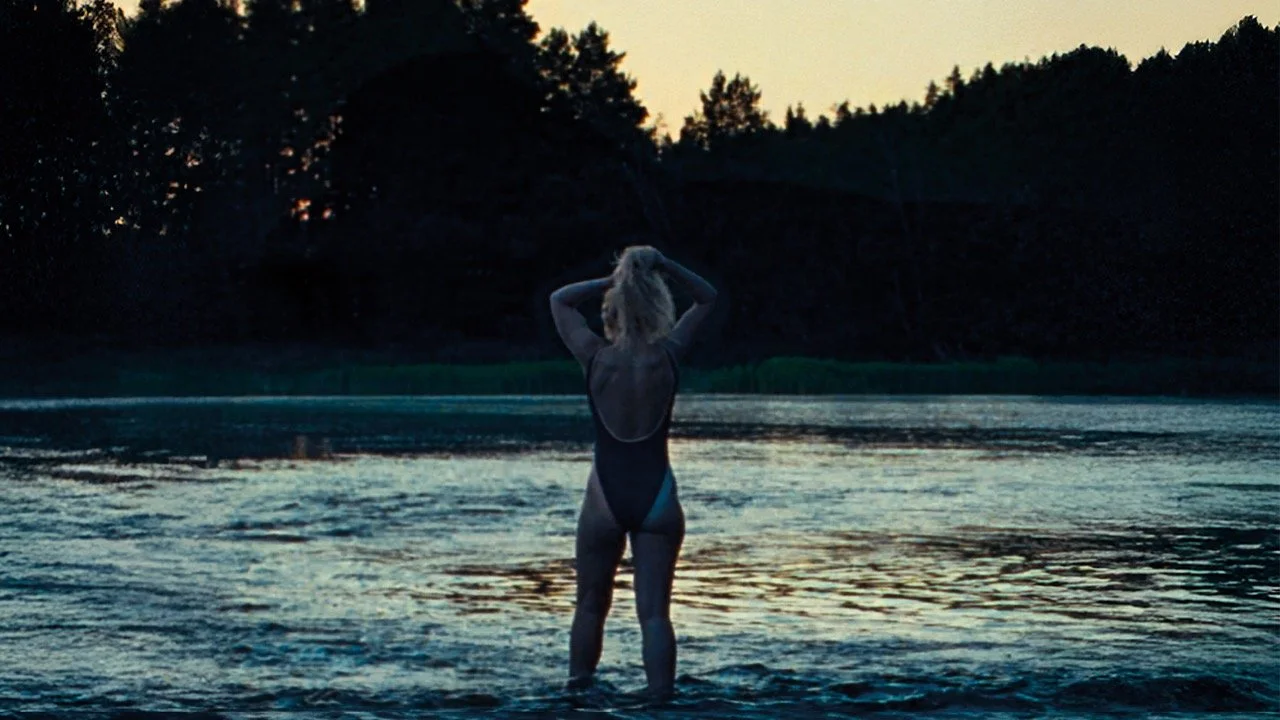
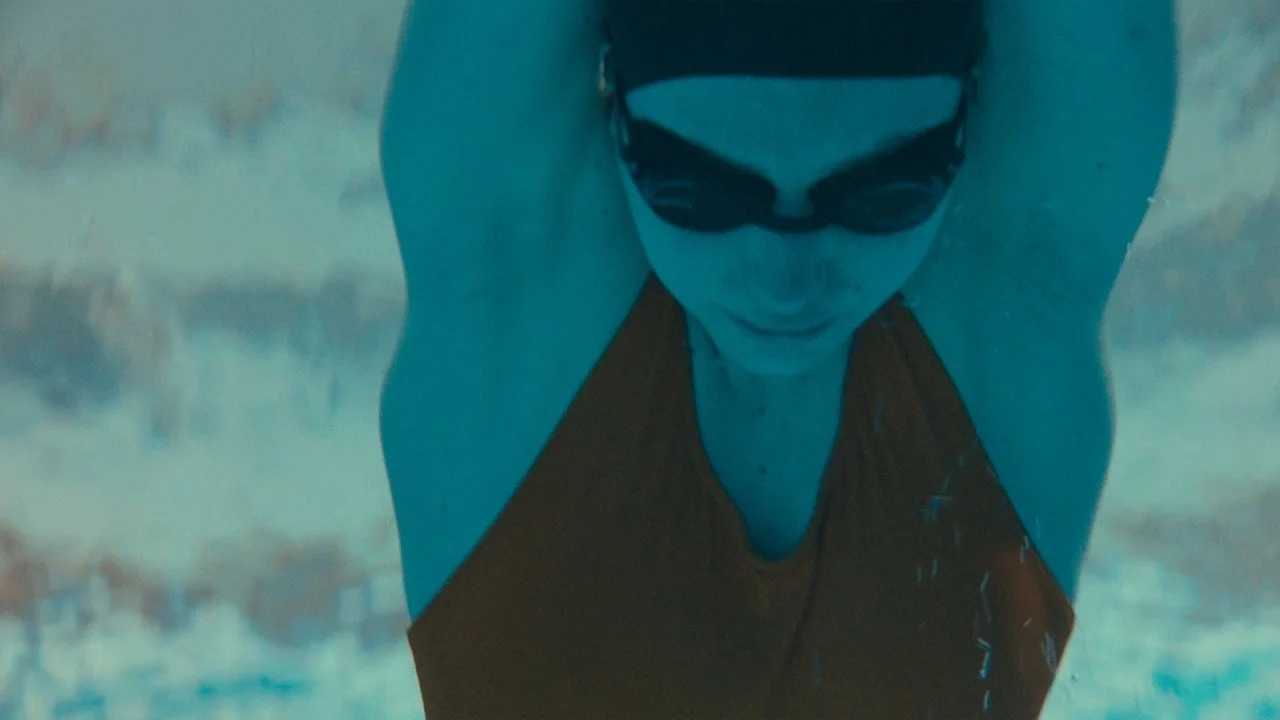
Staying faithful to Yuknavitch’s work, which she became gripped by way back in 2017 and spent the years since laboring to bring its silver screen adaptation to fruition, Stewart approaches The Chronology of Water with the same fragmentation as its author. Both stream of consciousness and the uncertain soundness of memory are intriguingly reproduced through the movie’s formal construction, particularly its visual language. Shot by Corey C. Waters on 16mm film, the camera gracefully veers between images, both disorienting and kaleidoscopic: lace curtains and tile floors stained with drops of blood, impossibly close-up shots of Lidia’s face and body, and the bodies she encounters, all awashed with a veneer of washed-out pastels that engage with the film’s predominantly 80s and 90s setting. Textures of the film grain and its fascinating imperfections closely align with Lidia’s recollections: distancing, blurring, and recasting memory, as we all do over time.
Sectioned into the identical five amorphous chapters that shape the memoir, The Chronology of Water never adheres to the three-act structure of conventional cinema; however, its latter sections do offer glimmers of hope as Lidia’s character finally begins to find her footing in the world. Following a major tragedy in her life, a writer workshop at the University of Oregon with One Flew Over the Cuckoo’s Nest author Ken Kesey (warmly recreated by Jim Belushi with the spirit of an aging hippy) unlocks Lidia’s lifelong passion for writing, as well as providing her with the unwavering safety she never received from her own father.
As Lidia’s career as a writer takes form over time, Stewart’s screenplay never takes the easy way out in depicting the character’s upward mobility. Her past hauntings persist, influencing her decisions in the present. Yet through the healing of writing, connecting with others, and contending with her demons, Lidia is finally delivered to a plane in which she can withstand the mighty waves of life’s challenges. For a work dominated by suffering and hardship, The Chronology of Water finds resolve in a beautiful final sequence that underscores the authenticity of its entire vision.
While Stewart’s work in front of the camera has been distinguished by arthouse fare and blockbusters alike, the former have come to define her career over the past decade, with her collaborating with auteurs such as Pablo Larraín and Kelly Reichardt. These creative sensibilities are imbued in every single frame of her directorial debut, every idiosyncrasy of its nuanced soundscape and characters. The uncompromising openness of Yuknavitch’s writing is echoed in Stewart’s decision to lean into the movie’s vivid portrayals of sexuality, studying the landscape of the feminine form with verismo and fascination uncommon in mainstream cinema. These creative expressions make for a challenging but wholly absorbing viewing experience, if not an esoteric one that will prove formidable for the popular masses. Based on Stewart’s meticulous and unyielding vision, I do not think she is concerned about The Chronology of Water’s box-office potential.
Les Films du Losange
Bookended by scenes submerged in water, Stewart’s directing debut embodies the element through its unusual fluidity, communicating not only the experience of its intricate protagonist but also those of women everywhere set upon lifelong voyages of self-discovery. The film stays true to both the unflinching despair and the authentic spirit of its source material, delivering a work from Stewart that feels promisingly distinctive, from a creative voice that continues to evolve. Bypassing the trap that many actors-turned-directors fall into by casting themselves in their movies, Stewart’s collaboration with Poots on The Chronology of Water feels like one of the movie’s most significant victories, proving that Poots can tackle arguably one of the year’s most demanding leading roles and deliver a truly magnetic performance.
4/5
128 minutes | Color | France, Latvia, USA | in English
‘The Chronology premiered in Un Certain Regard at the 2025 Cannes Film Festival. The Forge will handle the film’s U.S. theatrical release, beginning in New York City and Los Angeles on December 5 before expanding nationwide in January 2026. Click here for more information about ‘The Chronology of Water.”