
‘Hamnet’ Review: Chloé Zhao’s Glorious Examination of the Precipice Between Life and Death
Focus Features
*Screened at the 2025 Toronto International Film Festival*
As we all know, since his death over 400 years ago, the plays and writings of William Shakespeare have become a cornerstone of English literature, revisited time and again for their universal themes concerning the tribulations of the human experience. Shakespeare’s lasting impact on storytelling and performance across artistic mediums has resulted in thousands of cinematic interpretations of his work, ranging from Oscar Best Picture winner Hamlet (1948) to The Lion King (1994), the latter of which was my own introduction to the iconic playwright, even if I was not made aware of it until many years later.
Filmmaker Chloé Zhao is the latest creative to probe Shakespeare’s centuries-spanning influence on humanity, albeit with a delicate intimacy we have never before witnessed on the silver screen. Hamnet, adapted from the 2020 novel of the same name by Maggie O’Farrell, fictionalizes the domestic life of William Shakespeare and his wife, Agnes, concentrating on the love they share and the tragedy their family faces in the aftermath of their son’s death, which would go on to inform the composition of Shakespeare’s most celebrated play.
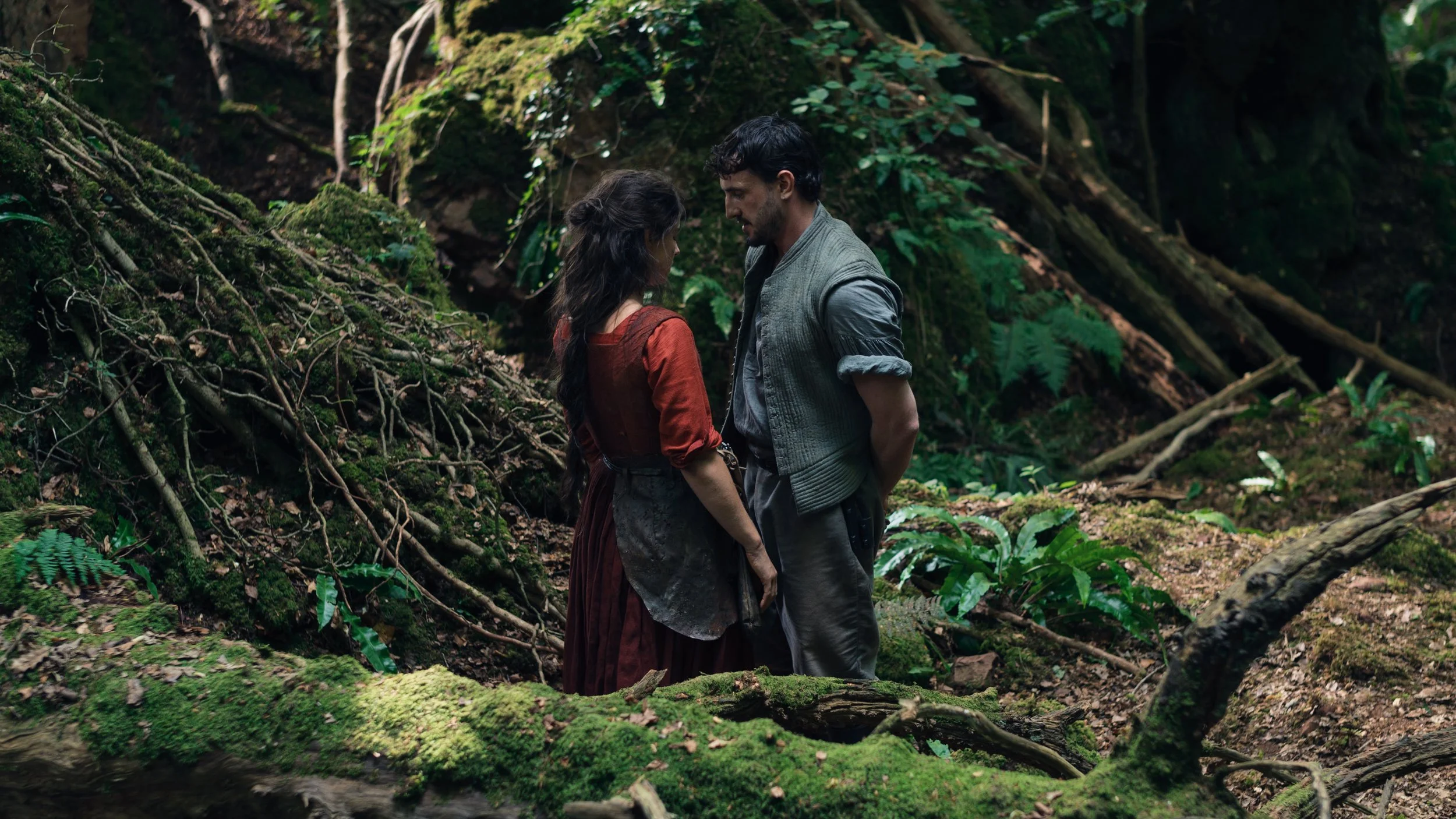
Aligning with our time-altered understanding of William Shakespeare’s account, O’Farrell’s novel and Zhao’s adaptation choose to remain tight to Agnes’s perspective, which serves as the emotional heart of both works. In the role is Irish actress Jessie Buckley, who is given the most substantial and heart-wrenching material of her career to date. We meet Agnes’s assertive character in the movie’s first moments, in the place where she feels most at home: the verdant woodlands outside of Stratford, England, her place of serenity, gorgeously captured by cinematographer Łukasz Żal with a soothing touch and appreciation for the natural world miles apart from his previous work on The Zone of Interest. Left to an unsympathetic father and stepmother after the death of her mother as a young girl, Agnes connects with her late matriarch, as all the women in their family have communed with one another for generations: through the rich soil, the restorative herbs it produces, and the hawks that circle overhead, like clandestine guardians of the wood. “The women in my family see things that others don’t.”
Cast off by much of her community as no more than a forest witch, Agnes feels seen and understood only by her brother, Bartholomew (Joe Alwyn in ultra-soft mode after his twisted turn in last year’s The Brutalist). Agnes’s outsider sensations melt away one day when a new Latin teacher shows up at her family’s estate, hired to tutor her younger brothers. William –– Will –– Shakespeare (Paul Mescal) is also feeling marginalized, buckling under the pressures of a strict, debt-ridden father and a longing for something more from life. First glimpsing Agnes from the bedroom window of a darkened Tudor home, Will is automatically drawn to her like a moth to a flame. Agnes becomes Will’s fixation; he follows her into the forest, recounts the story of Orpheus and Eurydice, and the two fall in love as though they are the first of our kind ever to do so. Of all the poetic tones and figures that comprise Zhao’s filmmography, dating back to her debut work, 2015’s Songs My Brother Taught Me, never has the director captured such an achingly beautiful romance.
Wasting no time, the two marry and fall into the routines of domestic life, yet Will is cast adrift as he struggles to carve out a career for himself in a society where such systems define men. Agnes is secretly distraught by her own concerns, shaped mainly by a dream in which she sees two children by her deathbed in the future. Only, they have three children: the eldest, Susanna, and twins Judith and Hamnet. Agnes splits her devotion between keeping the children safe and allowing Will the freedom to move through the world as he wishes, specifically to move to London on his own to establish himself as a playwright.
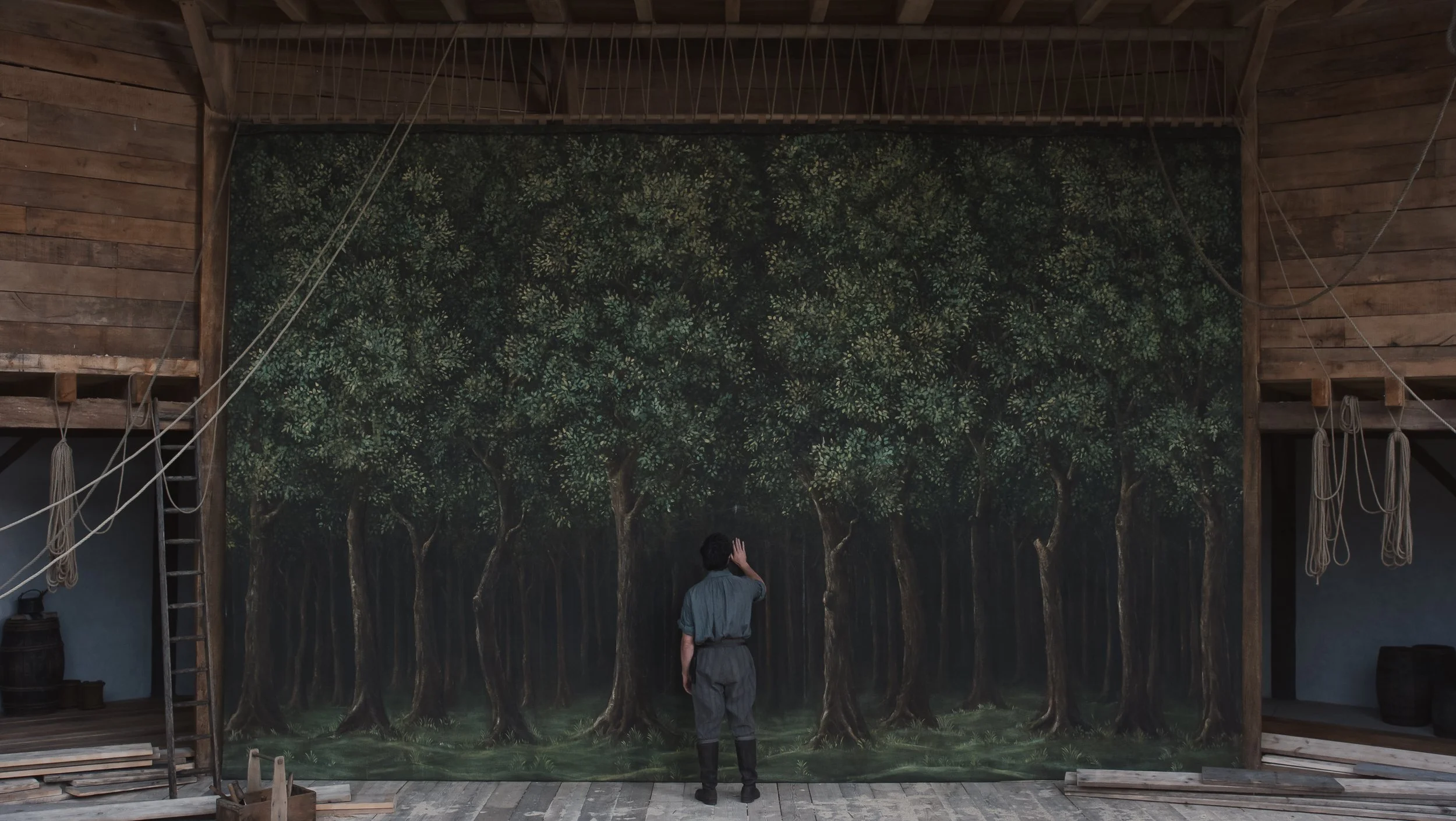
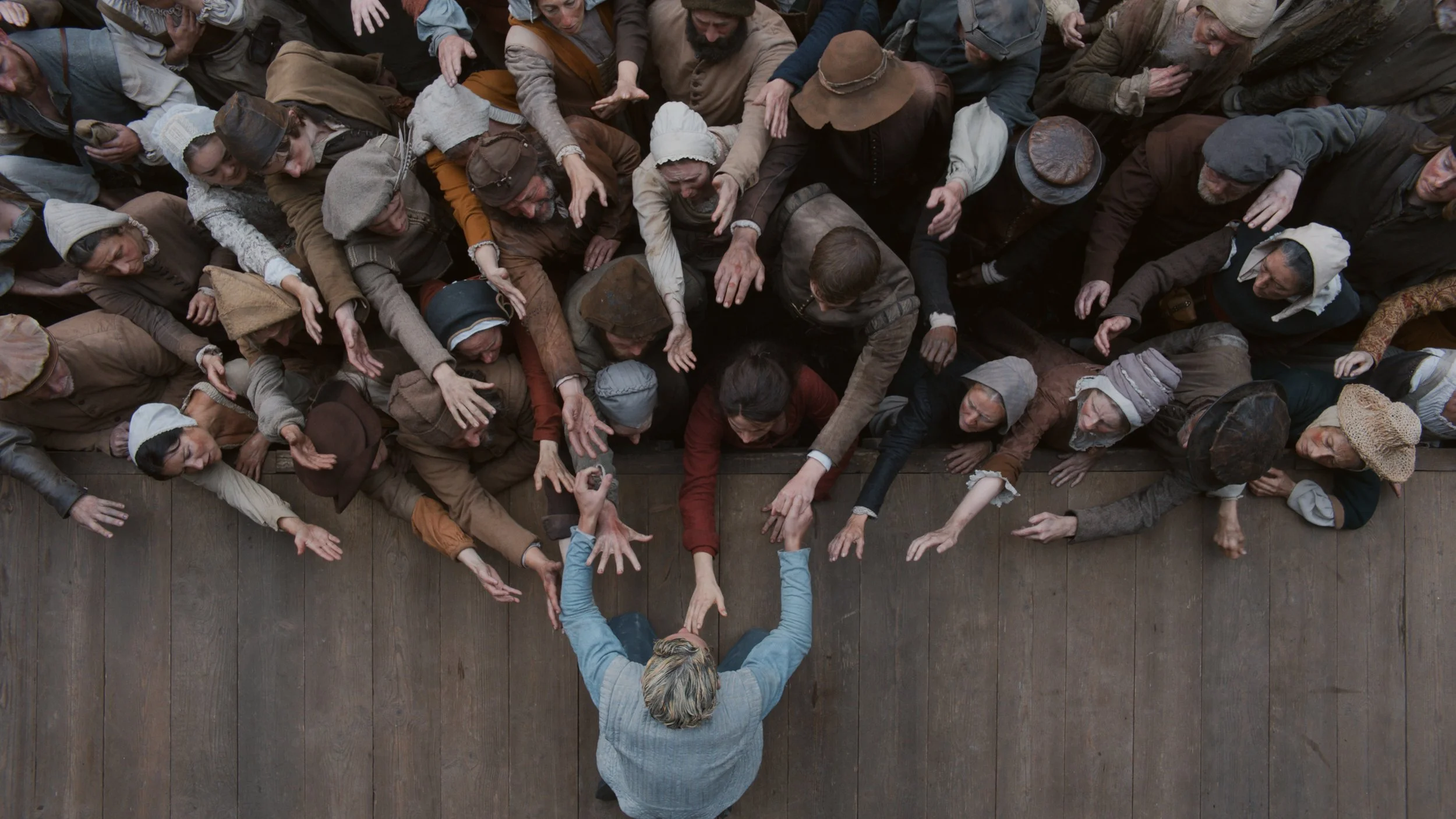
While Will’s aspirations gradually come to fruition in the big city, Agnes senses something nefarious on the coming winds. The plague descends on their household, first afflicting Judith before Hamnet becomes the ultimate sacrifice to the Angel of Death. The sense of loving security Agnes fiercely protected has shattered, and Will was miles away while she was left to pick up the pieces of their once sublime family life. While resentment fills a void once held by love in the Shakespeare home, Will begins writing Hamlet, the supreme expression of his personal grief. Agnes begrudgingly makes her way to see the play performed at the Globe Theatre, where, for the first time, she experiences the alchemical combination of love and loss expressed through her husband’s art.
Focus Features
In its structure, Hamnet veers from its source material to present a more traditionally linear vision of Agnes and Will’s lives, effectively split into a trio of sections that move from love to loss to learning to cope with both, with each component bookended by fades to black, tonally reinforced by an ethereal Max Richter score. The effect yields a rather formal method compared to the director’s other work, which typically favored a more meandering approach to temporality. Yet, the linearity strengthens the film’s tremendous emotional buildup as we watch the Shakespeares’ dynamics transform, and the children grow over the years.
Through the partnership of Zhao and her creative collaborators on Hamnet, the film bypasses the trappings of often-glossy Shakespearean adaptations to assemble images and characters that feel simultaneously of their time and timeless, just like the English bard’s body of work. The movie’s primary sets, concocted by production designer Fiona Crombie, possess a grungy patina reflective of the early 17th-century setting, as do the costumes and faces of the characters: Agnes wears the same crimson dress throughout the film, with sunburnt cheekbones to match. Żal’s contributions as director of photography further concretize Hamnet’s incredibly reinvigorated, authentic feel for a period piece. The camera maintains a particular distance in many exterior shots, allowing us to appreciate Agnes’s accord with nature, then, conversely, zooms in super close to the faces of the anguished characters when they are confined indoors during the movie’s most intense moments. Zhao’s cinema has always been anchored in powerful imagery; it is refreshing to see her step away from documentary cinema’s visual references with Hamnet.
Having previously played the lead in independent films like The Beast (2017) and Wild Rose (2018), Buckley delivers her career-best performance in Hamnet, encapsulating the unbridled spirit and vibrancy of Agnes’s character with a broad emotional range that evolves as she transitions from girlhood to motherhood. Mescal’s interpretation of Will balances Agnes’s edge with a melancholy that never threatens to steal the spotlight from a narrative that so decisively chooses to envision the Shakespeare matriarch’s viewpoint, while also maintaining conversation with the age-old notion of the “tortured artist.”
With both of these characters, Zhao’s screenplay (co-written with O’Farrell) toys with challenging and confirming gender stereotypes, many of which have not changed much since Shakespeare’s day. Agnes may serve as a stay-at-home mother while Will works in London, but it is clear from their interactions with the children and the rest of the family that Agnes is the one who runs the show. Hoping to cast off the negative memories of their own stony upbringings, Agnes and Will rear their three children with much love and care, instilling in them their own passions, from foraging for herbs to performing plays in the garden. The care with which Hamnet captures this joy of the Shakespeare family bond feels almost utopian.
Focus Features
Just as Nomadland served as a cinematic reprieve from the anxious zeitgeist of the pandemic era on its way to the Academy Award for Best Picture in 2021 (making Zhao the second female director to do so), Hamnet’s emotional storytelling has plucked the heartstrings of film festival goers since its premiere at Telluride in late August, leading to audience award wins at TIFF, Mill Valley, and the Virginia Film Festival. Both of these movies have been released to the world at such uncertain junctures, and the humanity with which Zhao approaches her work clearly has a profound impact on viewers. Facing days rocked by increasing political and social pandemonium, Hamnet’s themes take us back to the most essential elements of life: loving those around you, loving what you do, and relying on such amorous faith during the darkest of times.
4.5/5
2025 / 2 hours 5 minutes / Color / in English
‘Hamnet’ premiered at the 2025 Telluride Film Festival. The movie will begin its U.S. theatrical release on Wednesday, November 26, courtesy of Focus Features. Click here to find ‘Hamnet’ showtimes near you.