
Berlinale Review: ‘Traces’ Soberly Speaks to Overlooked Injustice in the Ongoing Russo-Ukrainian War
© Alisa Kovalenko
It has been nearly four years to the day since Russia began its full-scale invasion of Ukraine on February 24, 2022, yet in many circles of the Western media, the comprehensive devastation of the ongoing conflict and the millions of people who have been impacted by it have been all but forgotten by the never-ending news cycle that feeds our increasingly flippant popular culture.
Traces, premiering in this year’s Panorama program at the Berlin Film Festival, calls crucial attention back to the Russo-Ukrainian War, albeit through a perspective commonly overlooked: that of female survivors of sexual violence experienced during Russia’s war of aggression. Directed by Alisa Kovalenko and co-directed by Marysia Nikituk, Traces taps into the most powerful functions of documentary cinema to serve as a sobering but momentous voice for the female accounts it showcases.
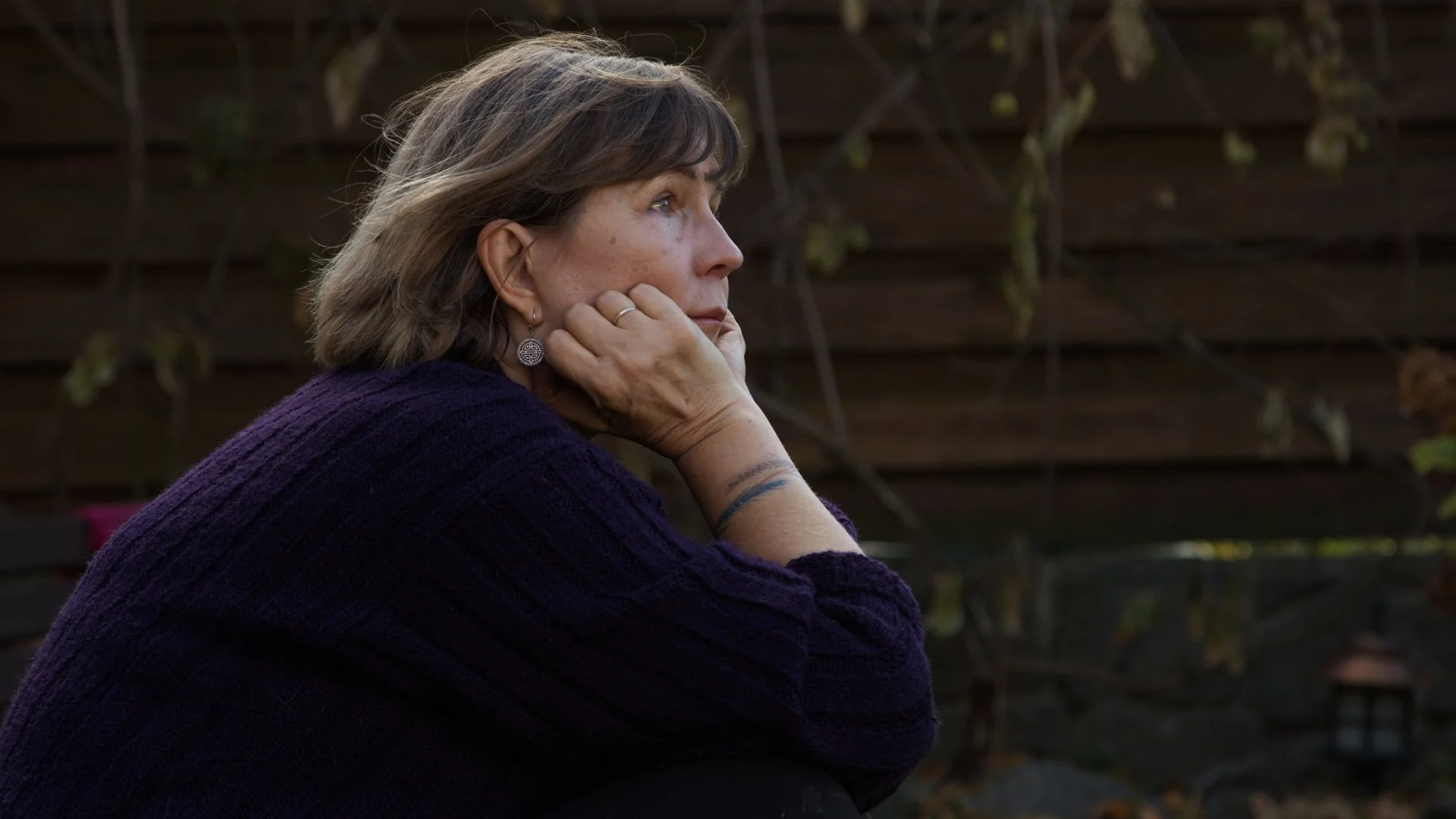
While Traces inconspicuously splits its focus on a number of women’s experiences, the documentary’s main focus always returns to Iryna Dovhan, founder of SEMA Ukraine, an NGO founded in 2019 to provide relief and community for survivors of conflict-related sexual violence (CRVS) during Russia’s invasion. As the camera tracks Dovhan while she tends to her lush backyard garden in the Kyiv region, she reflects on the trauma that spurred her to create the organization: her own sexual assault and torture at the hands of Russian soldiers during the 2014 conflict in Donbas.
© Alisa Kovalenko
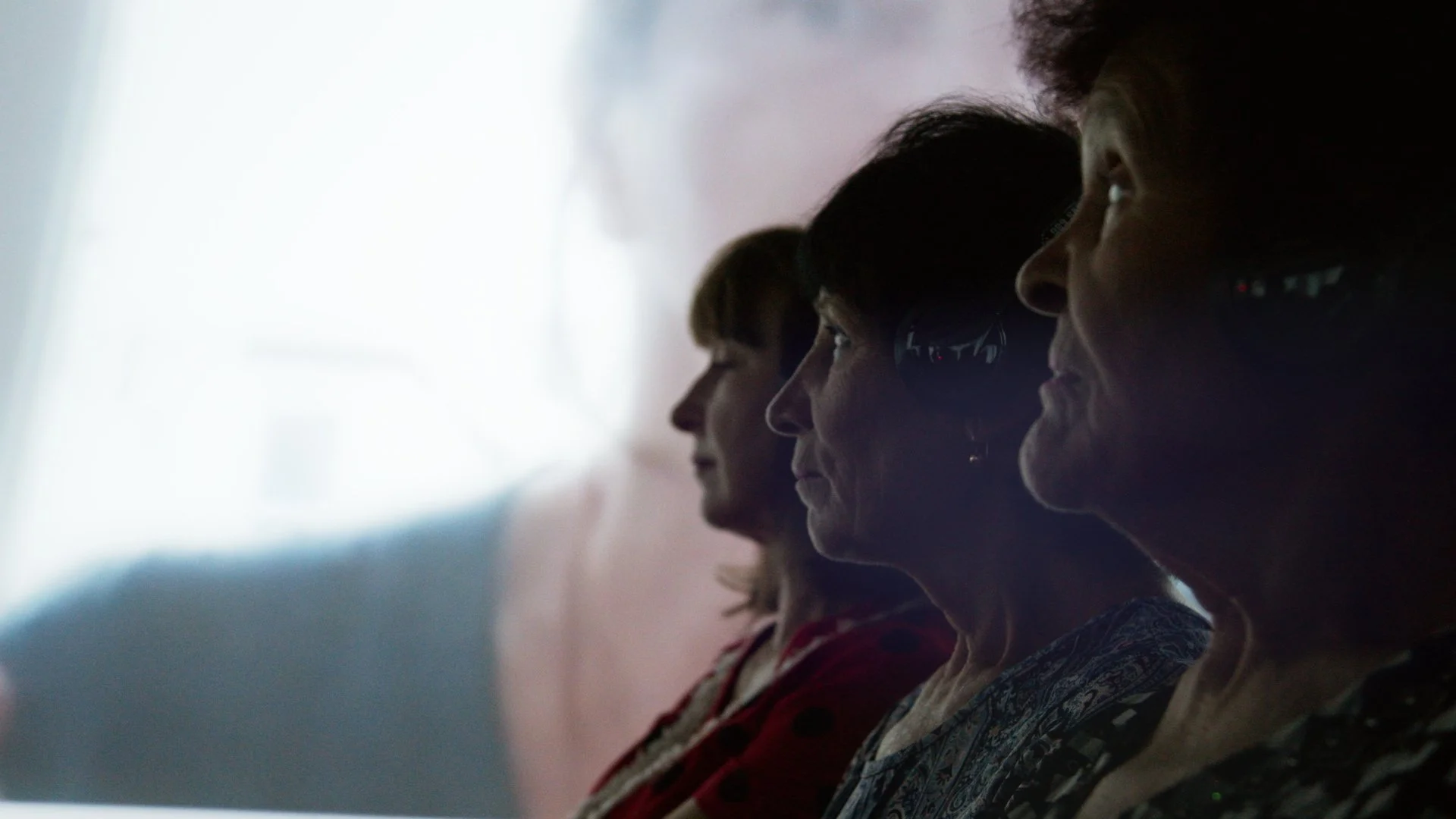
After becoming one of Ukraine’s first figures to speak publicly on their experiences with CRVS, Dovhan’s mission with SEMA Ukraine became centered around providing justice and mutual support for the countless women who had faced similar violence, with Traces placing emphasis on the group’s efforts to document testimonies of women impacted by CRVS. Through five accounts, those of Tetiana Vasylenko, Liudmyla Mefodiivna, Galyna Tyshchenko, Olha Cherniak, and Nina, the documentary’s camera becomes the women’s audience as they recount their horrifying and violent treatment from Russian soldiers.
The women’s retellings are bloodcurdling. They are mothers, grandmothers, even great-grandmothers whose homes are invaded, whose dignity is stripped away by false authority from the soldiers who violate them. Most chillingly, many of their statements remark on how young the assailants appear to be, how they toil to hide their faces and identities, pointing to their heinous knowledge of their crimes, to an extent. Kovalenko and Nikituk’s direction during these gut-wrenching passages bypasses the conventional “talking head” camera setups so prevalent in mainstream investigative documentaries today, instead choosing to remain distanced, giving their subjects the space to work through their trauma. Traces largely uses these testimonies in voiceover, with the audience hearing them through recordings gathered by SEMA members.
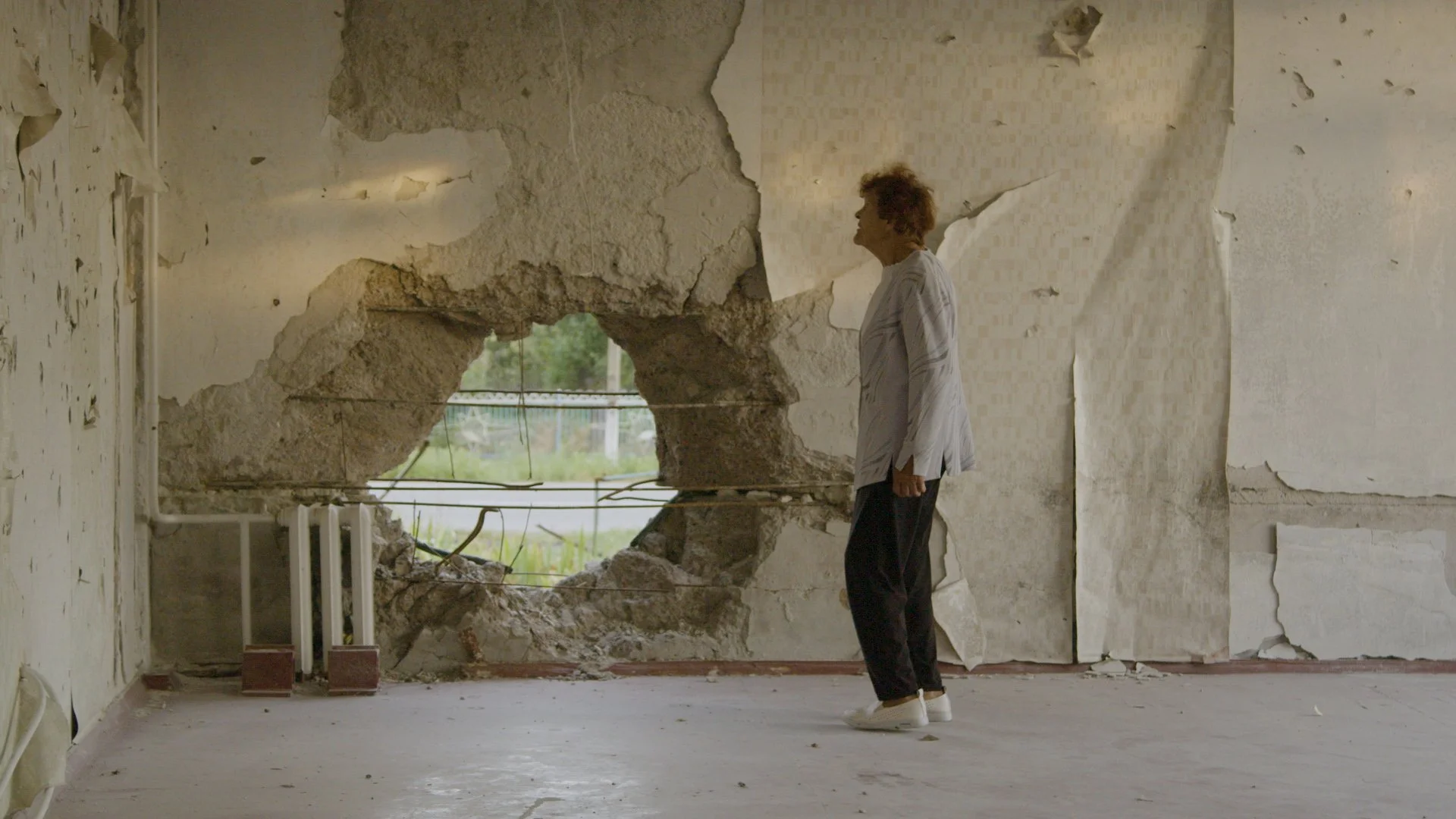
Solemnly interpersing these tragic statements with on-the-ground footage of Ukrainian neighborhoods and landscapes decimated by artillery fire, Traces routinely returns to Dovhan’s perspective as its shining guiding light. Although serious health issues forced her to leave Ukraine to seek medical attention in Ireland, Dovhan’s indomitable endurance continues to propel SEMA Ukraine’s purpose, with the filmmaker’s vision never wavering from platforming the importance of Dovhan’s mission, as its latter portion concentrates on the growing impact of the organization in both Ukraine and on the world stage.
While the well-known quote "all wars are started by angry old men, but they are fought by young men who die for reasons that are beyond them" rings true in many ways, such statements fail to convey the perspectives of the many others who are affected by the brutality of global conflicts. Women have faced CRVS in nearly every war, from World War II to the Rwandan Genocide, an aspect all too often overlooked, despite the U.N’s recognition of CRVS since 1948. Traces not only champions the difficult experiences of its female subjects but also shatters the stigma that keeps them from sharing their accounts.
© Alisa Kovalenko
Driven by her personal account of sexual violence during the 2014 conflict in the Donbas, Kovalenko uses Traces as a heart-wrenching if not impactful battle cry for justice, for the many like herself who are facing CRVS in Russia’s ongoing “special operation.” Through its careful construction, Traces stands out as a challenging but moving experience, one that speaks powerfully to the truth of the reports it centers around
4/5
Ukraine/Poland | 2026 | 85 Minutes | Ukrainian with English Subtitles
‘Traces’ made its world premiere as part of Berlinale’s Panorama program on Monday, February 16.